Marine & Sea Creatures
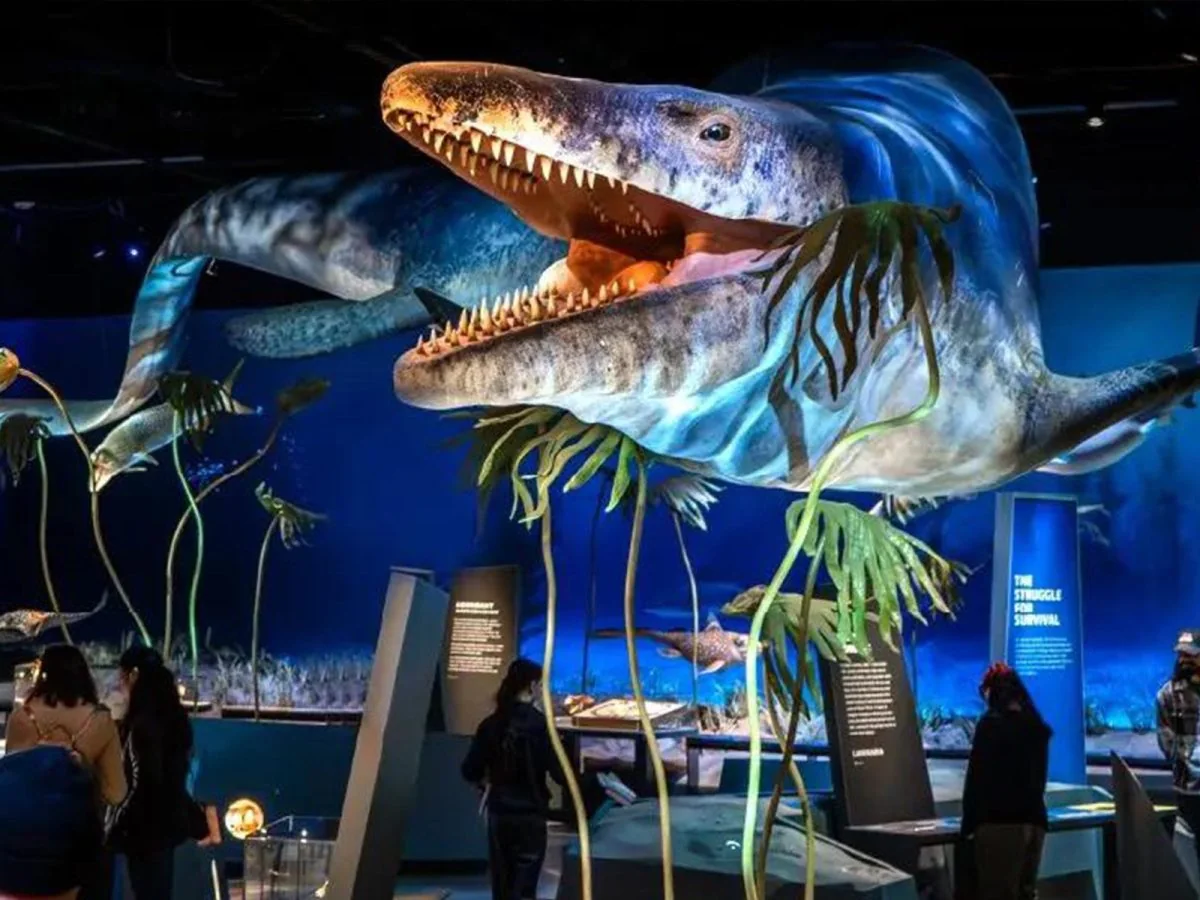
A Mosasaurus is the one marine reptile that makes an aquarium hall feel like open water. It is not a fish and it does not read like one — the body is long, the tail is a paddle, and the jaw is the part that does the work. Visitors looking up at a 10-metre animal with its mouth open do not analyse the anatomy; they stop and look.
| Length options | 6 m / 8 m / 10 m / 15 m |
|---|---|
| Frame | 316L stainless steel internal frame |
| Body | Fibreglass shell with hand-finished surface |
| Jaw | 80-degree gape with 40-plus individually set teeth |
| Power | 110–240 V AC, 2000 W average / 3500 W peak |
| Mount options | Wall-mounted, ceiling-suspended, or floor-standing |
| Duty | Indoor, including humid and salted aquarium halls |
| Motion | Jaw and tail sets; body sway on suspended builds |
The length you choose decides how the animal is supported, and that is the first thing to settle. At 6 metres it can go on a wall bracket or a floor frame. At 10 metres it wants either a suspended rig or a floor-standing armature, and at 15 metres it is a structural piece: the load goes into the building, and the building’s engineer has to be in the conversation.
Which is why we ask for the hall drawing before quoting. A 15-metre Mosasaurus quoted without knowing the ceiling structure is a number that will change.
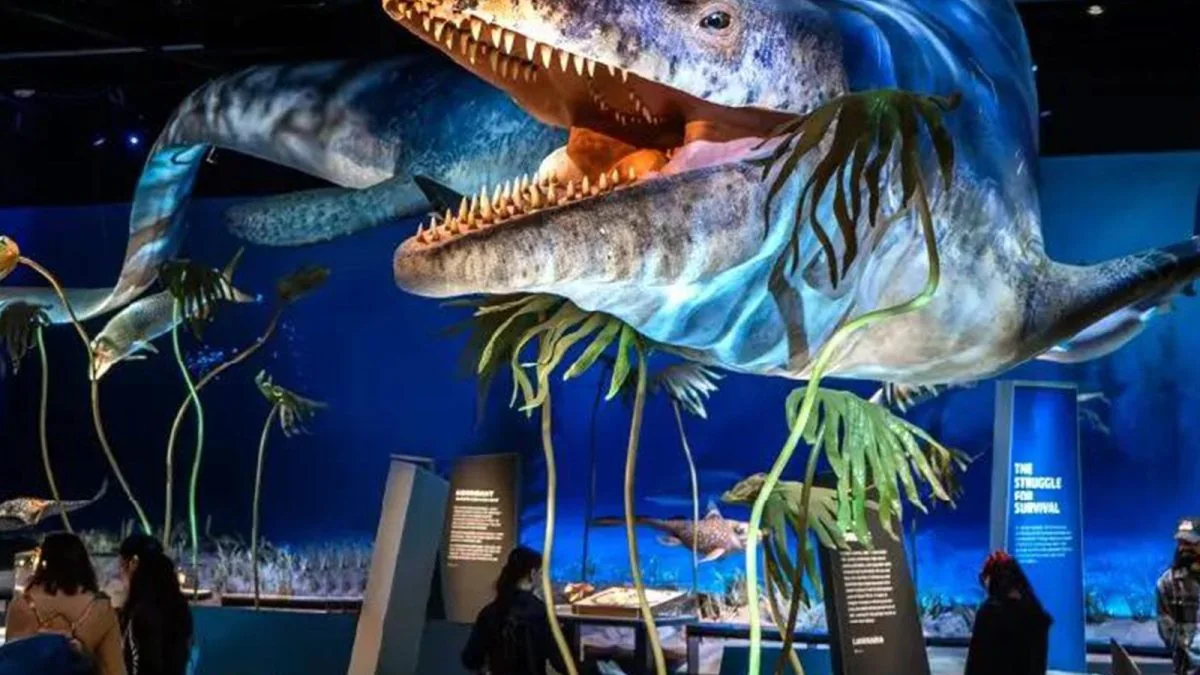
Eighty degrees of gape is roughly what the animal could actually do, and it is also what makes the exhibit photograph well from below. The teeth are set individually rather than cast as a strip, and they vary in size along the jaw — a row of identical teeth is the single clearest sign of a cheap build.
The jaw is on its own drive stage. On a suspended animal the jaw is the only motion that matters: the body is largely static and the tail is slow, so the open-and-close is what visitors catch as they walk through.
Aquarium halls combine humidity with salt, and a standard steel frame inside a fibreglass shell is the failure that takes years to show: the shell looks perfect and the frame has been rusting since the first season. 316L stainless is standard on every marine build we make.
Where the animal is going over water — an actual tank rather than a dry hall — say so at order. The specification changes: the frame treatment, the fixings, and the way the surface is finished all differ from a dry-hall build.
Suspended. The version that photographs best and the one that needs a ceiling that can take the load. Four to six points, each with adjustable tension.
Wall-mounted. Suits a long wall in a circulation area. The animal is seen side-on, which means the profile has to be right — this is the view where a badly proportioned Mosasaurus is obvious.
Floor-standing. A frame armature carrying the animal above head height. Used where the ceiling cannot take the load, and it reads almost as well if the armature is detailed rather than left as bare tube.
Can it be over water? Yes, with the tank specification. It costs more and it needs to be decided before production.
Does the whole body move? On a suspended build there is a slow sway plus the jaw. A 15-metre animal moving its whole body is a load problem, not a motion problem.
How accurate is the anatomy? It follows published proportions for Mosasaurus rather than one specimen. If the exhibit needs to cite a specimen, we will say so up front.
What is the delivered weight? It scales with length and mounting. Send the length and the mounting method and we return the figure with the drawing.
2000 W average and 3500 W peak is a serious draw for an exhibit animal, and the peak happens when the jaw and the tail drives start together. This wants a dedicated circuit, not a shared ring.
The supply has to reach the animal, which in a suspended installation means dressing the cable along one of the rigging points. Plan that route before the rig design is fixed — retro-fitting a cable to a suspended exhibit in a public hall is a night shift.
The rig or armature goes in first and is load-tested, then the animal is lifted and levelled. On a suspended build this is the slow part: four to six cables adjusted until the body sits at the angle that reads as swimming rather than hanging.
Then the jaw cycle is set. On a 10-metre animal the jaw moving at full speed reads as a machine; slowed to about half, it reads as an animal breathing. That one setting is what most changes how the piece comes across.
Materials. 316L stainless steel internal frame, fibreglass shell with hand-finished surface, individually set teeth.
Related. the marine range, the great white shark, dinosaur exhibits, request a quote.
Same factory and the same build standard. What changes is size, movement set and how the exhibit is meant to be used on site.
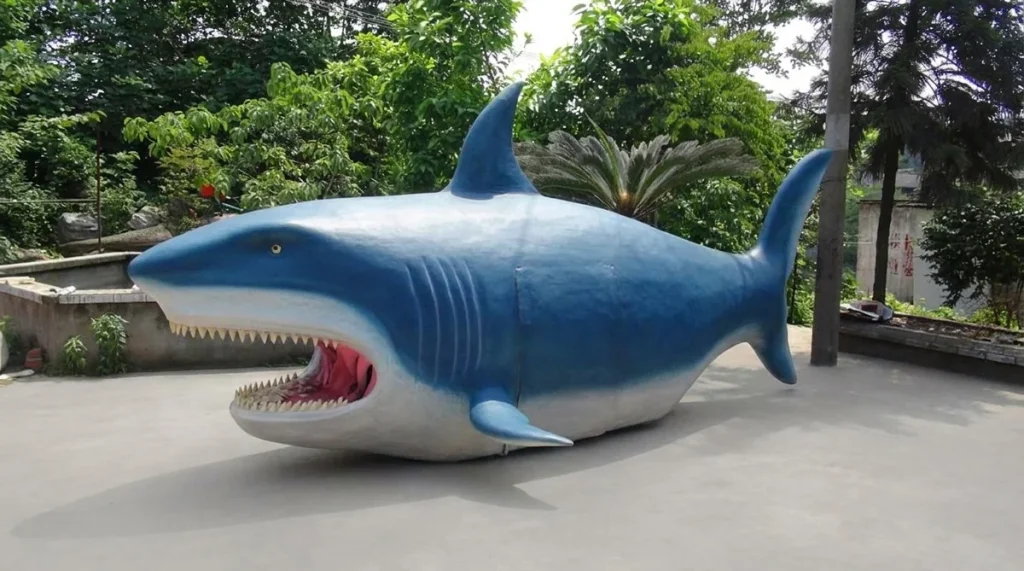
A shark is a suspended piece, not a standing one, and that single fact changes every part of the brief. The load goes into […]
View Product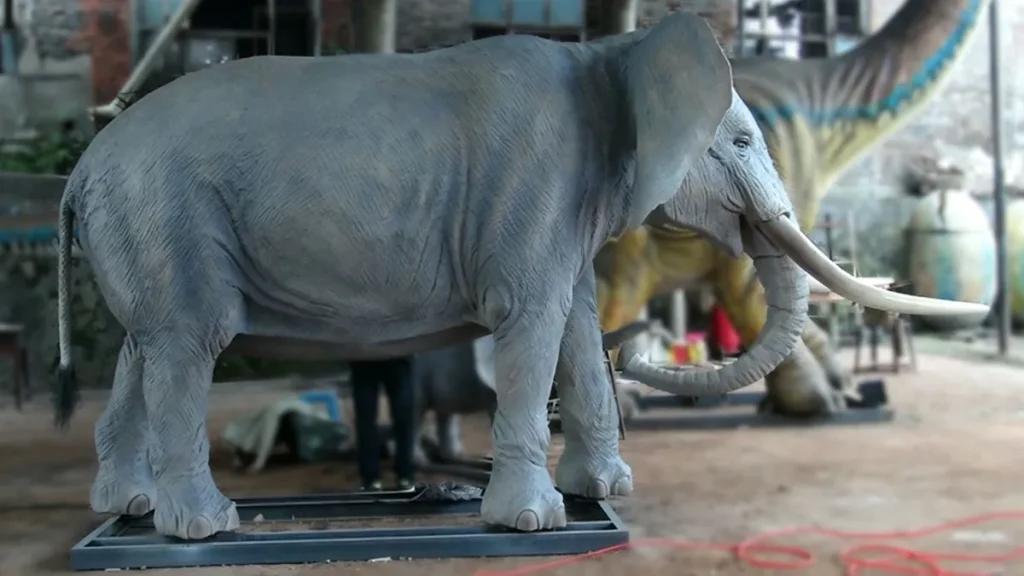
Our animatronic African elephant brings Loxodonta africana to life at full scale — from the deeply wrinkled skin to the independently moving ears and […]
View Product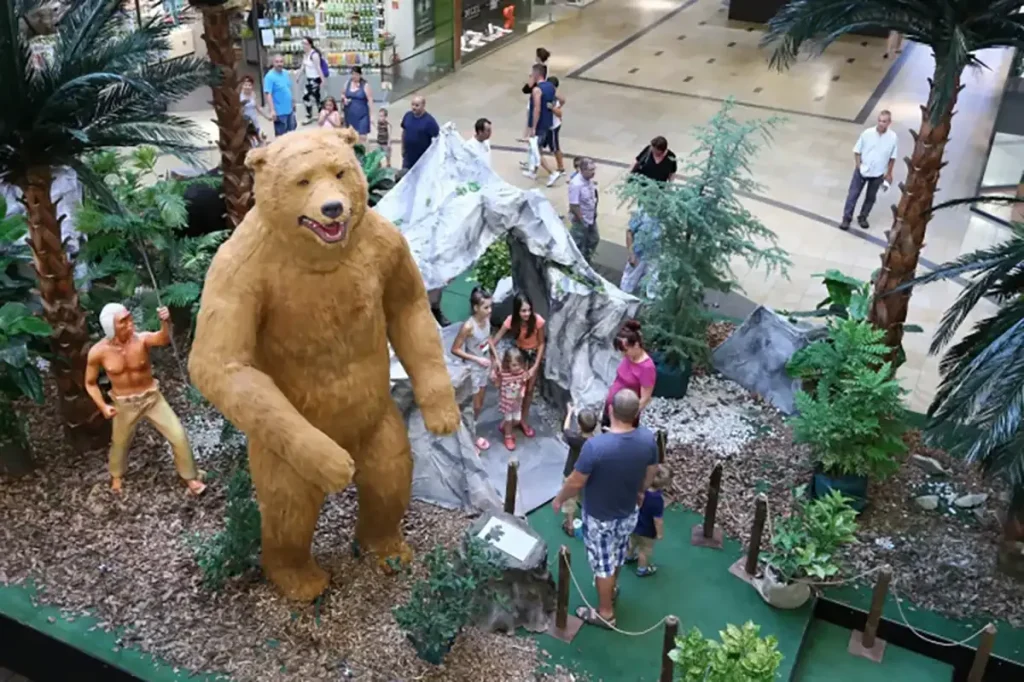
Life-size animatronic cave bear with hand-pasted fur, glass eyes and the heavy Pleistocene stance — for museum dioramas and Ice Age trails.
View ProductThree things buyers usually want settled before they ask for a drawing — what drives the number, how the piece is actually built, and what to check between suppliers.
Extinct and hard-to-keep species, sculpted to anatomy keepers can check — where animatronic animals earn a place beside a living collection.
Read the guide →How Much Does an Animatronic Dinosaur Cost? Understanding the Key Cost Factors If you are planning a museum exhibition, theme park attraction, or promotional […]
Read the guide →Animatronic Dinosaur Buying Guide for Museums & Theme Parks Choosing the right animatronic dinosaur for your museum, theme park, or zoo is one of […]
Read the guide →Send your dimensions, movement requirements and installation site. You get a realistic budget range and a dated build schedule.
Or email info@hltdino.com — we reply within one business day.