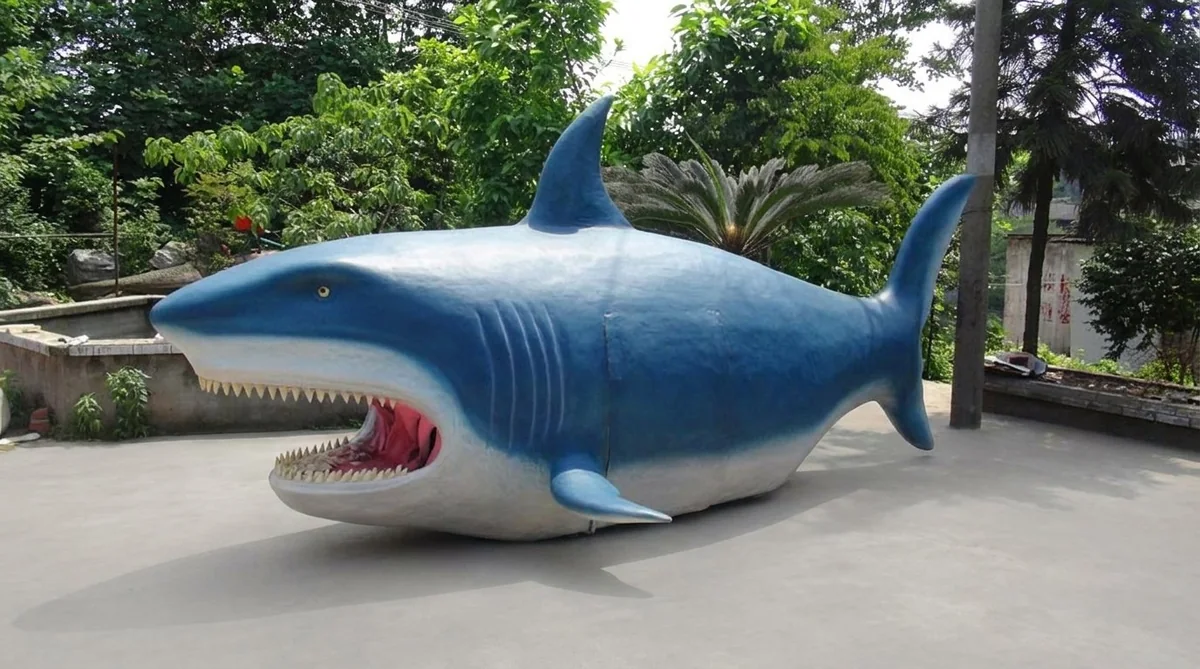
Marine & Sea Creatures
A shark is a suspended piece, not a standing one, and that single fact changes every part of the brief. The load goes into the building above rather than into the floor, the viewing angle is from below rather than from the side, and the rig that holds it is a bigger design problem than the animal itself.
| Weight | About 380 kg, suspended |
|---|---|
| Frame | 316L stainless steel |
| Body | Fibreglass shell with hand-finished surface |
| Suspension | Four-point metal cable rig with adjustable tension |
| Power | 110–240 V AC, 800 W |
| Mount options | Suspended, wall-mounted, or on a floor plinth |
| Size | Built to order at life size for the species |
| Duty | Indoor, including humid aquarium halls |
380 kg hanging from four points is a different engineering conversation from 380 kg standing on a base. The rig has to be designed against the structure above, and the four points need adjustable tension so the shark can be levelled and angled after it is up rather than during the lift.
The angle is the part that is usually got wrong. A shark rigged level reads as a display model; rigged nose-down at ten to fifteen degrees with a slight roll, it reads as an animal moving through water. That angle is set on site, and it is the single setting that decides whether the piece works.
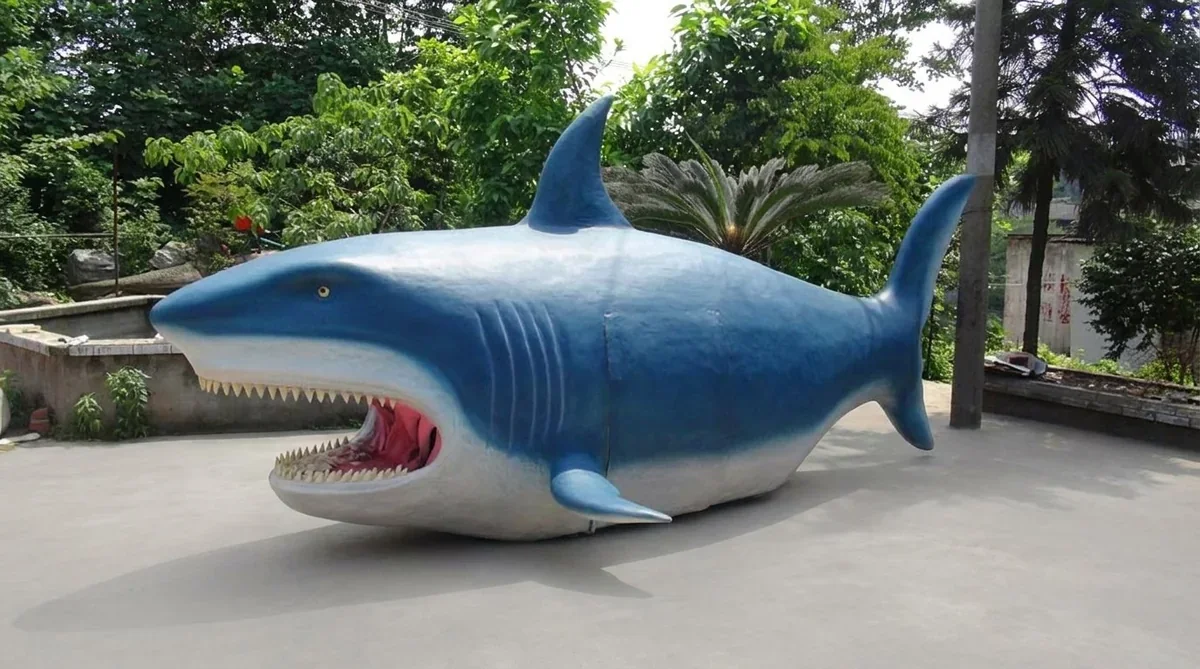
Aquarium halls are humid and often salted, and a standard steel frame inside a fibreglass shell is the classic failure: the shell looks fine and the frame rusts from the inside out. 316L stainless is specified for the frame on every shark we build, and it is not an optional upgrade.
The body shell is fibreglass with a hand-finished surface, which takes the kind of repair that a suspended piece eventually needs — a shark at head height in a public hall will get touched.
Three placements work. Suspended over a circulation route, seen from below. Wall-mounted on a bracket, seen side-on at a distance. On a plinth, which is the compromise used where the ceiling cannot take the load.
The suspended version is the one that photographs well and the one that needs the most site work. If the ceiling is a services deck rather than a structural slab, a plinth is the honest answer and the animal still reads — it simply loses the “swimming overhead” effect.
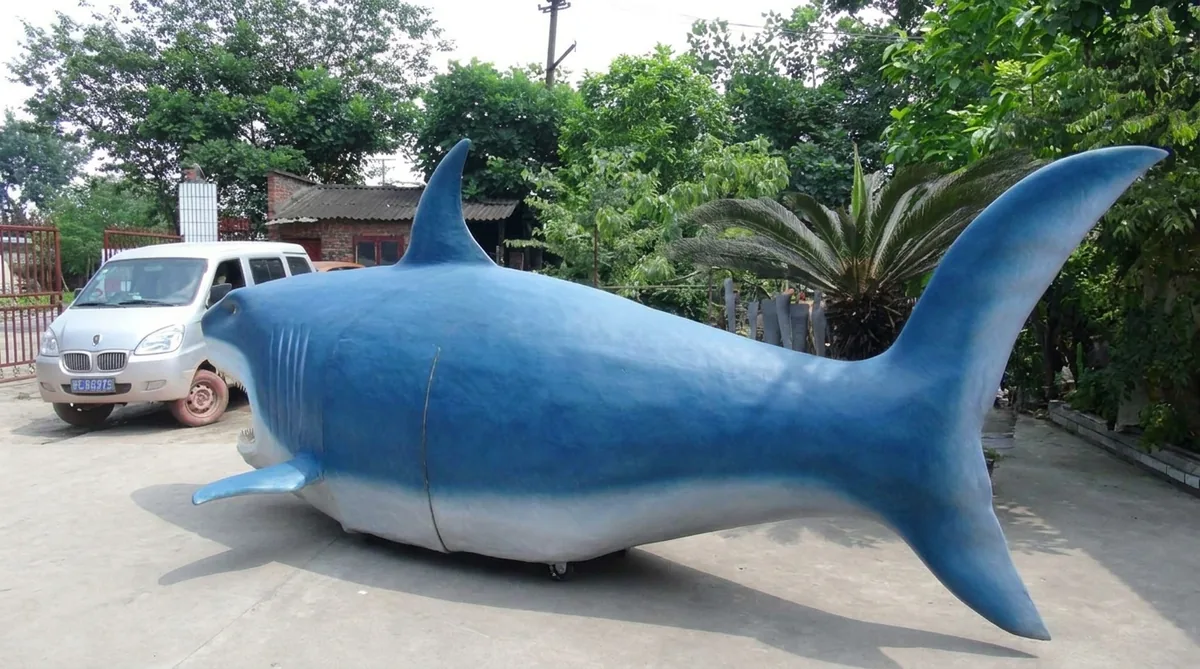
What species and size? Great white at life size is the standard ask; other species are built to published proportions. Send the species and the viewing distance.
Will it move? The body has a slow tail sway. Anything more than that on a suspended piece adds frame load and is rarely worth it.
Can it be taken down for maintenance? Yes, and the rig should be designed so it can be. Ask for a lowering procedure with the unit — it is a rigging question, not a shark question.
Does it need a water effect? No, and it should not have one. Lighting does the work; a wet surface in a public hall is a slip hazard with no upside.
800 W at the rig position, which is a single supply. The difficulty is not the load, it is getting the cable to a suspended piece without it reading as a cable — the supply is usually run to a discreet point on the rig and dressed along one of the suspension cables.
Confirm the ceiling capacity before anything else. This is the item that decides whether the project is a suspended shark or a shark on a plinth, and it has to be answered by the building’s engineer, not by us.
The rig goes up empty and is load-tested, then the shark is lifted and the tension adjusted point by point until the angle is right. Commissioning is mostly this: adjusting four cables until the animal sits at the angle that reads as swimming.
Then the tail sway is set to its slowest useful range, and the lighting is aimed from below. A shark lit from above loses the underside that visitors actually see.
Materials. 316L stainless steel frame, fibreglass shell with hand-finished surface, four-point adjustable cable rig.
Related. the animatronic animal range, marine reptile exhibits, dinosaur exhibits, request a quote.
Same factory and the same build standard. What changes is size, movement set and how the exhibit is meant to be used on site.
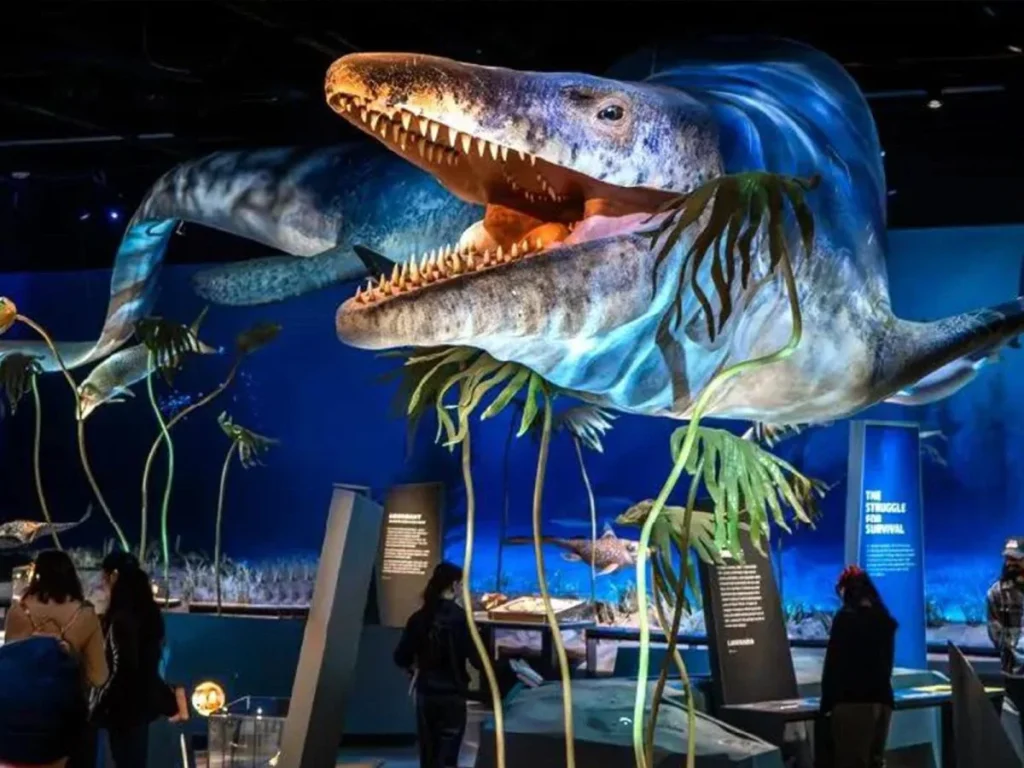
A Mosasaurus is the one marine reptile that makes an aquarium hall feel like open water. It is not a fish and it does […]
View Product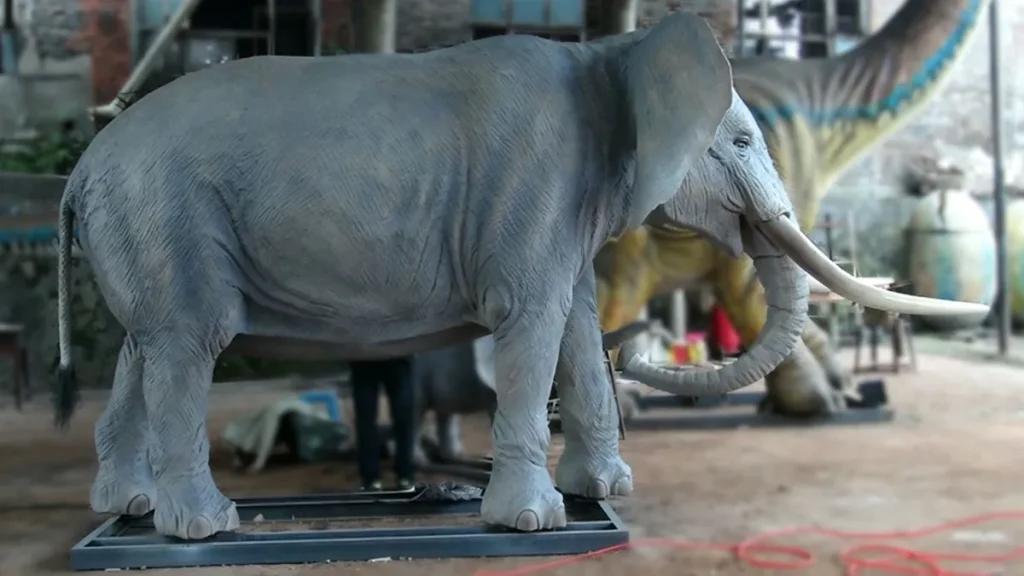
Our animatronic African elephant brings Loxodonta africana to life at full scale — from the deeply wrinkled skin to the independently moving ears and […]
View Product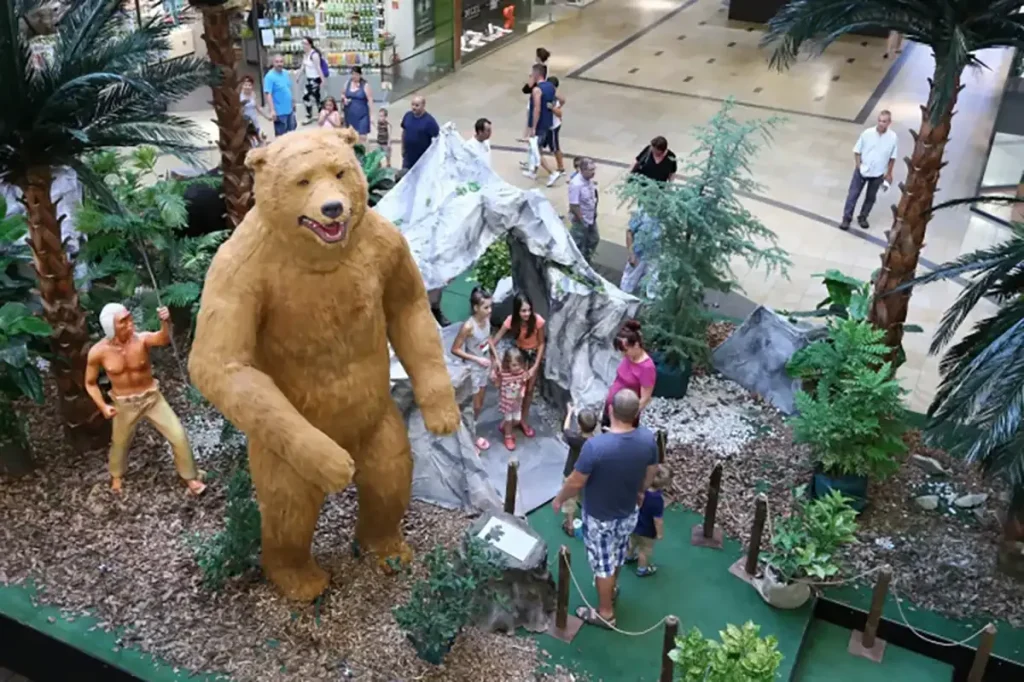
Life-size animatronic cave bear with hand-pasted fur, glass eyes and the heavy Pleistocene stance — for museum dioramas and Ice Age trails.
View ProductThree things buyers usually want settled before they ask for a drawing — what drives the number, how the piece is actually built, and what to check between suppliers.
Extinct and hard-to-keep species, sculpted to anatomy keepers can check — where animatronic animals earn a place beside a living collection.
Read the guide →How Much Does an Animatronic Dinosaur Cost? Understanding the Key Cost Factors If you are planning a museum exhibition, theme park attraction, or promotional […]
Read the guide →Animatronic Dinosaur Buying Guide for Museums & Theme Parks Choosing the right animatronic dinosaur for your museum, theme park, or zoo is one of […]
Read the guide →Send your dimensions, movement requirements and installation site. You get a realistic budget range and a dated build schedule.
Or email info@hltdino.com — we reply within one business day.