Animatronic Dinosaurs
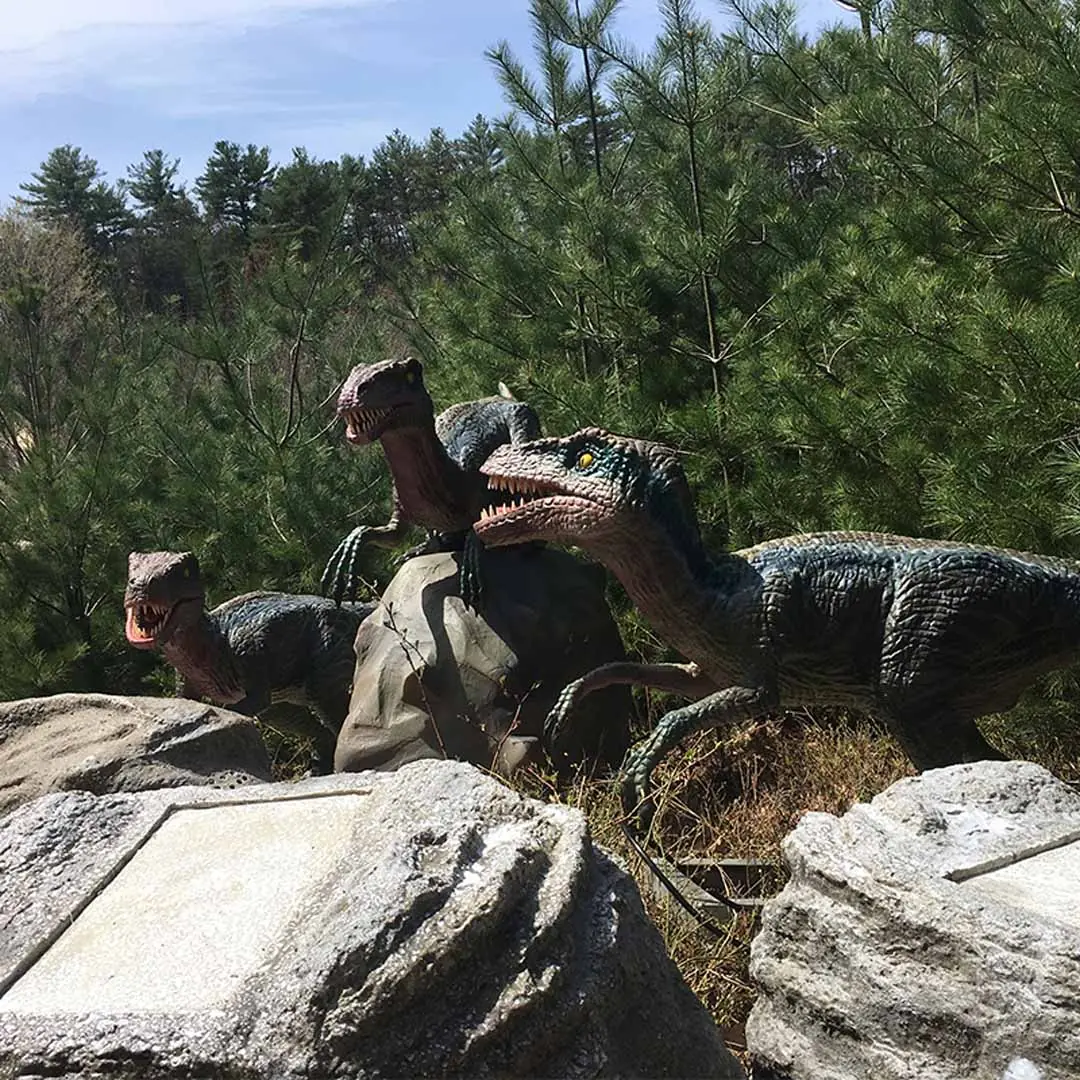
A single Velociraptor in a hall reads as a large bird. Three of them, in different stances, facing different directions, read as a hunt — and the difference in what visitors do next is not subtle. One they walk past; the other they stop in front of and photograph.
| Size options | 2 m / 3 m / 4 m / 5 m — custom lengths available |
|---|---|
| Height | 1.2 m to 2.2 m at the hip, depending on length |
| Frame | Internal steel frame with high-density foam core |
| Skin | Hand-finished feathered texture (patent ZL 2022 1 0224489.5) |
| Animation | Basic / Standard / Premium movement sets |
| Power | About 100 W per 3 m unit |
| Eyes | Optional LED |
| Duty | Outdoor rated |
| Lead time | 25 to 40 days |
A pack scene is a layout decision, not an order of three identical animals. The three or five units want different poses and different facings: one crouched low and forward, one upright and alert, one in the leaping stance with the body off the ground. All three facing the same direction reads as a queue, not a hunt.
The spacing matters too. A metre and a half between animals makes each one read separately; two to three metres lets the group read as a unit from the path while still giving each animal its own pose. We mark the layout on your site plan before production, because the spacing has to be settled before the plinths or anchor points go in.
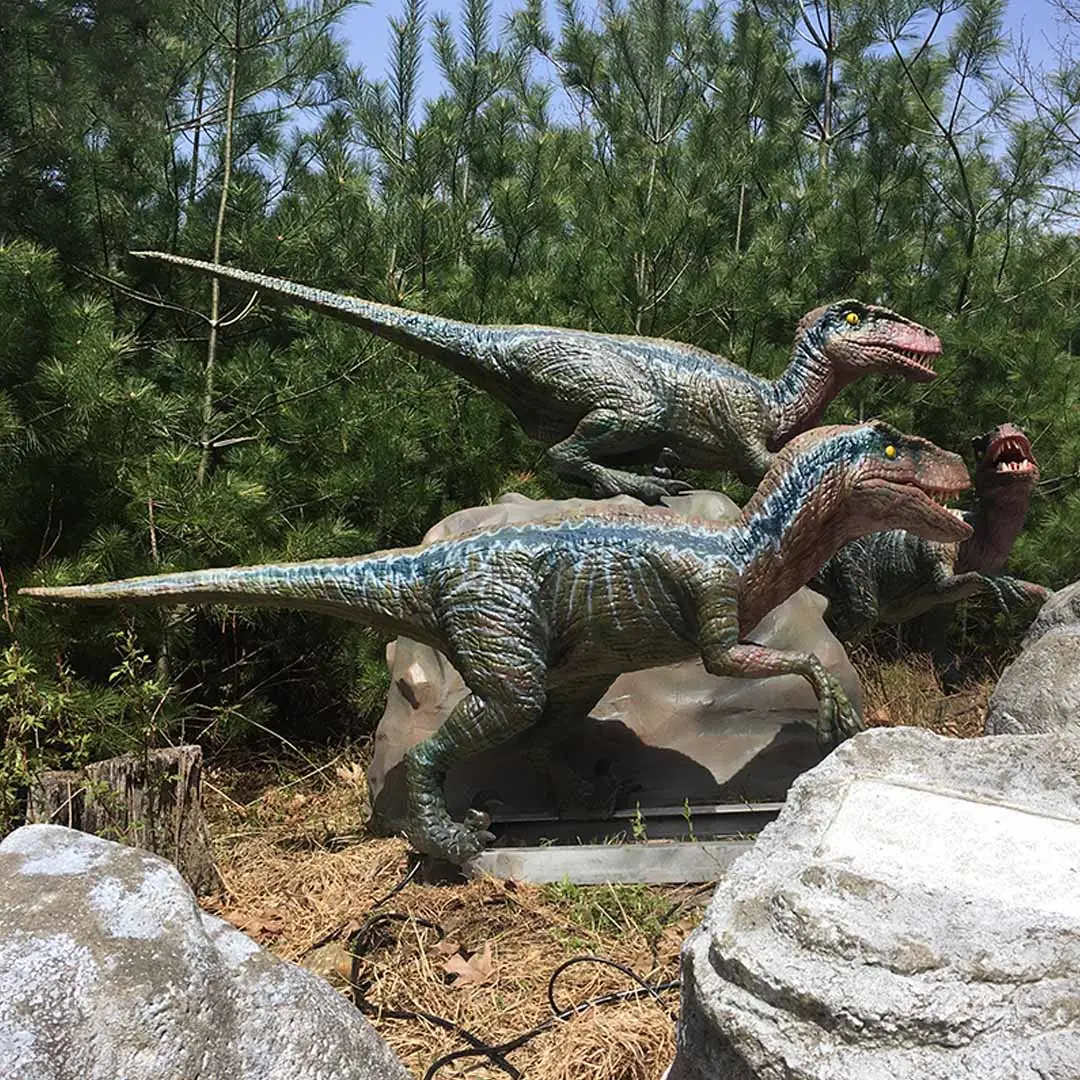
Velociraptor has been feathered in the literature for twenty years and most factory builds still ship it smooth-skinned, because feathers are slow work. The skin is hand-finished in the feathered texture, which is a surface finish rather than glued-on parts — there are no individual quills to break off when a visitor reaches over a barrier.
The sickle claw is the second detail that separates a good build. It sits clear of the ground on a raised toe, and the toe itself has to be strong enough to survive being stepped on by a child who has climbed the barrier.
Crouched. The lowest and most compact. Suits a trail with a narrow footprint and reads as stalking from a distance.
Upright and alert. The default for a single animal. Lowest centre of gravity of the three and the simplest to install.
Leaping. The body off the ground, supported on one leg and a frame arm. The most dramatic and the one that needs the most headroom and the widest clear zone — this is the pose that gets photographed and it is also the pose that needs a site check before ordering.
How many for a pack? Three is the minimum that reads as a group; five is the number most exhibitions settle on. Two still reads as a pair rather than a pack.
Is the feathered texture optional? No. It is how this build is finished. A smooth-skinned Velociraptor is available as a different product and is priced lower.
Can the poses be mixed in one order? Yes, and they should be. Tell us the layout and we assign poses against it.
How is it anchored? Ground anchors or a weighted base, decided by the pose. The leaping version cannot use a plain weighted base.
At roughly 100 W for a 3-metre unit, three animals are still under half a kilowatt — this is not a power-hungry build and a single circuit will carry a pack. The constraint is the cable route rather than the load: three animals spread over fifteen metres means three drops, and the drops have to be planned along the path rather than run afterwards across a walkway.
Outdoor-rated skin is not the same as hose-down rated. The feathered finish holds water in the texture, so cleaning is a soft brush and a damp cloth, not a pressure washer. Sites that plan to jet-wash the trail need to know this before the season starts, not after.
Each animal is commissioned individually and then as a group. Individually: the animation level is set, the motion is checked through a full cycle, and the sensor range is set to the distance visitors actually approach from.
As a group: the timing is staggered. Three animals that trigger and move at the same moment read as a machine; the same three running a few seconds apart read as animals responding to each other. Staggering is a setting, not a different product, and it is the single thing that most changes how a pack comes across.
Materials. Internal steel frame with high-density foam core, hand-finished feathered silicone skin (patent ZL 2022 1 0224489.5), optional LED eyes.
Related. the animatronic dinosaur range, theme park installations, the Dilophosaurus ride, request a quote.
Same factory and the same build standard. What changes is size, movement set and how the exhibit is meant to be used on site.
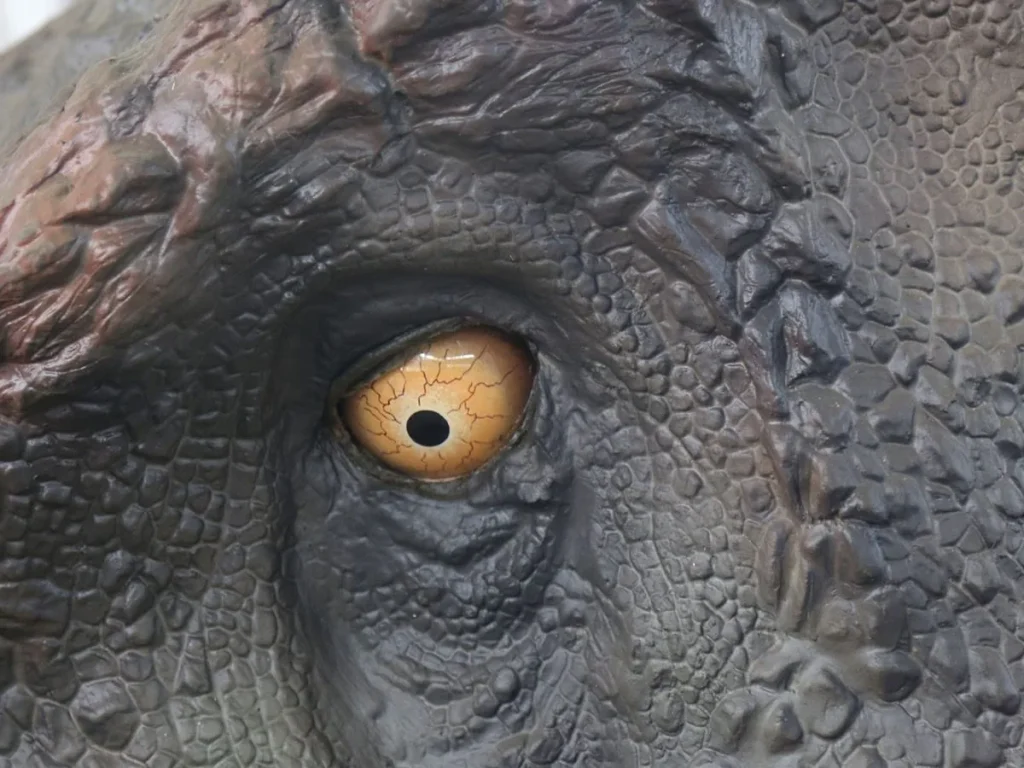
Museum-grade interactive animatronic dinosaur with 3 m proximity sensing, touch response and dual behaviour modes for science centers and parks.
View Product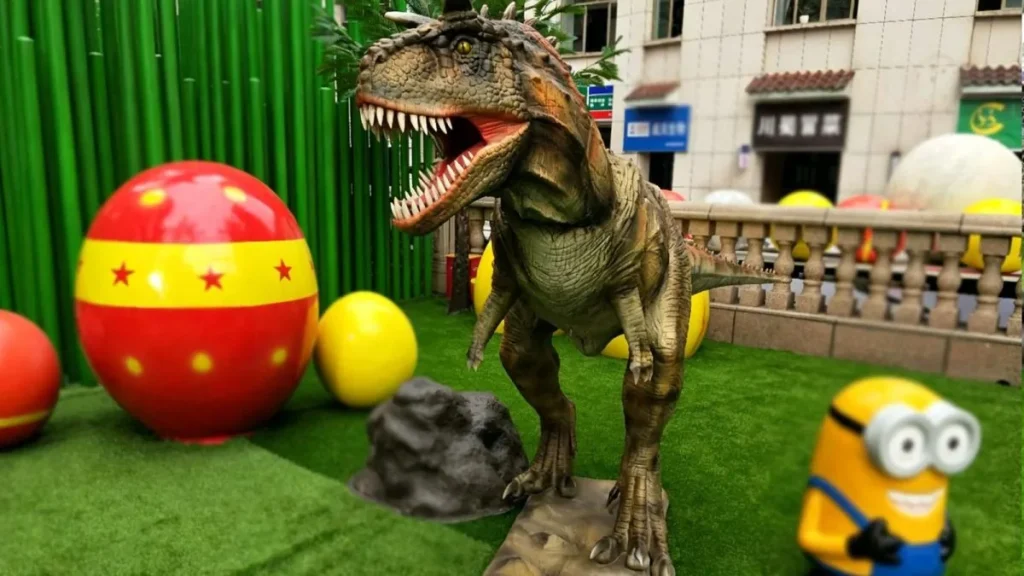
Life-size animatronic Carnotaurus in a roaring pose — articulated jaw, forward-set horns and roar audio on a rock base for outdoor display.
View Product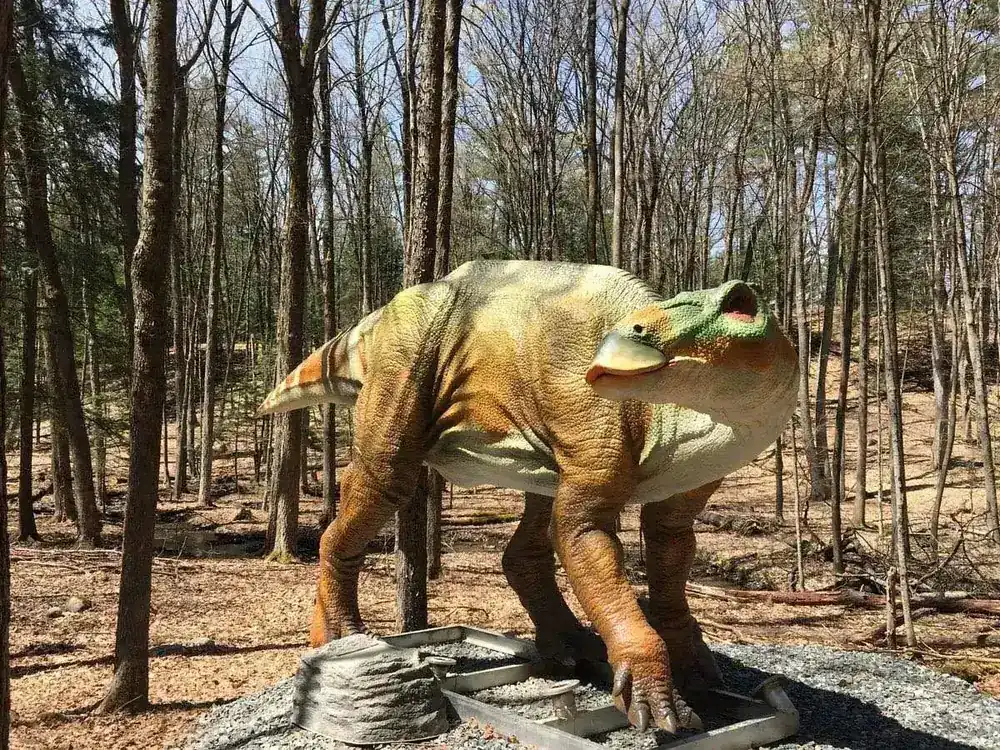
The duck-billed dinosaurs are the least dramatic animals in the catalogue and the ones that read most like real animals. That is the appeal: […]
View ProductThree things buyers usually want settled before they ask for a drawing — what drives the number, how the piece is actually built, and what to check between suppliers.
Animatronic Dinosaur Buying Guide for Museums & Theme Parks Choosing the right animatronic dinosaur for your museum, theme park, or zoo is one of […]
Read the guide →From fossil reference to finished skin — how proportions, texture, colour and weathering are decided, and what separates a realistic build from a cartoon one.
Read the guide →Why Motor Choice Matters More Than Buyers Expect Motor selection is usually treated as a manufacturing detail. It is not. It is the decision […]
Read the guide →Send your dimensions, movement requirements and installation site. You get a realistic budget range and a dated build schedule.
Or email info@hltdino.com — we reply within one business day.