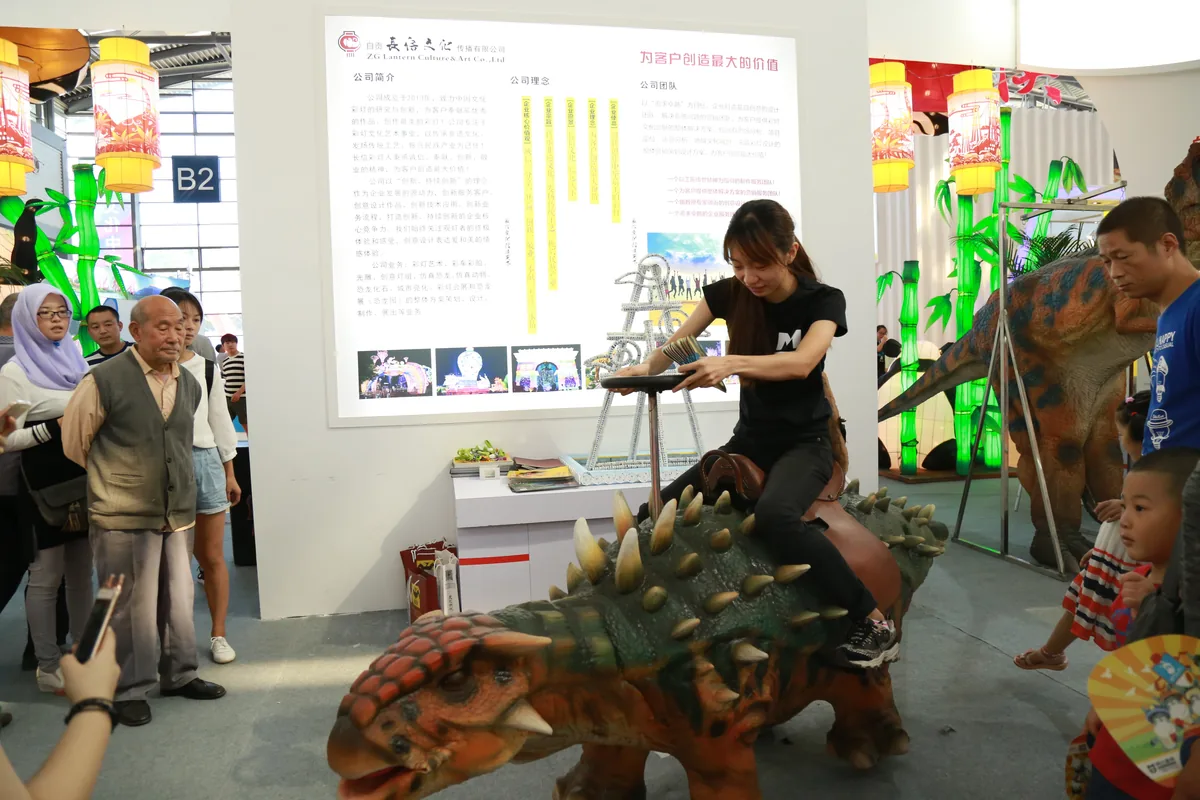
Dinosaur Rides
The Ankylosaurus is the smallest build in this range and the one that fits where nothing else does. At 1.8 metres it works in a shop unit, a hotel lobby, a covered market — sites where a 3-metre ride would be delivered and then found to be in the way.
| Overall size | 1.8 m long × 0.8 m wide × 1.2 m high; custom sizes available |
|---|---|
| Rider weight | Up to 80 kg |
| Rider age | 3 to 12 years |
| Motion | Electric rocking — no travel, the unit stays on its base |
| Control | Coin-operated, remote, or timed cycle |
| Motor | 300 W |
| Power | AC 220 V / 50 Hz |
| Audio | Ankylosaurus call plus background music |
| Body | High-density foam with silicone skin over glass fibre |
This unit does not move across the floor. It rocks on its base, which sounds like a limitation and is the reason it works in tight sites: no clear path to maintain, no wheel tracks on a polished floor, and nothing to steer.
Rocking also means the ride can be placed against a shop window with the head facing out, which is where the passing traffic is. A travelling ride has to be pointed down the concourse and the window as a backdrop goes to waste.
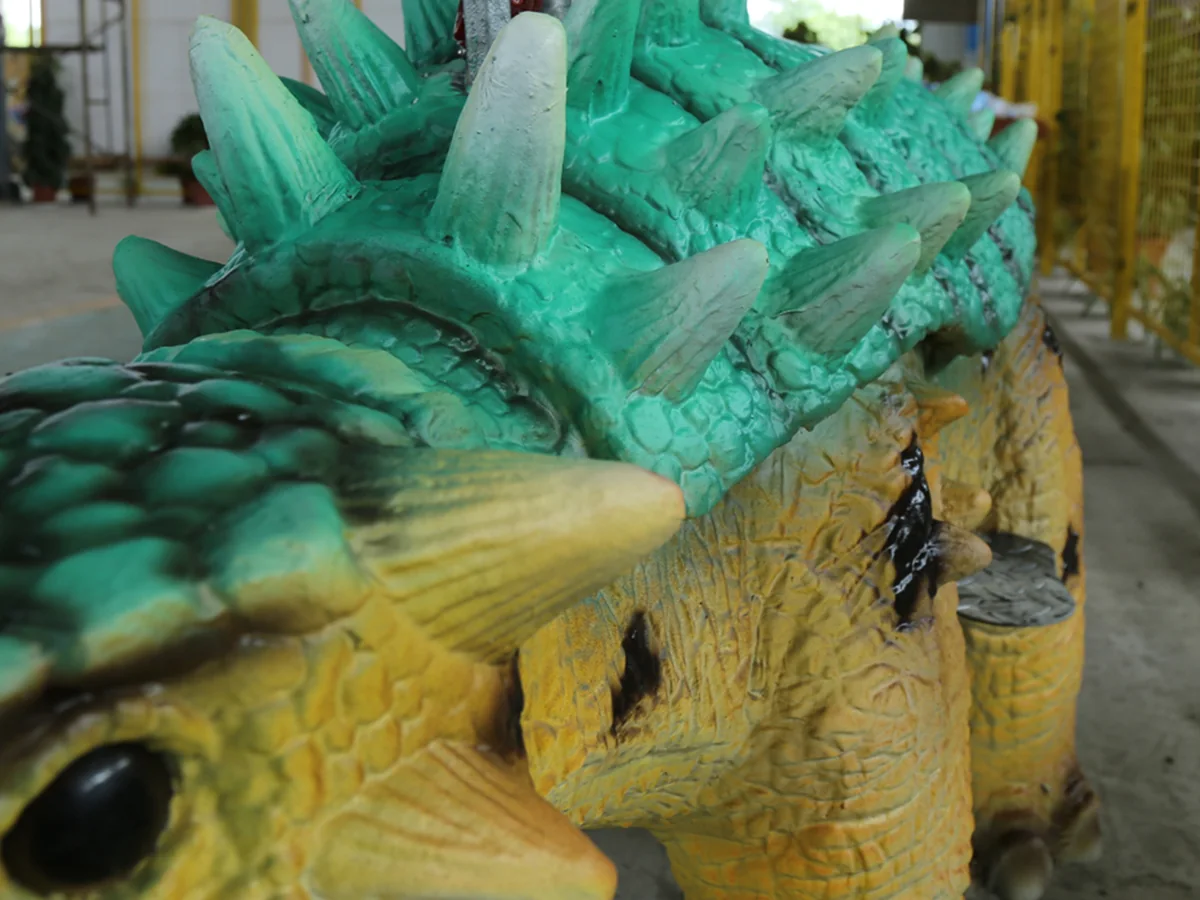
Short and wide is the reason the rating is high. A smaller footprint normally means a lighter rider, but the load here sits over a broad base rather than out on a long frame, so the practical limit stays at 80 kg — enough for an older child and for an adult to steady it without worrying about the structure.
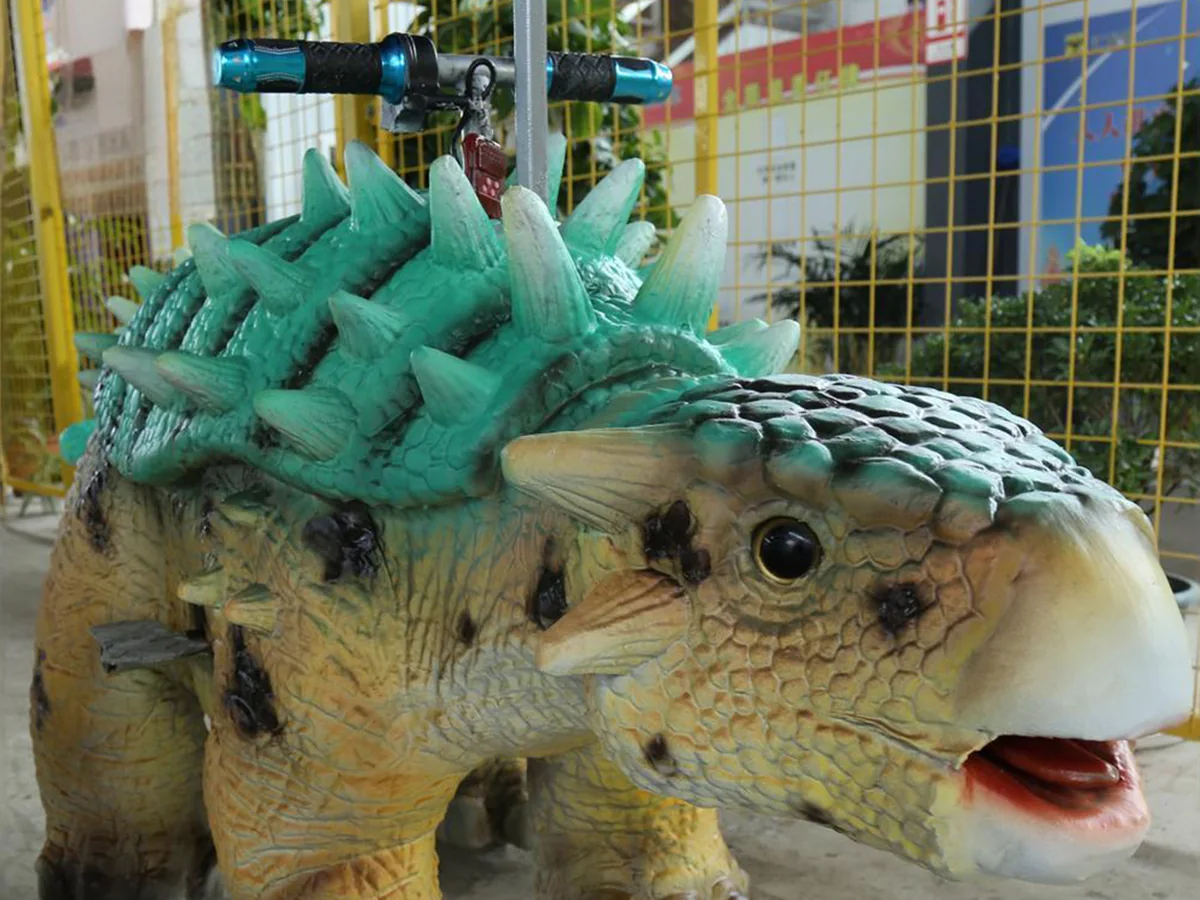
Riders put their hands on the back plates, and the plates are the part that wears. They are moulded with the body and finished so wear happens evenly across the surface rather than in a bright patch where hands land.
The tail club is present and does not swing on the ride version. That is deliberate: a club moving at rider height next to a queue is a hazard with no upside, and disabling it costs nothing in how the ride reads.
Can it move? No. This is the rocking build. If the site needs travel, order the Parasaurolophus or the Dilophosaurus, both of which run on wheels.
Does it need a fixed power point? Yes, 220 V at the ride position. There is no battery option on this build.
What is the floor requirement? Flat and hard. On an uneven floor the rocking motion translates into a wobble, which is uncomfortable and accelerates wear in the base.
Can two children ride at once? The saddle is single. A two-seat version is a different frame, not an add-on.
Fixed 220 V, 300 W, and no battery option — this is the one build in the range that assumes it will not move. That is a constraint and it is also why the footprint is small: no battery box, no charger, no space reserved for a swap pack.
The 1.8-metre body means it fits places the others do not, but the operating clearance is not just the body. Allow for the rider mounting from the side and for a pushchair passing behind. In a shop unit that usually means the ride sits against a wall with the mounting side facing into the space.
Check the supply earth before installation. A rocking ride with a metal base on a tiled floor is exactly the case where a poor earth shows up as a tingle rather than as a fault, and it is the single most common thing an electrician finds on a first visit.
Commissioning is an hour. The rock amplitude is set, the timed cycle length is set against how long a child actually stays on, and the audio volume is set against the room rather than against a workshop.
The timer is the setting worth getting right. Most operators start at three minutes and cut it to two once they watch a queue, because a cycle that runs long produces a bored rider and a restless queue at the same time.
Operator training is short because there is little to break: start, stop, the daily check on the base fixings, and the coin mechanism reset. The base fixings are the one item that needs checking monthly — a rocking ride works them loose slowly, and a loose base is felt as a knock before it is seen.
Materials. High-density foam body with silicone skin over glass fibre, moulded armour plates, electric rocking drive.
Related. the full ride range, mall installations, the Triceratops ride, request a quote.
Same factory and the same build standard. What changes is size, movement set and how the exhibit is meant to be used on site.
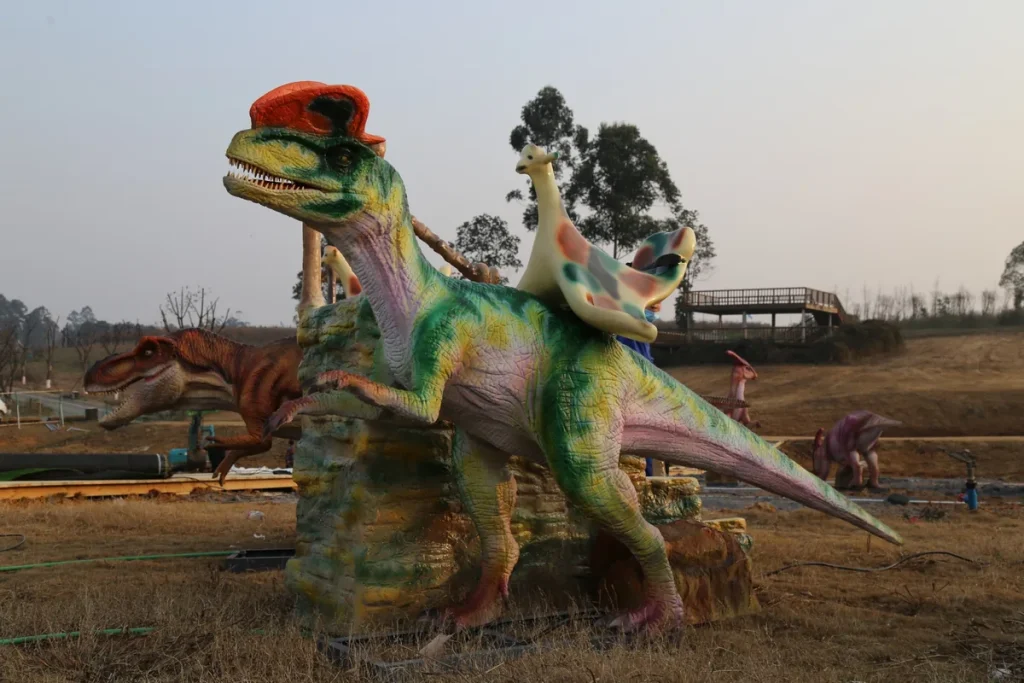
The Dilophosaurus is the unit that gets filmed, and not because of the twin crest. It is the spray. A mouth-level atomiser that puffs […]
View Product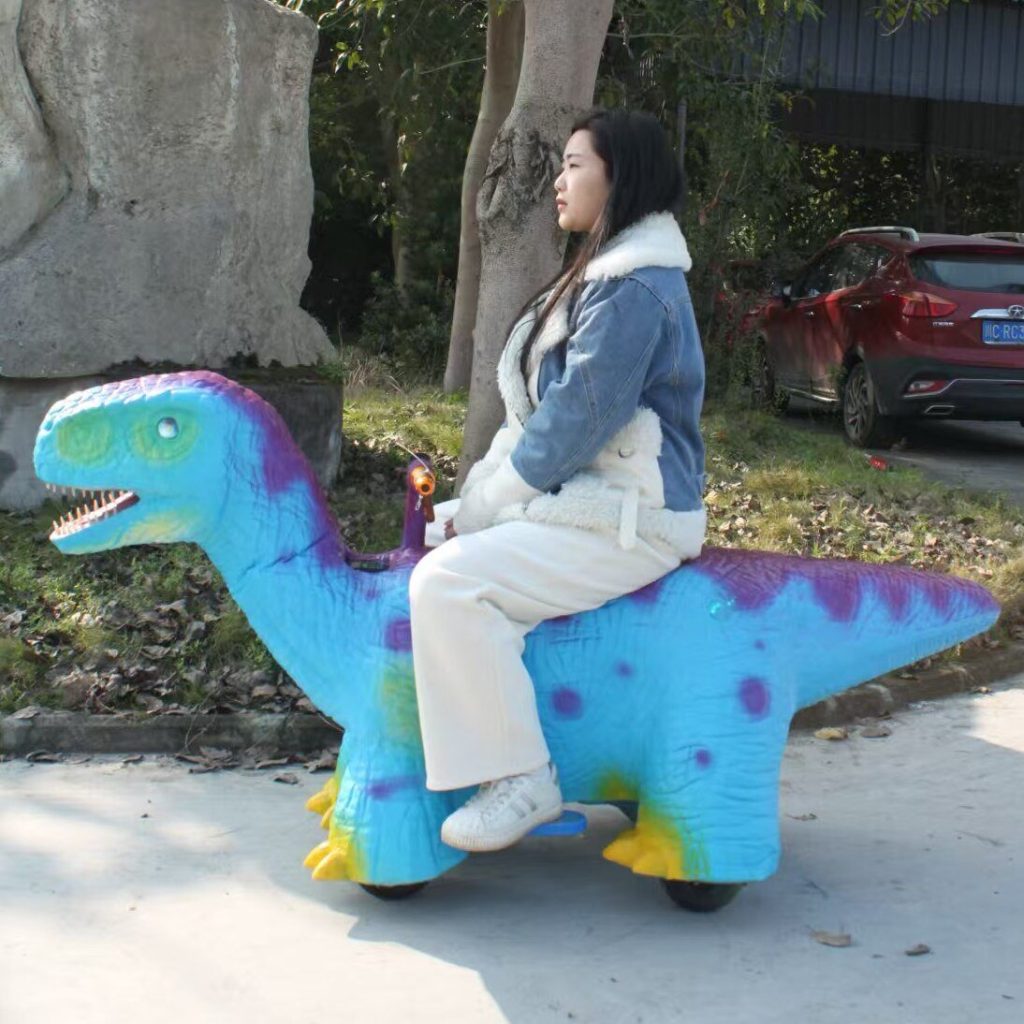
The T-Rex is the one every child asks for, and the one operators are most nervous about — a big head, a heavy tail […]
View Product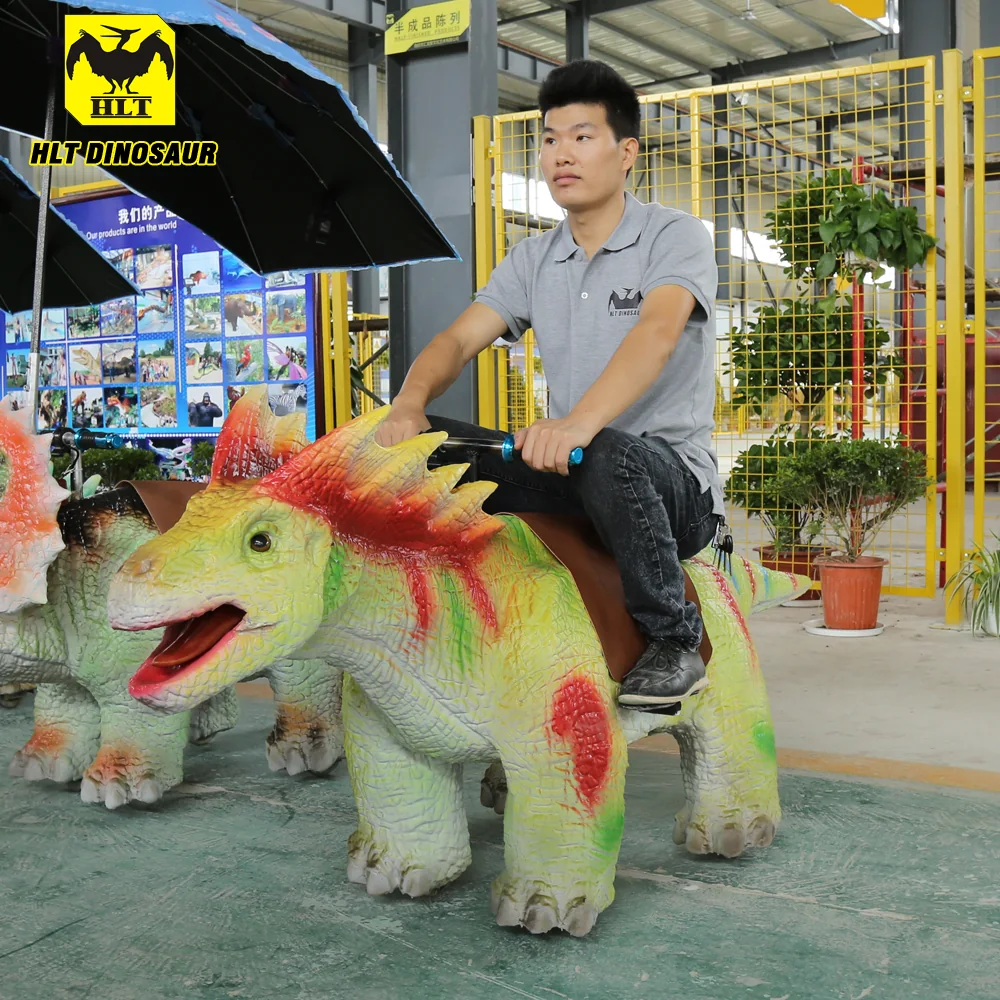
A single-seat kiddie ride earns per child and queues per child. A four-seat unit earns four times per cycle on the same footprint and […]
View ProductThree things buyers usually want settled before they ask for a drawing — what drives the number, how the piece is actually built, and what to check between suppliers.
What Animatronic Products Are Actually Used For Buyers come to animatronic products with one of two jobs in mind, and the job determines almost […]
Read the guide →Which drive system actually suits an animatronic dinosaur? A factory-side comparison of force, precision, noise, maintenance and weather.
Read the guide →If you are planning a museum exhibition, theme park attraction, or shopping mall event, you have probably asked this question: How much does a life […]
Read the guide →Send your dimensions, movement requirements and installation site. You get a realistic budget range and a dated build schedule.
Or email info@hltdino.com — we reply within one business day.