Dinosaur Skeletons & Fossils
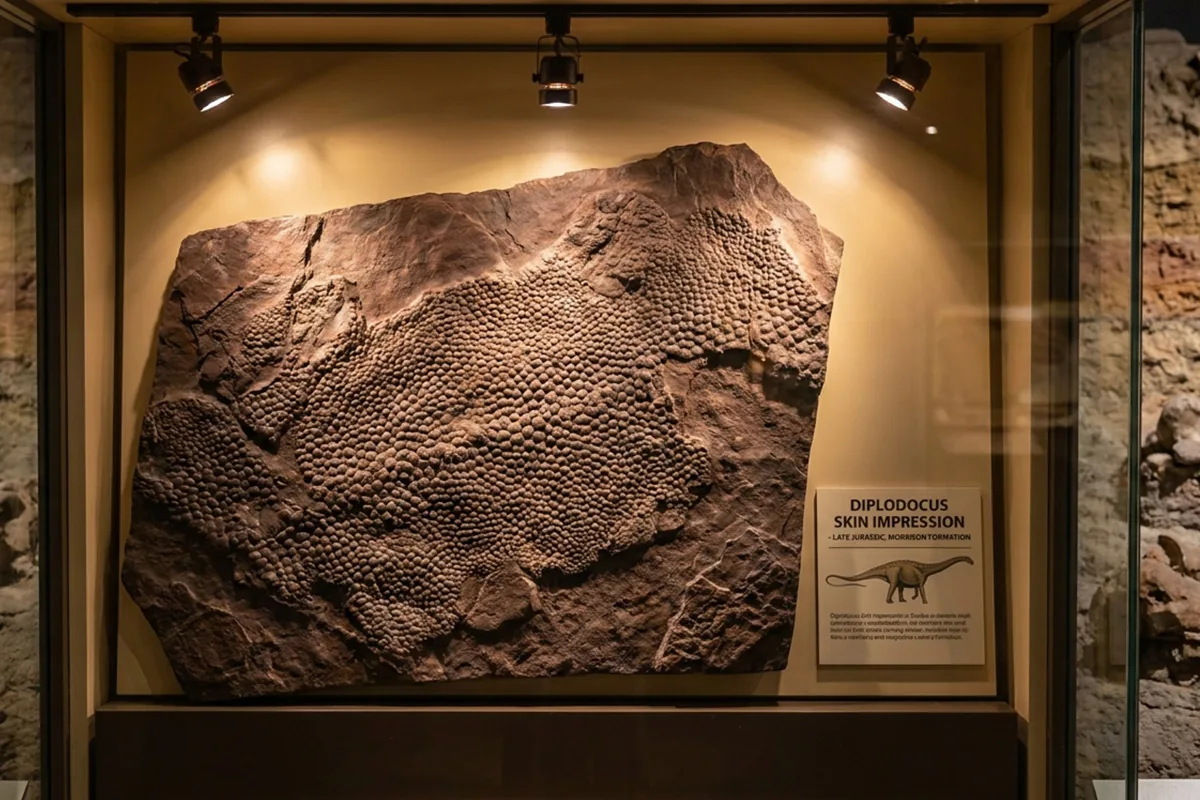
Skin impressions are the hardest fossil to fake and the easiest to ruin. Everyone knows what dinosaur skin is supposed to look like, which means a slab with a repeating texture stamped into it is spotted immediately, even by a visitor who could not name the species.
The Diplodocus impressions show hexagonal scales that vary in size across the body, tighter on the limbs and larger along the flank, with soft tissue creases running between scale fields rather than across them. A repeating texture gives every scale the same size in every direction, and the eye reads that as wallpaper.
We cast from a reconstruction built on the published impressions, so scale size varies across the slab, the crease lines break the fields, and the edges of the piece are irregular rather than cut square. The irregular edge is what makes it look excavated rather than manufactured.
The standard slab is around 60 by 40 centimetres, which is the size that fits a wall case without a custom mount and reads at arm’s length. Larger pieces are made to order for feature walls, and those are usually built as a set of slabs with matching edges rather than one large casting, because a single large casting is heavy, awkward to hang, and impossible to replace if it is damaged.
Wall mounting is the default. A touch table is the second most common use, and it changes the specification: the surface has to take handling, the edges have to be rounded rather than broken, and the piece is usually set into a recessed tray so visitors cannot lift it.
Colour runs from pale sand through to dark umber, following the sediment the impression came from. On this piece the staining sits in the low points between scales and lightens on the raised faces, which is the reverse of how paint normally settles and is the detail that separates a replica from a resin cast with a wash over it.
Texture is not only visual. Visitors touch these pieces, and the difference between a flat cast and one where the scale edges catch a fingernail is the difference between a sign and an artefact.
If the piece is going into a handling collection, say so at order. It changes the resin, the edge treatment and the finish. A display casting that gets handled daily will lose its ageing on the high points within a season, and a handling casting is built to lose it evenly rather than in patches.
| Slab size | 60 × 40 cm standard; larger pieces by order |
|---|---|
| Material | High-density resin |
| Finish | Mineral pigment ageing, darker in the low points between scales |
| Edge | Irregular excavated edge as standard; dressed edge for handling |
| Mount | French cleat with backing board |
| Handling spec | Available for touch tables, with dressed edges and layered finish |
| Duty | Indoor |
Is it cast from a real impression? It is cast from a reconstruction based on published Diplodocus skin impressions. We do not have access to the original slabs, and we will say so rather than imply otherwise.
Can it be made in another species’ skin? Yes, where published impressions exist. Species without good skin records are guesswork and we would rather decline than invent one.
Can it be wall mounted without a case? Yes, on a French cleat with a backing board. In a public hall a case or a rail is still the better answer.
Does it come with interpretation? A species and formation label is supplied flat-packed for you to mount at the height your visitors read at.
Materials. High-density resin cast with mineral pigment ageing finish.
Related. the skeleton and fossil range, museum exhibit layout, single bone replicas.
Same factory and the same build standard. What changes is size, movement set and how the exhibit is meant to be used on site.
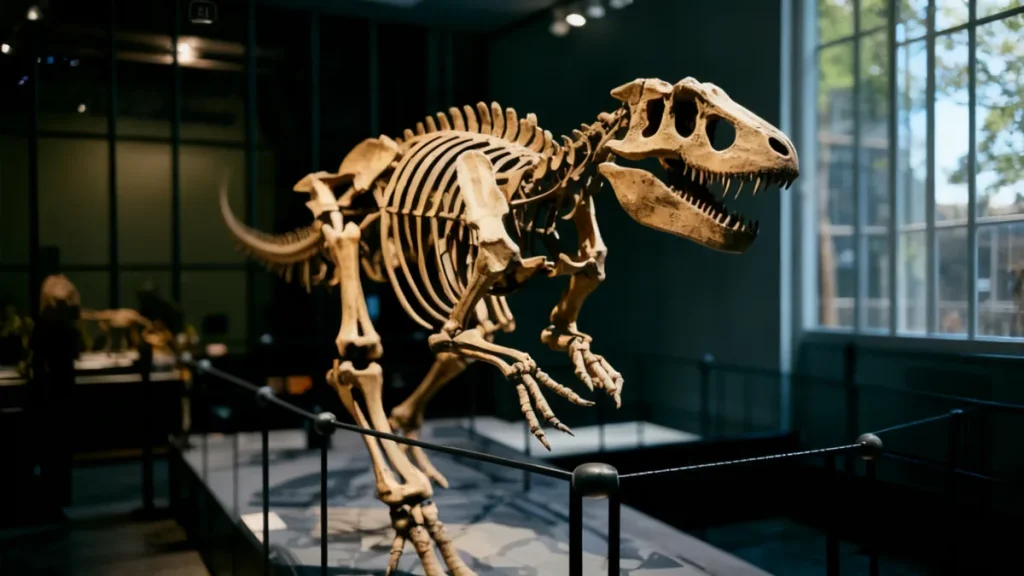
Above about ten metres a dinosaur skeleton stops being an exhibit and becomes a structure. The engineering changes category: wind load replaces handling as […]
View Product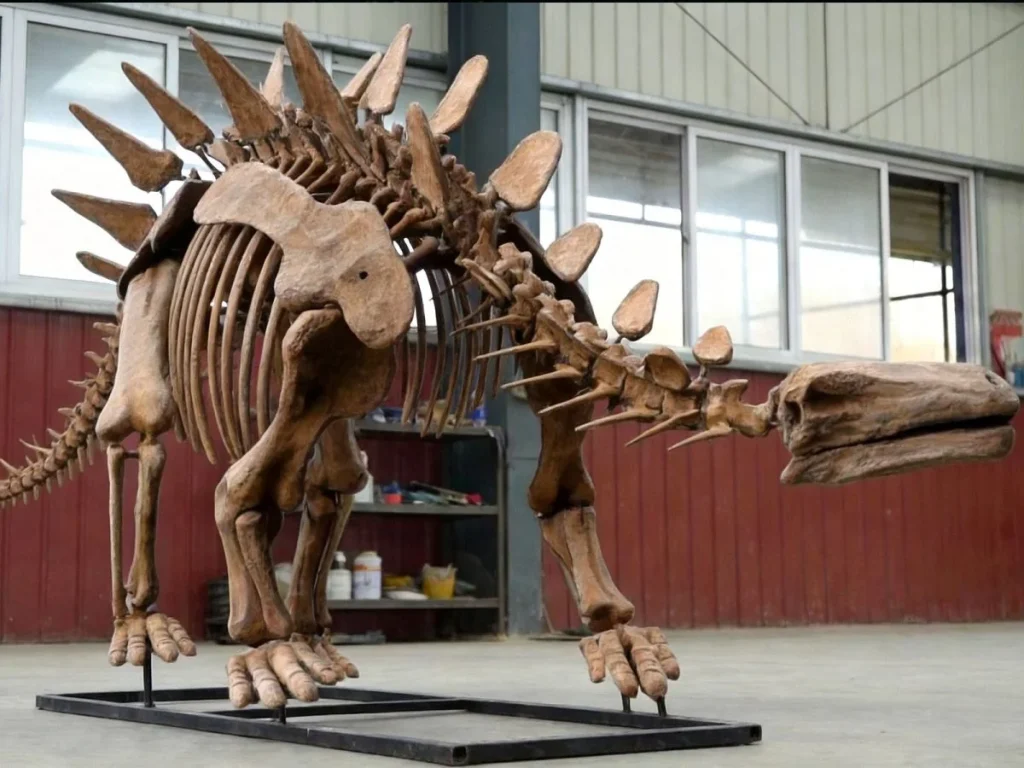
A skeleton is easier to read than a living reconstruction, and harder to get right. With no skin to hide behind, every proportion is […]
View Product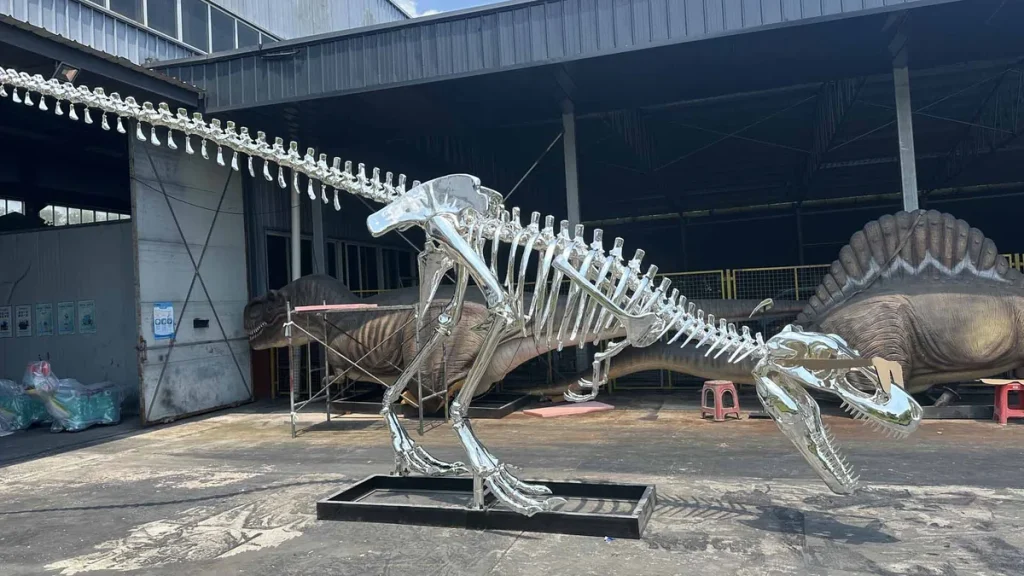
A dinosaur skeleton replica is not a model of bones. It is a steel structure that happens to be dressed in bones, and every […]
View ProductThree things buyers usually want settled before they ask for a drawing — what drives the number, how the piece is actually built, and what to check between suppliers.
From fossil reference to finished skin — how proportions, texture, colour and weathering are decided, and what separates a realistic build from a cartoon one.
Read the guide →Frame, drives, skin, sensors, sound and weatherproofing — the six systems behind every animatronic dinosaur, and how each one changes cost and behaviour.
Read the guide →Choosing the right animatronic dinosaurs for your venue is not just about picking the most famous species — it is about matching each dinosaur […]
Read the guide →Send your dimensions, movement requirements and installation site. You get a realistic budget range and a dated build schedule.
Or email info@hltdino.com — we reply within one business day.