Animatronic Animals
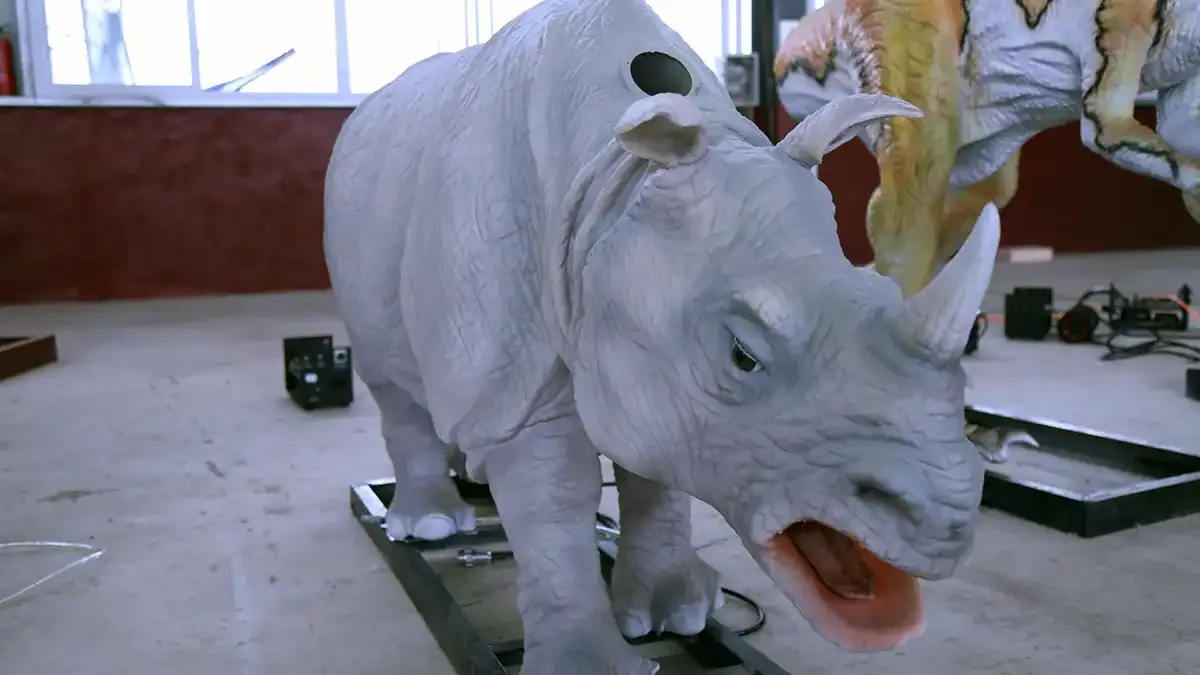
Life-Size Animatronic White Rhino
Animatronic white rhino built for year-round outdoor display — mouth and vocal system, head raise, concrete base for loose ground or grass.
Animatronic white rhino built for year-round outdoor display — mouth and vocal system, head raise, concrete base for loose ground or grass.
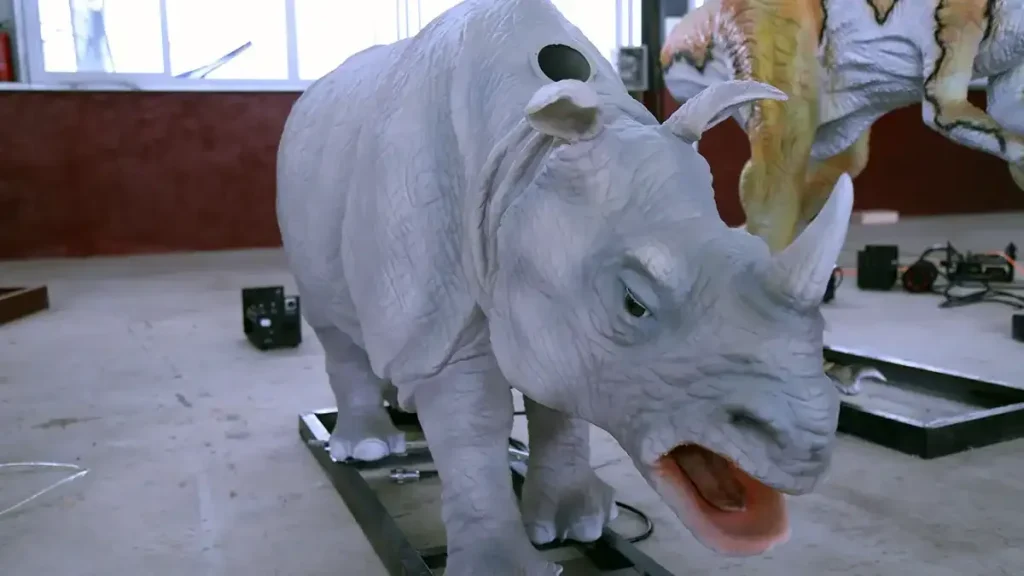
A white rhino is not white. The name comes from the Dutch wijd — wide — describing the mouth, and that mouth is the whole animal. It is a grazing machine: square lip, head carried low, and a body built to spend its life eating grass. A rhino built with its head up reads as a different species.
| Species | White rhinoceros (Ceratotherium simum) |
|---|---|
| Type | Animatronic, or static on request |
| Size | Life-size; custom body length from 1.2 m to 3.5 m |
| Material | Internal frame, high-density foam, reinforced hand-finished surface |
| Surface | Hand-painted weathering with UV-resistant topcoat |
| Base | Textured reinforced concrete or FRP composite, ground-anchored |
| Animation | Jaw open and close, head raise, ear-flattening trigger, idle motion |
| Sound | Recorded snort and breath cycle, synchronised with the jaw |
| Trigger | Motion sensor, push button or scheduled loop |
| Power | 110–220 V AC, weatherproof control box, internal wiring |
| Duty | Indoor and outdoor, rated to 0 °C; cold-rated option available |
| Support | 12 months mechanical / 12 months electronic |
The wide square lip is the identifier. Black rhinos have a hooked lip for browsing shrubs; white rhinos have a flat mouth for cropping grass, and the head hangs low to reach it. Build a white rhino with a black rhino’s head carriage and the silhouette is wrong from fifty metres — which is exactly where a zoo visitor first sees it.
The ear-flattening trigger is the second detail. Rhinos flatten their ears back when alert, and an animal that does it on approach rather than turning its head reads as noticing you rather than performing. It is a small movement and it is the one visitors remember.
The build runs from a 1.2 m calf to a 3.5 m adult on the same structure. The base is a textured reinforced concrete or FRP platform, ground-anchored — a rhino at 3.5 metres is heavy enough that a surface-mounted base will move.
Standard rating is 0°C. Below that the hydraulics and the skin both behave differently, so a cold-rated option is specified at order rather than added later. The recorded snort and breath cycle is synchronised to the jaw; a site that mutes the audio loses half the effect.
Zoos use it as a collection match — a white rhino where the real herd is visible from the path. Safari parks use it as a landmark at a viewpoint. Indoor orders are usually museum galleries, where side lighting and the low head carriage work with a low camera angle.
Is it a white rhino or a black rhino? White. Square lip, low head carriage, larger body. The black rhino is a different head sculpt.
Can it be static? Yes, and many orders are. Head and jaw animation matters at close range, so a static build suits barrier or elevated positions.
Does it survive winter? To 0 °C as standard. Below that a cold-rated specification is required and is set at order.
How is it anchored? Ground anchors through an FRP or concrete base; the anchor layout ships with the drawing.
A single 110–220 V supply at the animal, weatherproof control box at the base, all wiring internal. The load is modest — this is a head and jaw build, not a walking machine.
The site requirement is the base: a 3.5-metre rhino needs a hard standing and a drainage path, because water sitting under the platform is what ages the base before the animal.
Assembly, then three settings: head raise height, jaw cycle, and the ear-flattening trigger range.
The ear trigger is worth taking time over. Set too wide and it fires at everyone walking past; set to the point where visitors actually stop, and the animal appears to react to each group.
Materials. Internal frame, high-density foam, reinforced hand-finished surface with UV-resistant topcoat, FRP or concrete base.
Related. the animatronic animal range, the lion, zoo installations, request a quote.
Same factory and the same build standard. What changes is size, movement set and how the exhibit is meant to be used on site.
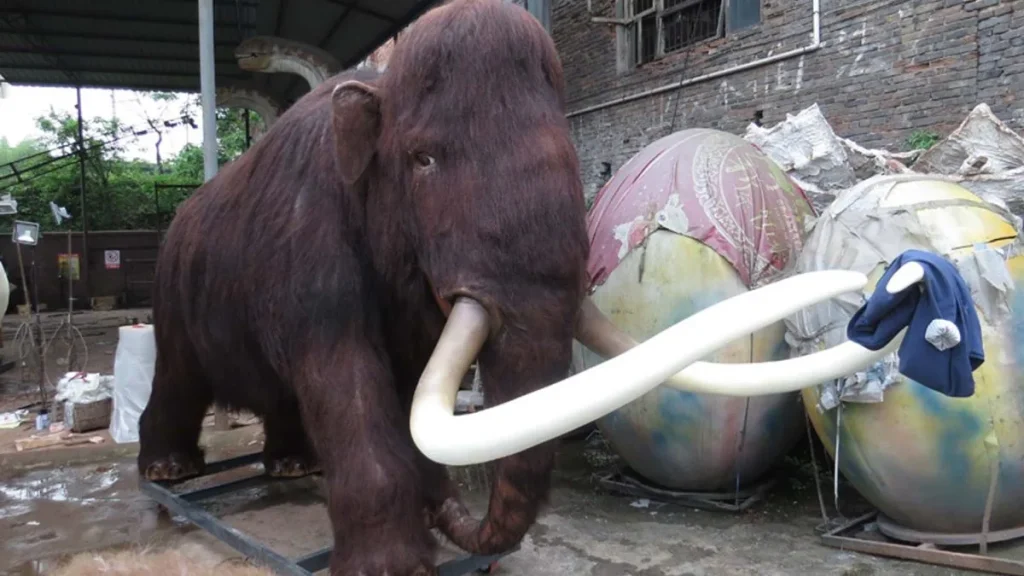
Life-size animatronic woolly mammoth — 4 m at the shoulder, 3 m tusks, articulating trunk and proximity triggers for Ice Age halls.
View Product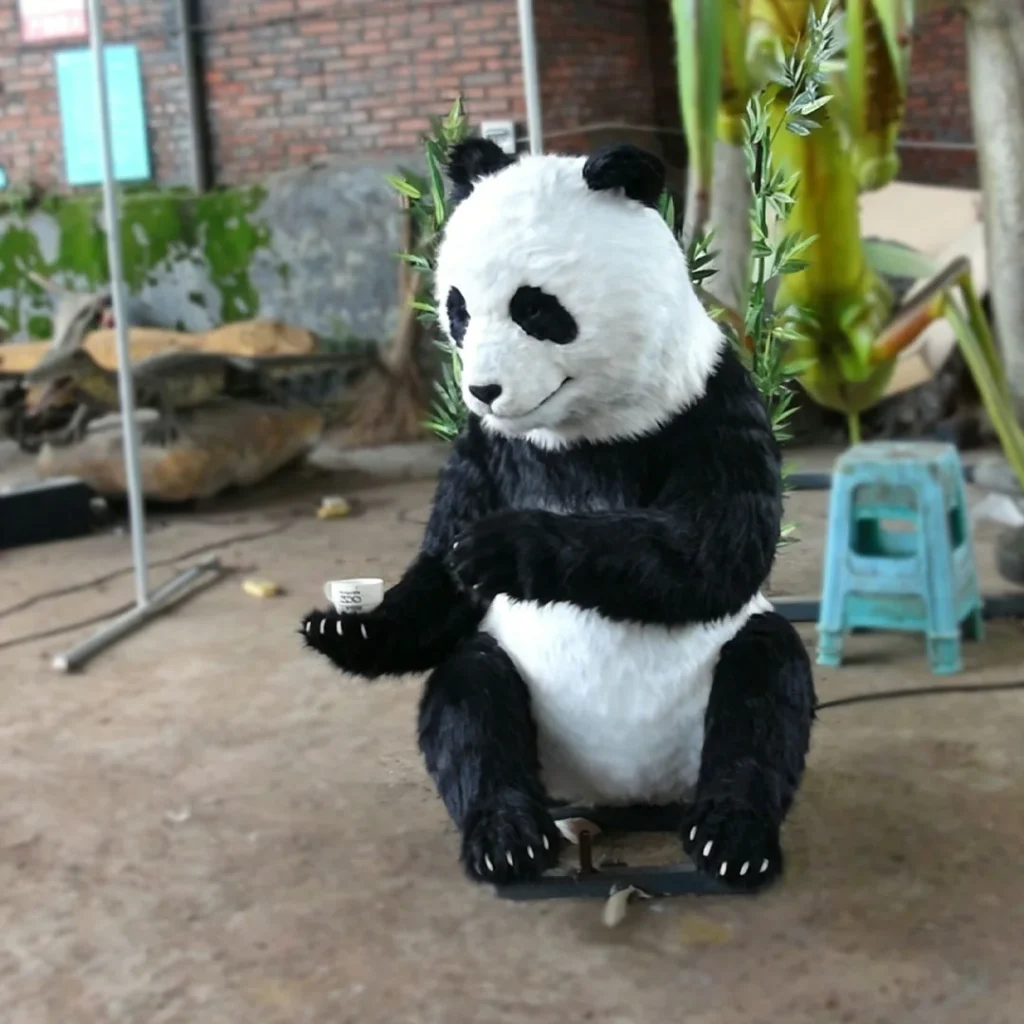
A panda is the most photographed animal in the catalogue and the one where a small error is most visible. Everyone has seen a […]
View Product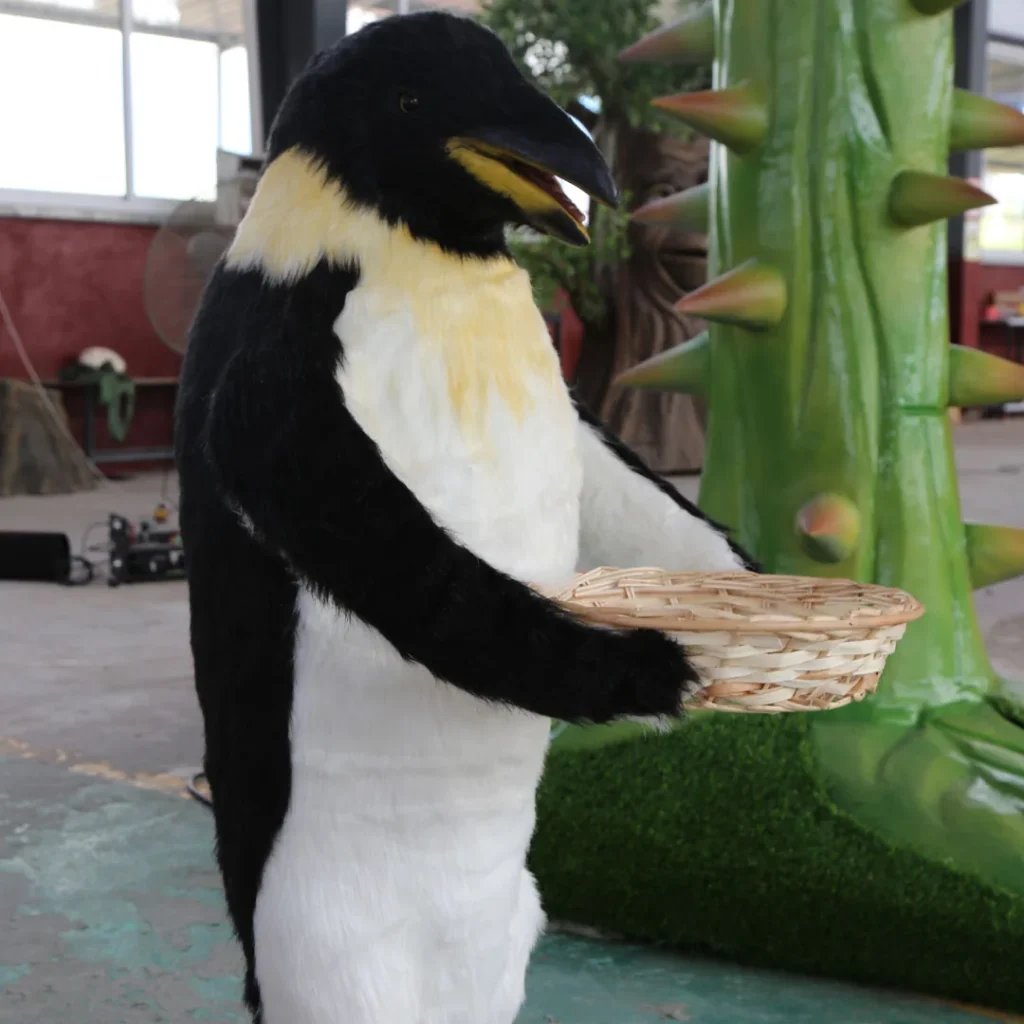
One penguin reads as a toy. Five, at different heights, with one bent over and one mid-waddle, read as a colony — and a […]
View ProductThree things buyers usually want settled before they ask for a drawing — what drives the number, how the piece is actually built, and what to check between suppliers.
Extinct and hard-to-keep species, sculpted to anatomy keepers can check — where animatronic animals earn a place beside a living collection.
Read the guide →From fossil reference to finished skin — how proportions, texture, colour and weathering are decided, and what separates a realistic build from a cartoon one.
Read the guide →How Much Does an Animatronic Dinosaur Cost? Understanding the Key Cost Factors If you are planning a museum exhibition, theme park attraction, or promotional […]
Read the guide →Send your dimensions, movement requirements and installation site. You get a realistic budget range and a dated build schedule.
Or email info@hltdino.com — we reply within one business day.