Animatronic Dinosaurs
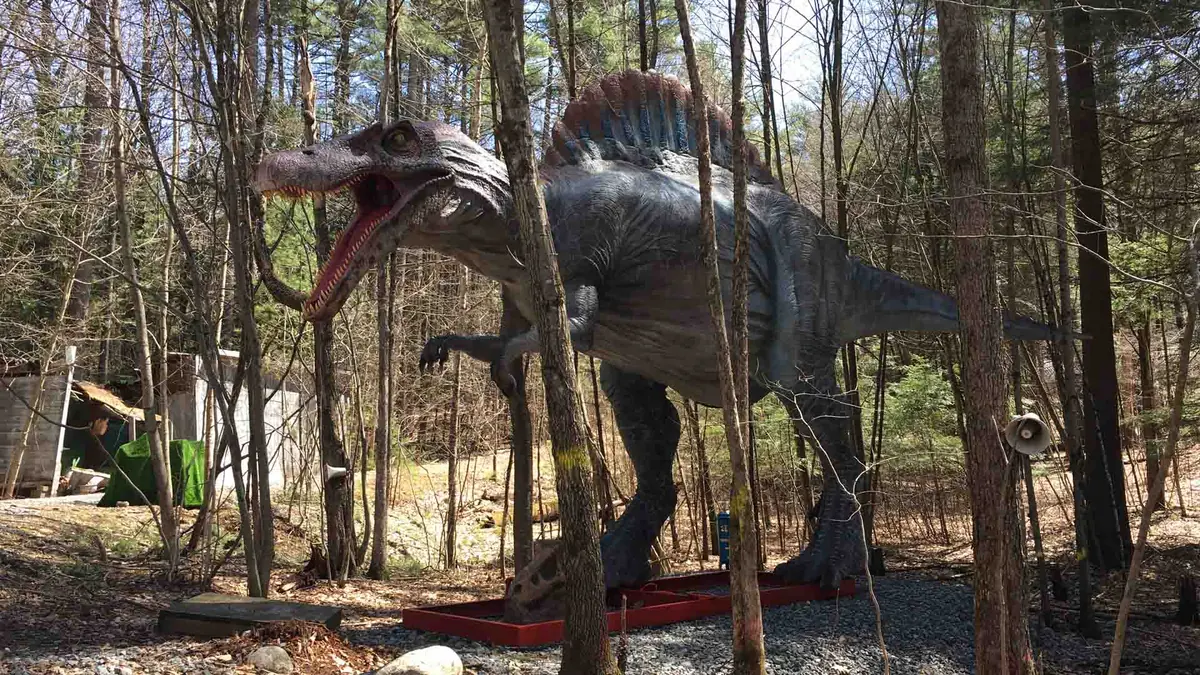
Animatronic Spinosaurus
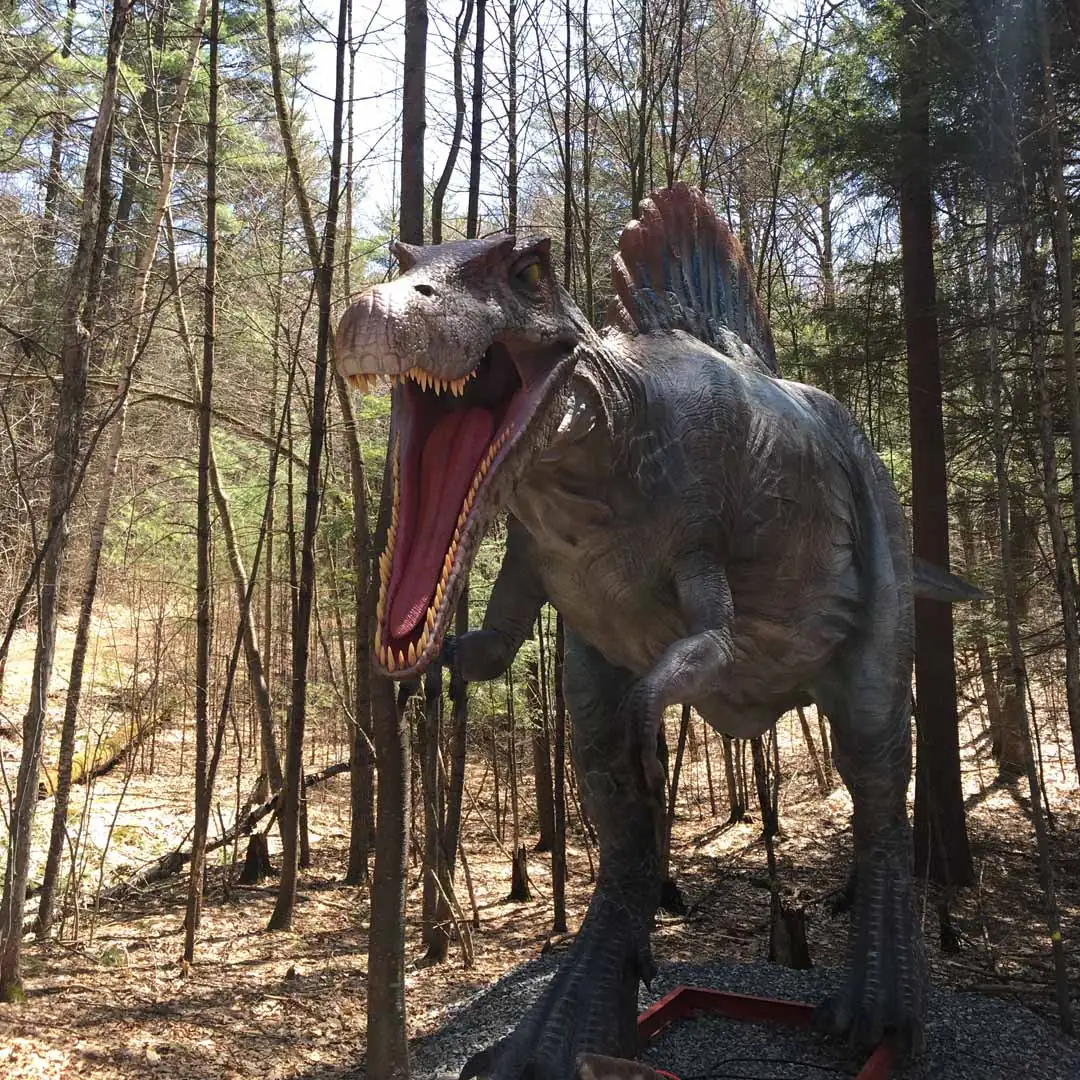
Life-size animatronic Spinosaurus with its signature sail, crocodile-like snout and jaw, neck and tail motion — built to order, outdoor rated.
Life-size animatronic Spinosaurus with its signature sail, crocodile-like snout and jaw, neck and tail motion — built to order, outdoor rated.
The Spinosaurus is the only large theropod identified at a glance from the side, because of the sail. It is also the one most often built wrong: the sail is skin stretched over the neural spines, not a row of separate fins, and a build that casts it as fins loses the silhouette that makes the animal worth buying.
| Species | Spinosaurus aegyptiacus |
|---|---|
| Size options | 4 m / 6 m / 8 m / 10 m / 12 m — custom lengths available |
| Height | 2.5 m to 6 m at the sail, depending on length |
| Frame | Internal steel frame |
| Skin | Premium hand-finished surface (patent ZL 2022 1 0224489.5) |
| Animation | Basic / Standard / Premium movement sets |
| Power | About 200 W per 6 m unit |
| Eyes | Optional LED, in addition to natural coloration |
| Duty | Outdoor rated |
| Lead time | 30 to 45 days |
The sail runs from the shoulders to the tail as a continuous membrane. Built as separate fins it reads as a stegosaurus with a bad back — and it is the first thing a museum visitor will notice, because everyone has seen the reconstruction drawings.
Because the sail is a large flat surface, it also takes the weather differently from the rest of the body. It needs both-side finishing and a support structure behind it, or it drums in wind and the paint crazes along the spine line in the first season.
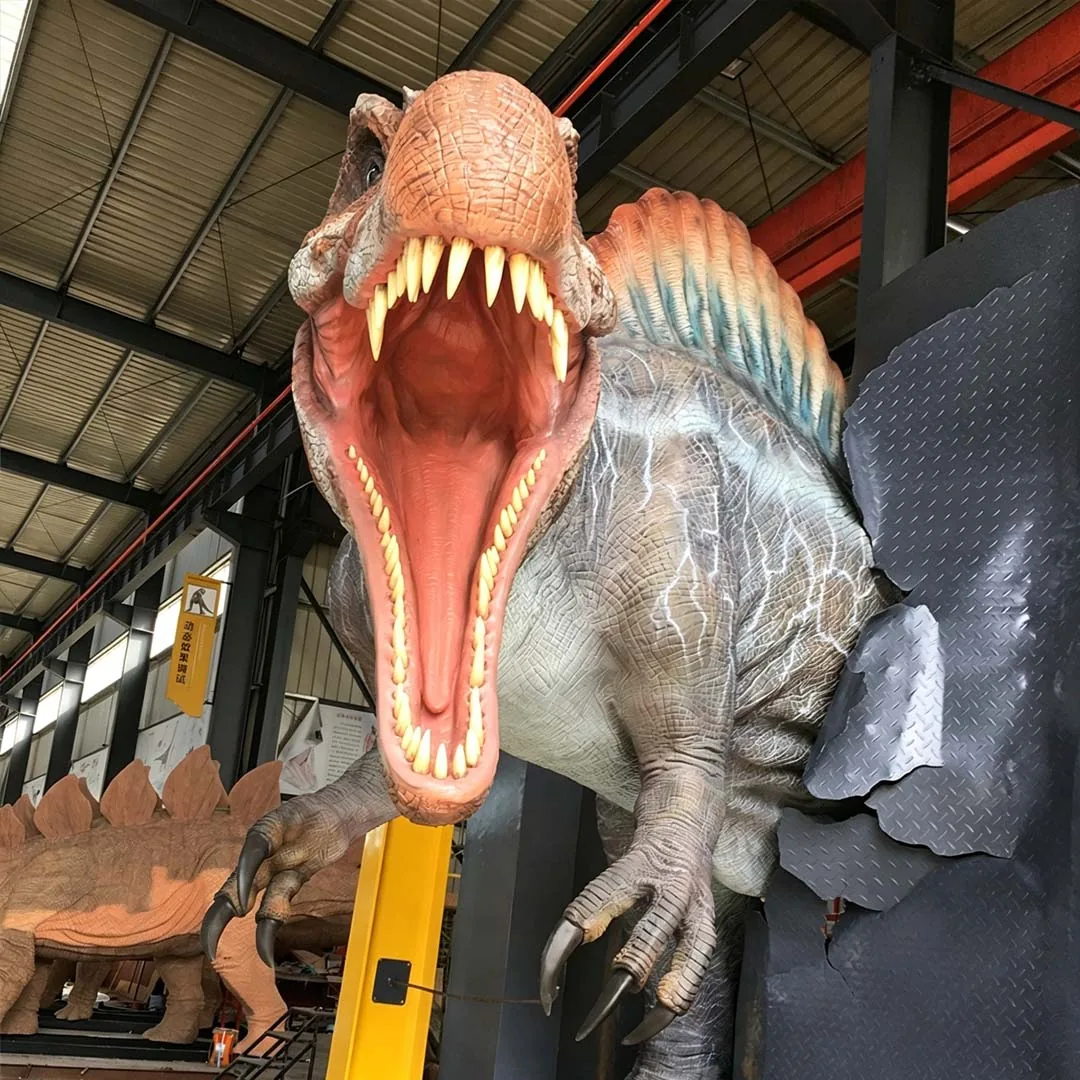
Four metres is the indoor build: it fits a hall, reads at arm’s length and suits a museum gallery. Six to eight metres is the park build, where the animal is seen from a path at fifteen or twenty metres. Ten to twelve metres is the entrance piece — the sail becomes a landmark visible from outside the gate, and it is also the length where transport sections start needing a crane plan.
The power figure follows the length: about 200 W per six-metre unit, which stays modest because this is a head, neck and tail build rather than a walking machine.
Can the sail be made shorter? Yes, but it stops being a Spinosaurus. The sail height is set by the length you order.
Does it need a water feature? No, and most orders do not have one. The Spinosaurus works as a dry exhibit; a water setting is atmospheric, not structural.
Which movement level? Standard is the usual choice — head, neck, jaw and tail. Premium adds independent limb motion, which on a 12-metre animal mostly adds load.
How is it shipped? Sectional. On lengths above eight metres the sail is separated from the body for transit and refitted on site.
110–240 V AC at the animal position. The load is modest, so the constraint is the cable route rather than the circuit: on a long trail the drop has to be planned along the path before the position is fixed.
Outdoors, the base needs drainage and a hard standing. A 12-metre animal on soil settles unevenly, and an uneven Spinosaurus shows it at the hip line, which is exactly where the eye goes.
The sail is checked against the drawing before the motion is run — a sail that leans is obvious from every angle. Then the movement set is tuned: the neck sweep is reduced until it reads as slow, the jaw cycle is slowed, and the tail is set to its narrowest useful arc.
On a large theropod the fastest way to ruin the piece is to let it move like a small one. The tuning is the difference between an animal and a machine at this scale.
Materials. Internal steel frame, premium hand-finished silicone surface (patent ZL 2022 1 0224489.5), continuous sail membrane, optional LED eyes.
Anything above eight metres ships in sections, with the sail separated from the body. On site the order is fixed: base first, body sections next, sail last — because the sail is the part that has to be aligned against the spine, and it cannot be adjusted once the body is dressed. A 10 to 12 metre build needs a telehandler and two to three days with a small crew.
Related. the animatronic dinosaur range, the Brachiosaurus build, theme park installations, request a quote.
Same factory and the same build standard. What changes is size, movement set and how the exhibit is meant to be used on site.
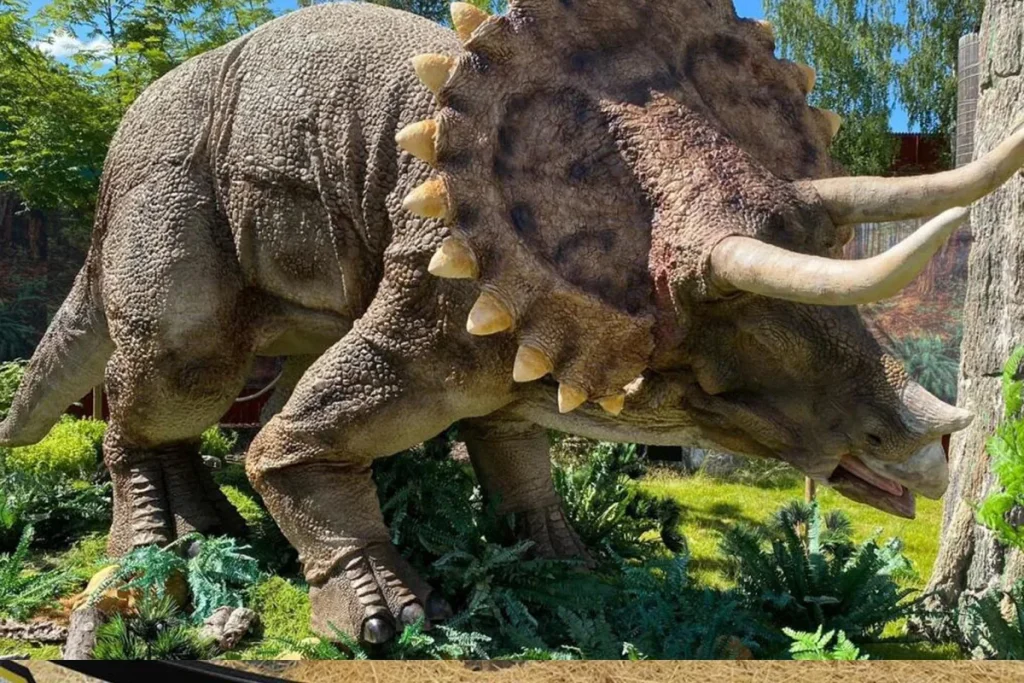
A 7–9 m three-horned exhibit — the family photo piece with steel-cored horns and a wind-rated frill.
View Product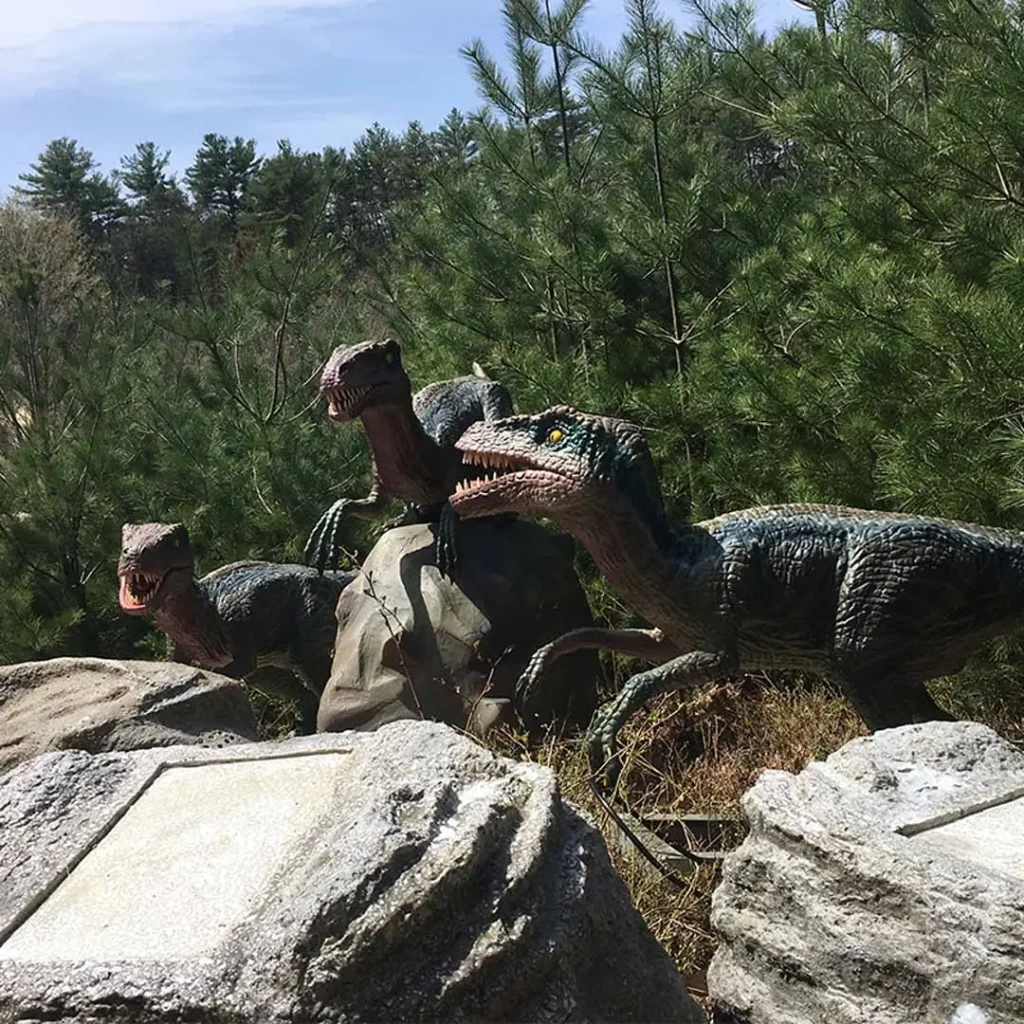
A single Velociraptor in a hall reads as a large bird. Three of them, in different stances, facing different directions, read as a hunt […]
View Product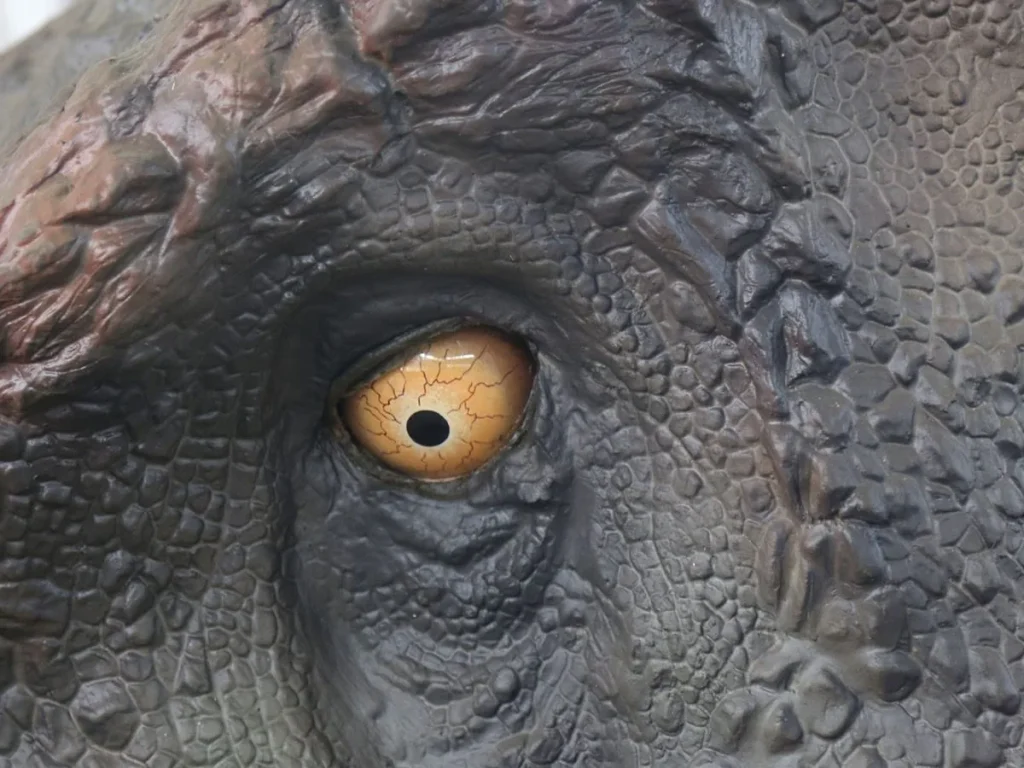
Museum-grade interactive animatronic dinosaur with 3 m proximity sensing, touch response and dual behaviour modes for science centers and parks.
View ProductThree things buyers usually want settled before they ask for a drawing — what drives the number, how the piece is actually built, and what to check between suppliers.
Animatronic Dinosaur Buying Guide for Museums & Theme Parks Choosing the right animatronic dinosaur for your museum, theme park, or zoo is one of […]
Read the guide →From fossil reference to finished skin — how proportions, texture, colour and weathering are decided, and what separates a realistic build from a cartoon one.
Read the guide →Why Motor Choice Matters More Than Buyers Expect Motor selection is usually treated as a manufacturing detail. It is not. It is the decision […]
Read the guide →Send your dimensions, movement requirements and installation site. You get a realistic budget range and a dated build schedule.
Or email info@hltdino.com — we reply within one business day.