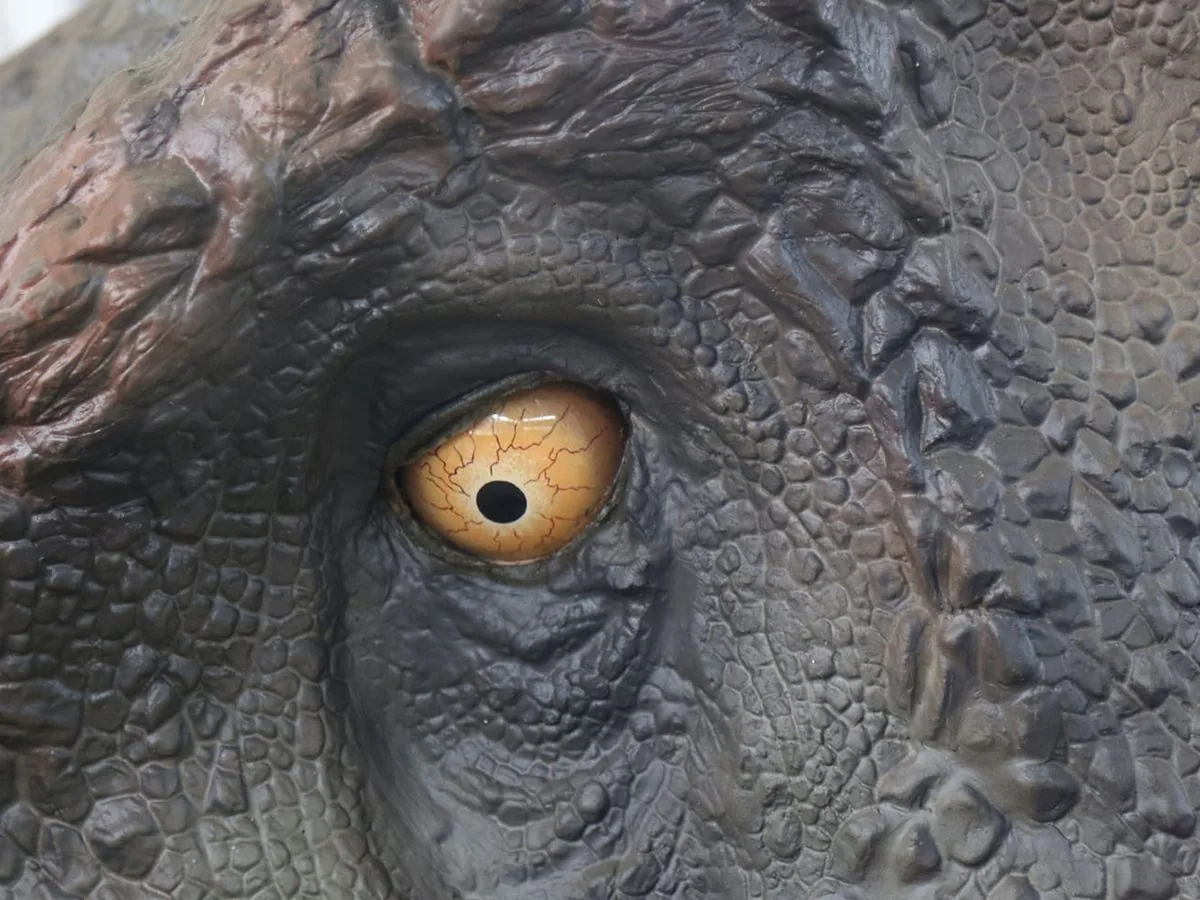
Animatronic Dinosaurs
Interactive Animatronic Dinosaur Exhibit
Museum-grade interactive animatronic dinosaur with 3 m proximity sensing, touch response and dual behaviour modes for science centers and parks.
Museum-grade interactive animatronic dinosaur with 3 m proximity sensing, touch response and dual behaviour modes for science centers and parks.
An interactive exhibit is a system, not an animal: sensors, behaviour logic, audio and the build itself. The failure mode is always the same — an animal that reacts to everything reacts to nothing, and visitors learn within ten seconds that nothing they do matters.
| Interaction | Infrared proximity (3 m range), capacitive touch sensors |
|---|---|
| Audio | Multi-track player with USB content upload |
| Behaviour modes | Idle (ambient breathing, periodic movement) and interactive |
| Material | High-density surface finish, weatherproof frame, fibreglass sub-structure |
| Power | 110–240 V AC, 600 W average / 1200 W peak |
| Control | PLC with pre-programmed sequences, USB configurable |
| Operating temp | −20 °C to +50 °C outdoor; unlimited indoor |
| Safety | CE certified, automatic shutdown sensor, soft-touch surface |
| Scale | 2 m juvenile to 8 m adult on the same platform |
| Support | 12 months mechanical and electronics |
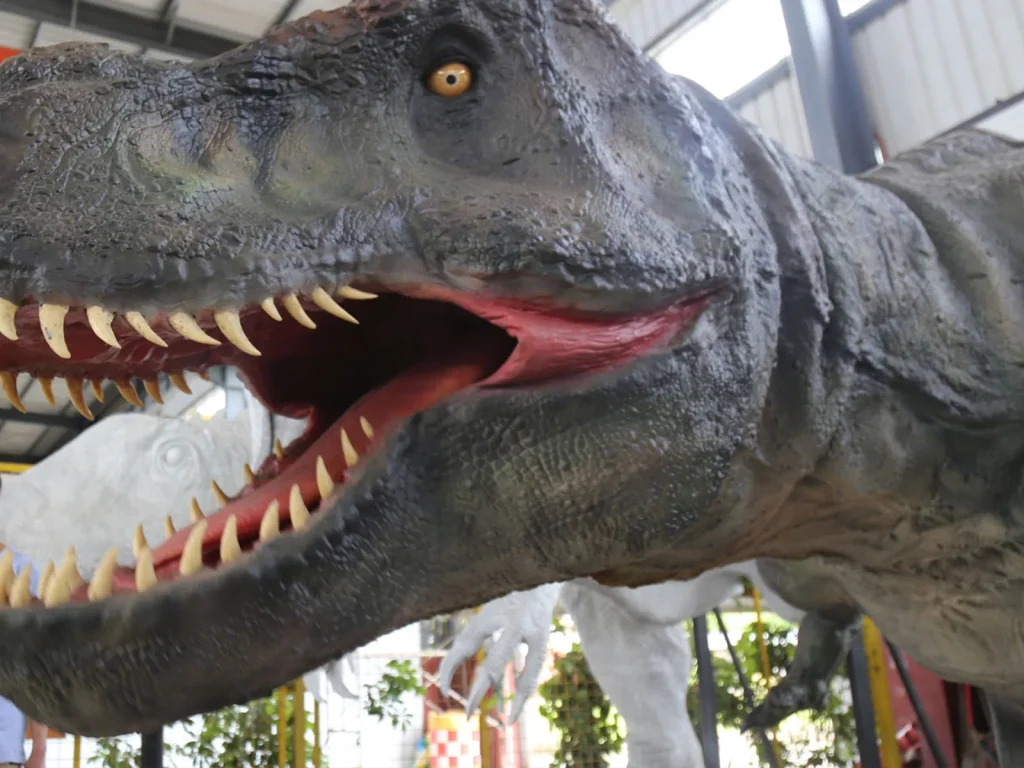
Infrared proximity at a 3-metre range, capacitive touch sensors, and a multi-track audio player with USB content upload. Two behaviour modes: idle with ambient breathing and periodic movement, and interactive with responses on approach or touch.
The design intent is that visitors discover the response. That means the idle mode has to be genuinely quiet — an animal that is already performing has nowhere to go when someone approaches.
High-density surface finish over a weatherproof internal frame with a fibreglass sub-structure. PLC control with pre-programmed behaviour sequences, USB-configurable. 600 W average and 1200 W peak on 110–240 V AC, rated −20 °C to +50 °C outdoors.
CE certified with an automatic shutdown sensor and a soft-touch surface finish — the safety items matter more here than on a static exhibit, because interaction means people get close.
The platform runs from a 2-metre juvenile to an 8-metre adult on the same control system, so a venue can start with one interactive animal and add more without a second control design.
What sensors are used? Infrared proximity at 3 metres plus capacitive touch. Both are configurable through the PLC.
Can the behaviour be changed later? Yes — sequences are USB-configurable, so new behaviour can be loaded without new hardware.
Why 1200 W peak? The peak covers simultaneous animation plus audio start-up. Specify a circuit for the peak, not the average.
Is it safe for children touching it? Pinch points are enclosed, the surface is soft-touch, and CE certification includes an automatic shutdown sensor.
600 W average and 1200 W peak on 110–240 V AC. The peak is the number for the circuit, because audio start-up and animation can coincide.
Indoors the constraint is sensor placement rather than power: an infrared sensor in a busy atrium fires constantly. Plan the approach geometry before the position is fixed.
Commissioning here is behaviour design, not just tuning. The idle mode is set first and set quiet. Then the interactive responses are timed: a short delay before reacting reads as noticing, while an instant reaction reads as a switch.
Then the trigger zones are walked with a real visitor path. This is the only way to set the 3-metre range correctly, and it is why the exhibit cannot be fully commissioned in a workshop.
Materials. High-density surface finish, weatherproof internal frame, fibreglass sub-structure, PLC control with USB-configurable sequences, CE certified.
Behaviour sequences load from USB, which means an exhibit can be re-programmed for a new season without new hardware. That is worth planning for at order: a venue that intends to change the sequence should ask for the sequence files in an editable form, because a locked sequence turns a flexible platform into a fixed exhibit within a year. The same applies to audio — the multi-track player accepts new content, but only if the file format is specified up front.
Related. the interactive exhibit range, the motion-activated T-Rex, mall installations, request a quote.
Same factory and the same build standard. What changes is size, movement set and how the exhibit is meant to be used on site.
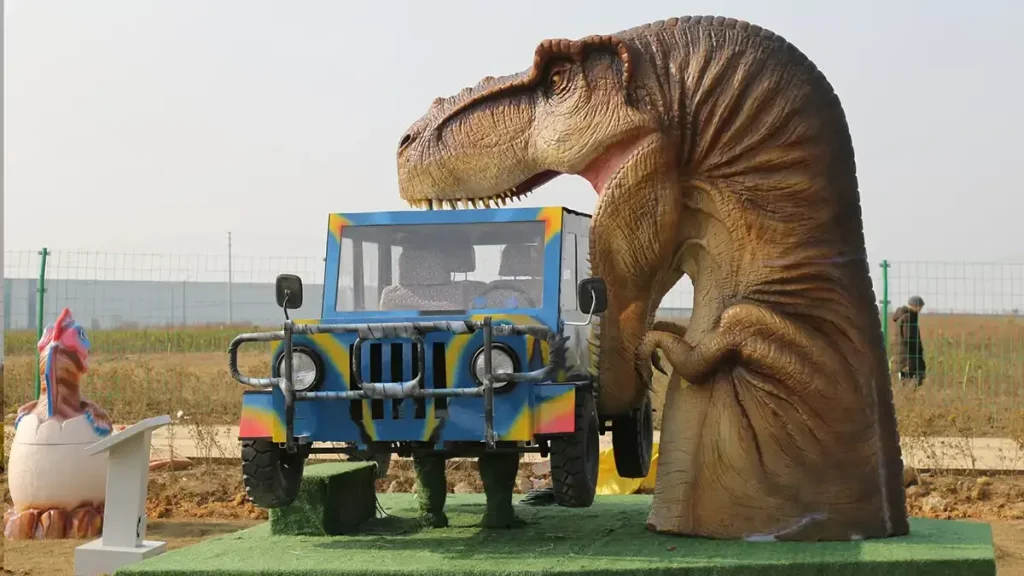
This is a photograph that sells itself. A visitor sits in a jeep cockpit, a T-Rex head comes down over the roof, the jaws […]
View Product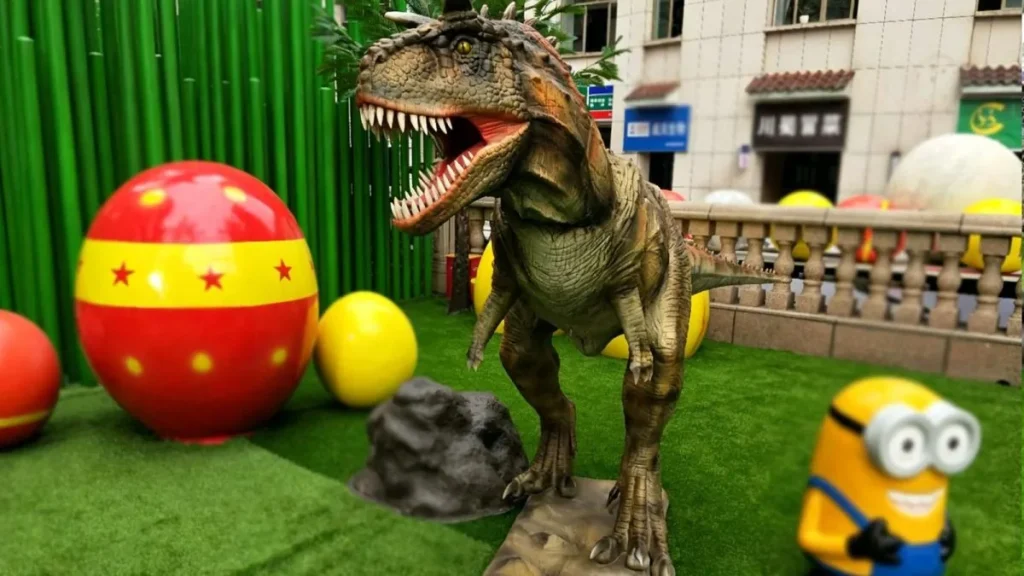
Life-size animatronic Carnotaurus in a roaring pose — articulated jaw, forward-set horns and roar audio on a rock base for outdoor display.
View Product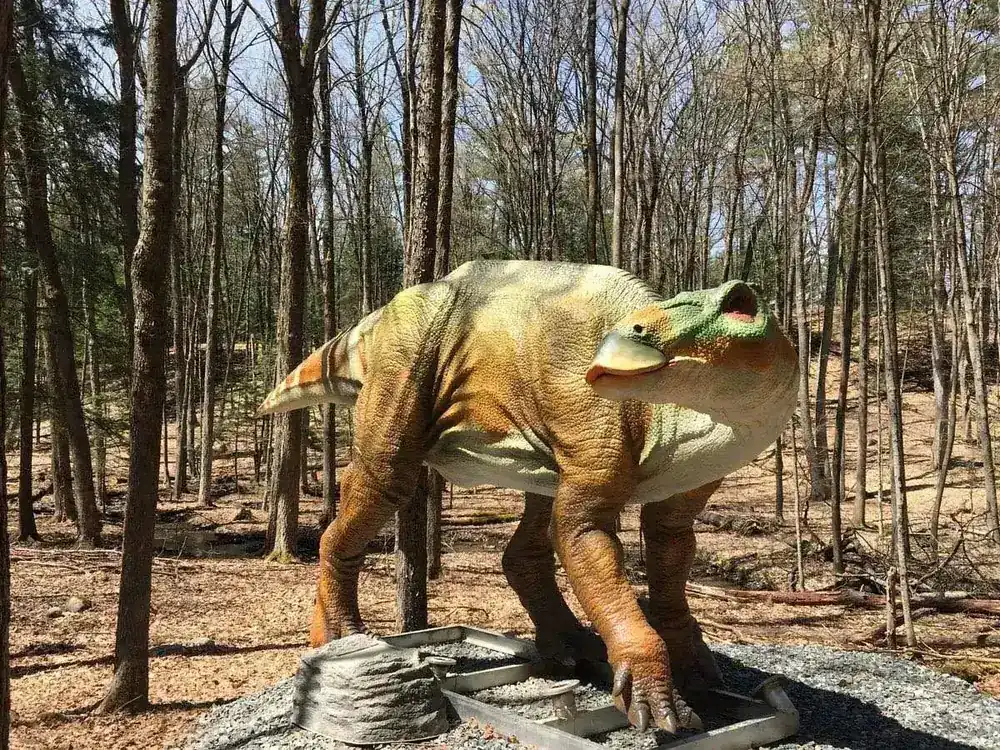
The duck-billed dinosaurs are the least dramatic animals in the catalogue and the ones that read most like real animals. That is the appeal: […]
View ProductThree things buyers usually want settled before they ask for a drawing — what drives the number, how the piece is actually built, and what to check between suppliers.
Animatronic Dinosaur Buying Guide for Museums & Theme Parks Choosing the right animatronic dinosaur for your museum, theme park, or zoo is one of […]
Read the guide →From fossil reference to finished skin — how proportions, texture, colour and weathering are decided, and what separates a realistic build from a cartoon one.
Read the guide →Why Motor Choice Matters More Than Buyers Expect Motor selection is usually treated as a manufacturing detail. It is not. It is the decision […]
Read the guide →Send your dimensions, movement requirements and installation site. You get a realistic budget range and a dated build schedule.
Or email info@hltdino.com — we reply within one business day.