Interactive Dinosaur Exhibits
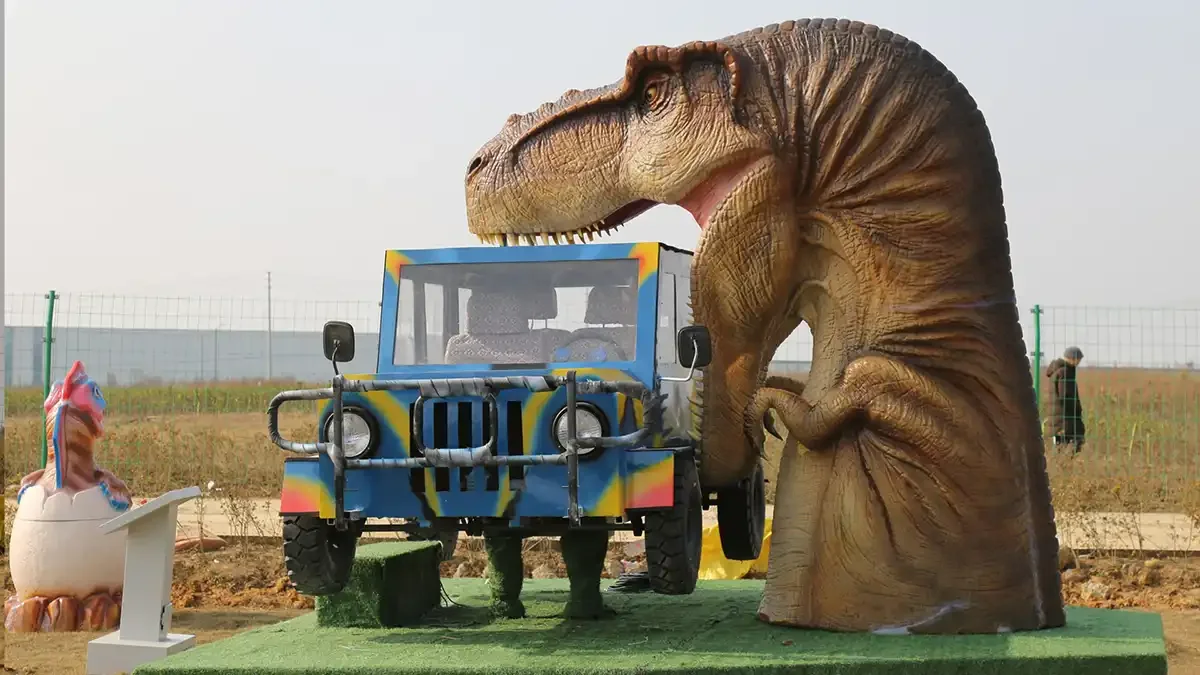
This is a photograph that sells itself. A visitor sits in a jeep cockpit, a T-Rex head comes down over the roof, the jaws close a metre above them, and someone outside takes the picture. The piece is not an exhibit to look at — it is a machine for producing one specific image, and everything about the build serves that image.
That distinction decides the whole design. The head does not need to be a complete animal, the jeep does not need an engine, and the mechanism does not need to run continuously. What it does need is a jaw that closes convincingly at the right height, on cue, and a frame that a family can be photographed inside safely.
| Species | Tyrannosaurus rex — other species available on request |
| Era | Late Cretaceous, roughly 68–66 million years ago |
| Type | Sensor-triggered interactive animatronic photo ride — fixed installation |
| Size | Head 2.5–3.5 m tall; total footprint 8–12 m long × 4–6 m wide |
| Material | Galvanised steel frame, high-density foam and silicone skin, weatherproof finish; jeep cockpit in steel with 2–4 seats |
| Surface | Hand-painted UV-resistant pigment over sealed silicone, wet-weather clear coat |
| Animation | Hydraulic jaw close, head tilt, eye flash; optional head turn on the larger build |
| Sound | 200 W outdoor directional speaker, custom roar recording, volume capped at commissioning |
| Power | 220/110 V single phase, about 3 kW peak at jaw cycle |
| Installation | Level concrete pad required, ground anchoring, 3–4 technicians, 2–3 days |
| Customisation | Species, jeep style, colour scheme, branding, signage language, trigger wording |
| Support | 12-month warranty; hydraulic jaw service kit and controller spares shipped with the unit |
Eight to twelve seconds per cycle, and almost all of that is the pause before the jaw moves. If the head closes the moment someone sits down, the photograph catches a closed mouth and the visitor never felt threatened. The sequence that works is: trigger on entry, hold, a slow close that stops short of contact, hold again for the camera, then reset.
That hold is why the piece is hydraulic rather than servo-driven at the jaw. A servo at this load moves fast and stops hard; a hydraulic ram can be set to close slowly and hold under load without stalling. The trade-off is a hydraulic service interval, which is why the service kit ships with the unit rather than being ordered later.
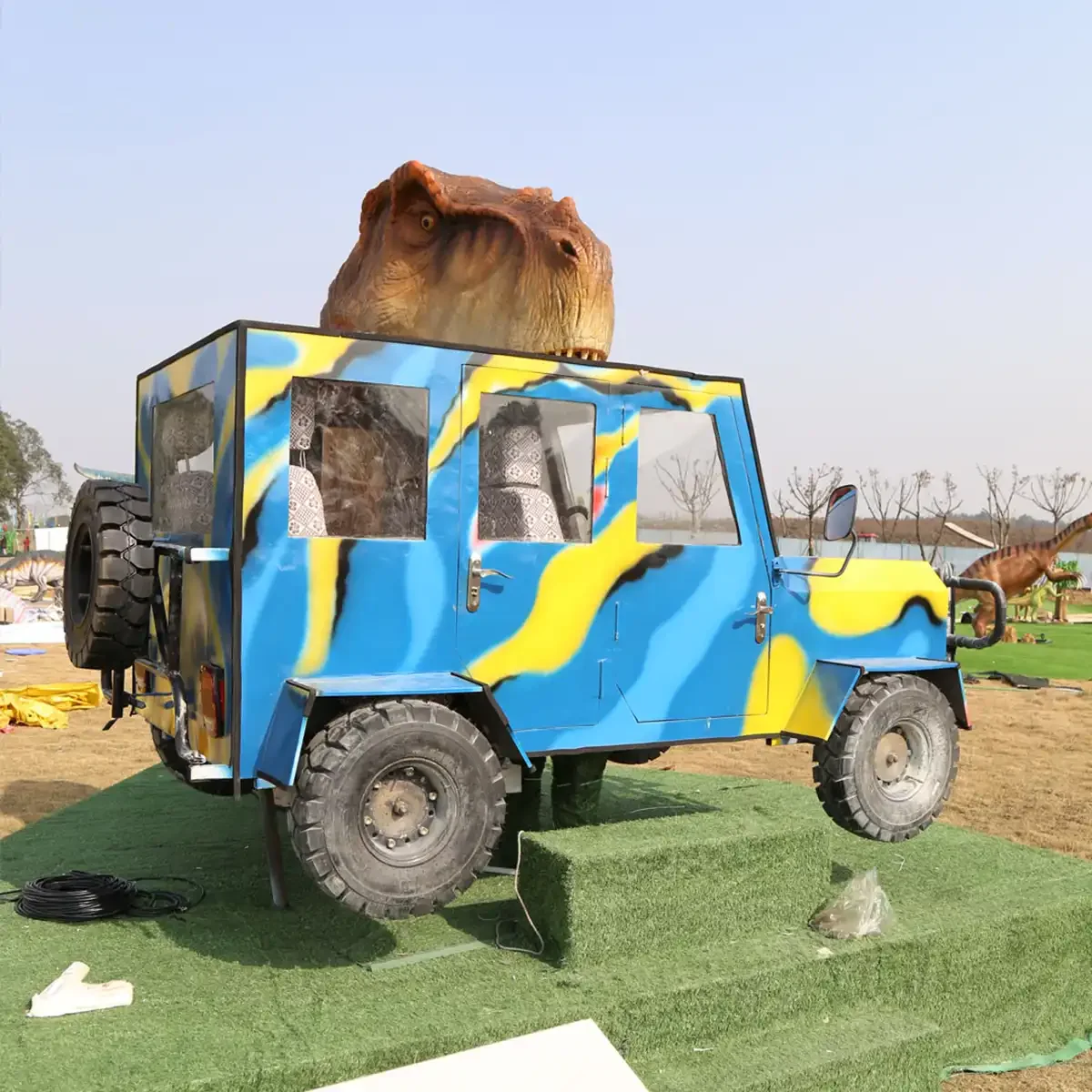
The cockpit is a real-size 4×4 body on a steel frame with 2–4 seats. The jaw stops at a fixed height above the roof — that stop is mechanical, not software, so a controller fault cannot bring it lower. This is the single most important detail in the build and the one worth asking about directly.
Access is from the side, not the front, so visitors never stand under the head. The trigger zone faces the entrance, which keeps the crowd that gathers to watch out of the jaw’s path. Both of those are site layout decisions rather than product decisions, and they matter more than the finish.
The standard build runs 30–60 visitors an hour, which is one cycle every one to two minutes allowing for people getting in and out. That is a queue-friendly number for a paid photo point and a bottleneck for a free one.
Two things raise it: a second jeep cockpit sharing one head, or a shorter hold with an automated camera. The first roughly doubles throughput on the same head; the second removes the human photographer from the cycle. Both are layout decisions made at order, because the pad and the anchoring change.
It works where there is a natural queue and a reason to stand still: a zoo entrance plaza, a theme park mid-way point, a museum forecourt, a mall atrium at Christmas. It does not work on a moving trail — the piece needs people to stop for two minutes, and a trail is designed to keep them moving.
It also works as a paid photo point rather than a free one, because a two-minute dwell with a produced image is something visitors expect to pay for. That commercial framing is a decision for the operator, but it changes the specification: paid points justify the directional speaker and the branded signage, free ones rarely do.
No. The jaw travel is limited by a mechanical stop set above the cockpit roof, independent of the controller. A software fault cannot lower it. The stop is set and verified at commissioning and marked on the service schedule.
An annual service on the ram and fluid, plus a check on the stop setting. The service kit and a spare controller ship with the unit so the first service does not depend on a parts order. Where the site has no maintenance team, we can arrange a service visit.
Yes. The head is built to the same frame, so a Spinosaurus, Allosaurus or a fictional creature is a sculpting change rather than a new mechanism. The jaw travel and the stop height stay the same, so the safety case does not change.
A level concrete pad sized to the footprint, a single-phase supply of about 3 kW at the position, and drainage that keeps water off the pad. Everything above the pad comes crated. Where the pad is not level, the anchoring has to compensate, which is a longer install rather than a different product.
Same factory and the same build standard. What changes is size, movement set and how the exhibit is meant to be used on site.
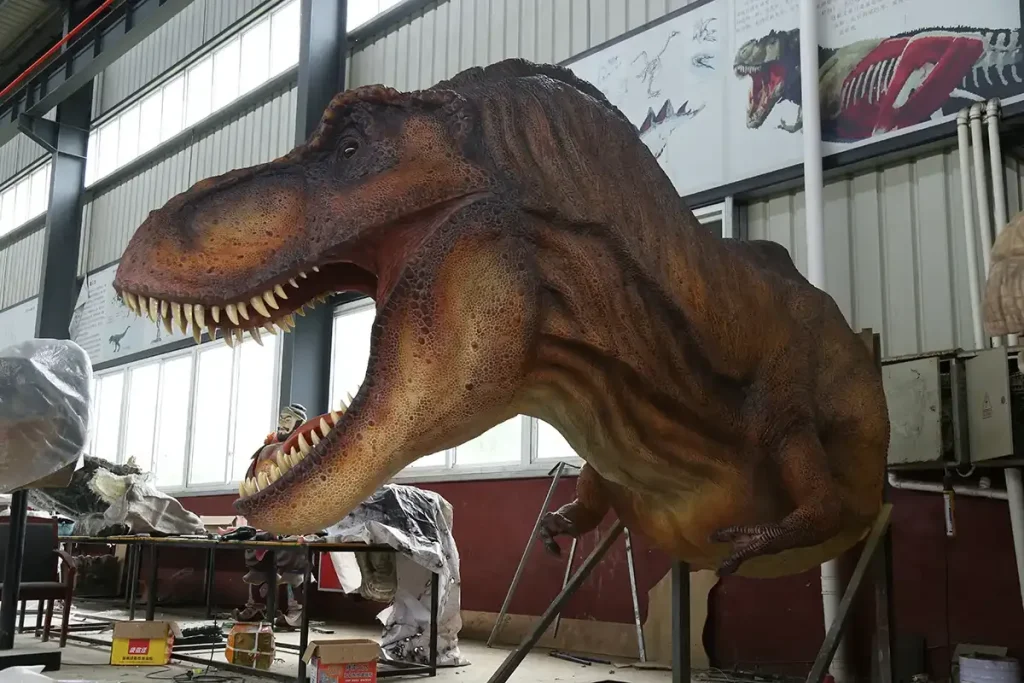
Gesture-responsive T-Rex that reads hand movement and approach speed — every visitor gets a different reaction. Indoor or outdoor, built to order.
View Product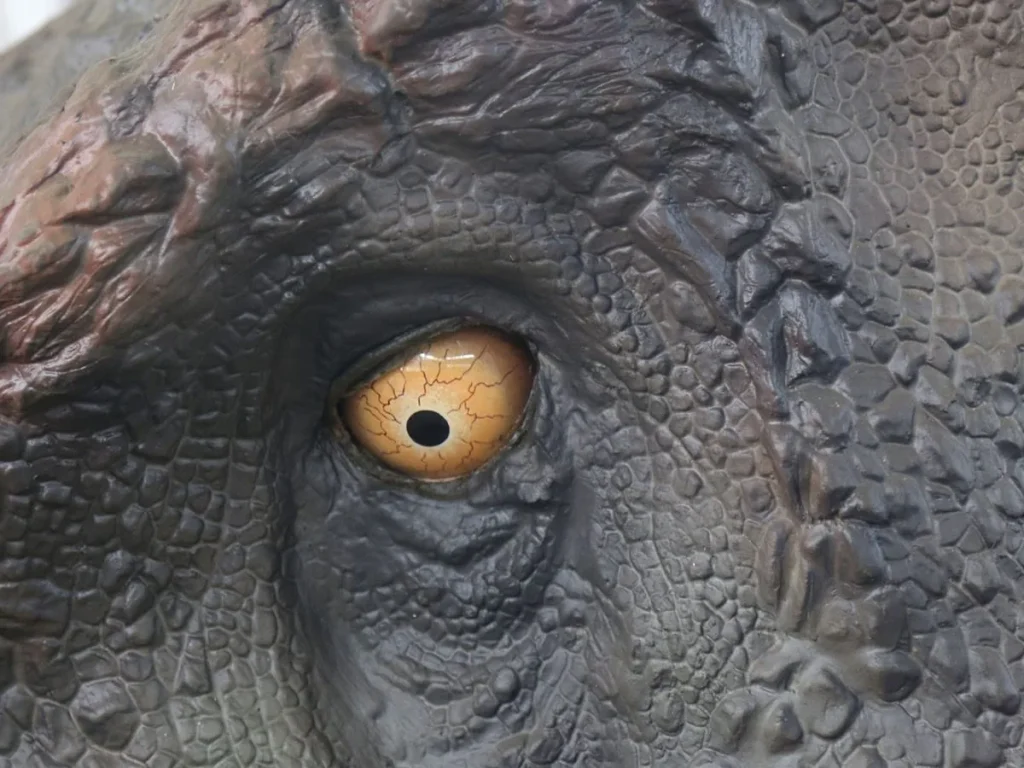
Museum-grade interactive animatronic dinosaur with 3 m proximity sensing, touch response and dual behaviour modes for science centers and parks.
View Product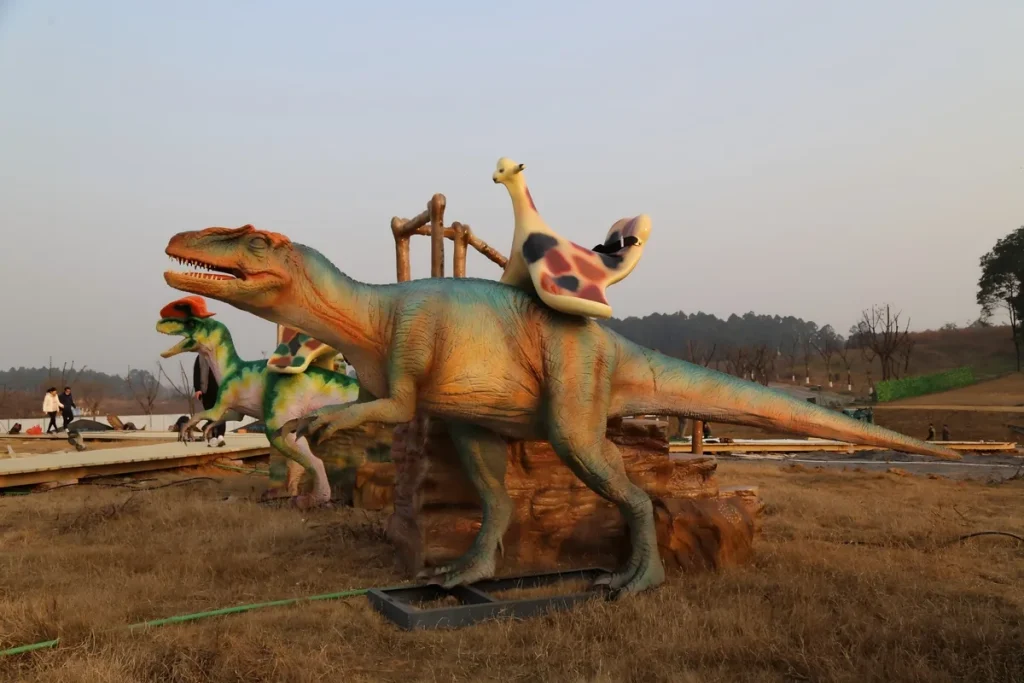
The Allosaurus is the only unit in this range rated for a rider over 100 kg, and that single number changes who can sit […]
View ProductThree things buyers usually want settled before they ask for a drawing — what drives the number, how the piece is actually built, and what to check between suppliers.
Proximity sensing, touch response and timed shows — what visitors actually do around an interactive exhibit, and how that changes placement and programming.
Read the guide →Infrared, ultrasonic and gesture recognition — how a dinosaur reads a raised hand or a fast approach, and what it takes to keep that interaction reliable.
Read the guide →Walk past a life-size animatronic dinosaur in a museum, and it turns its head toward you. A child shouts — and the animatronic velociraptor […]
Read the guide →Send your dimensions, movement requirements and installation site. You get a realistic budget range and a dated build schedule.
Or email info@hltdino.com — we reply within one business day.