Dinosaur Skeletons & Fossils
The name describes the layout twice over. Three lobes run front to back, a central axis flanked by two pleural fields. Three sections run head to tail, cephalon to thorax to pygidium. Almost every trilobite you will be offered gets the outline right. The failures are in the segments.
Count the pleurae across the thorax. A Calymene-type animal carries thirteen, and each rib ends in a rounded tip with a groove running along its length. Cheap casts show the ribs as smooth ridges with the groove missing, or with the count blurred because the mould was pulled from a weathered specimen rather than a good one.
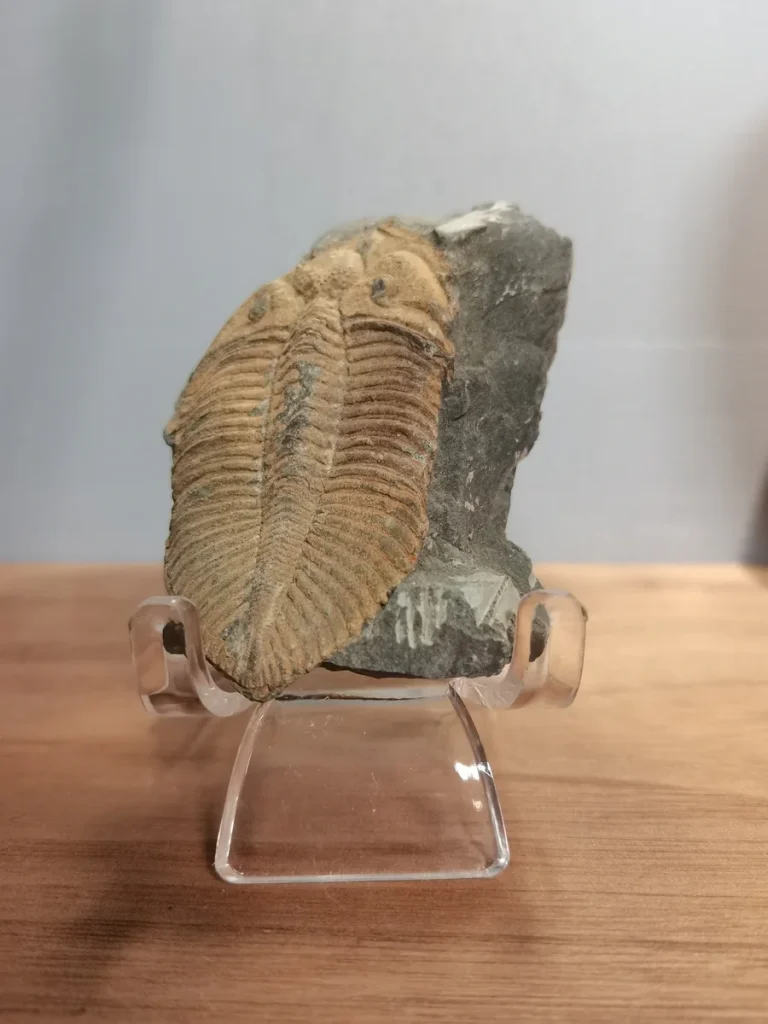
The other tell is the axis. It should narrow gradually from the head to the tail and carry its own set of rings, one per segment. When a cast flattens the axis into the pleural fields, the animal reads as a woodlouse rather than a trilobite. That single failure is visible from two metres away, which is why it is the first thing we check on a sample.
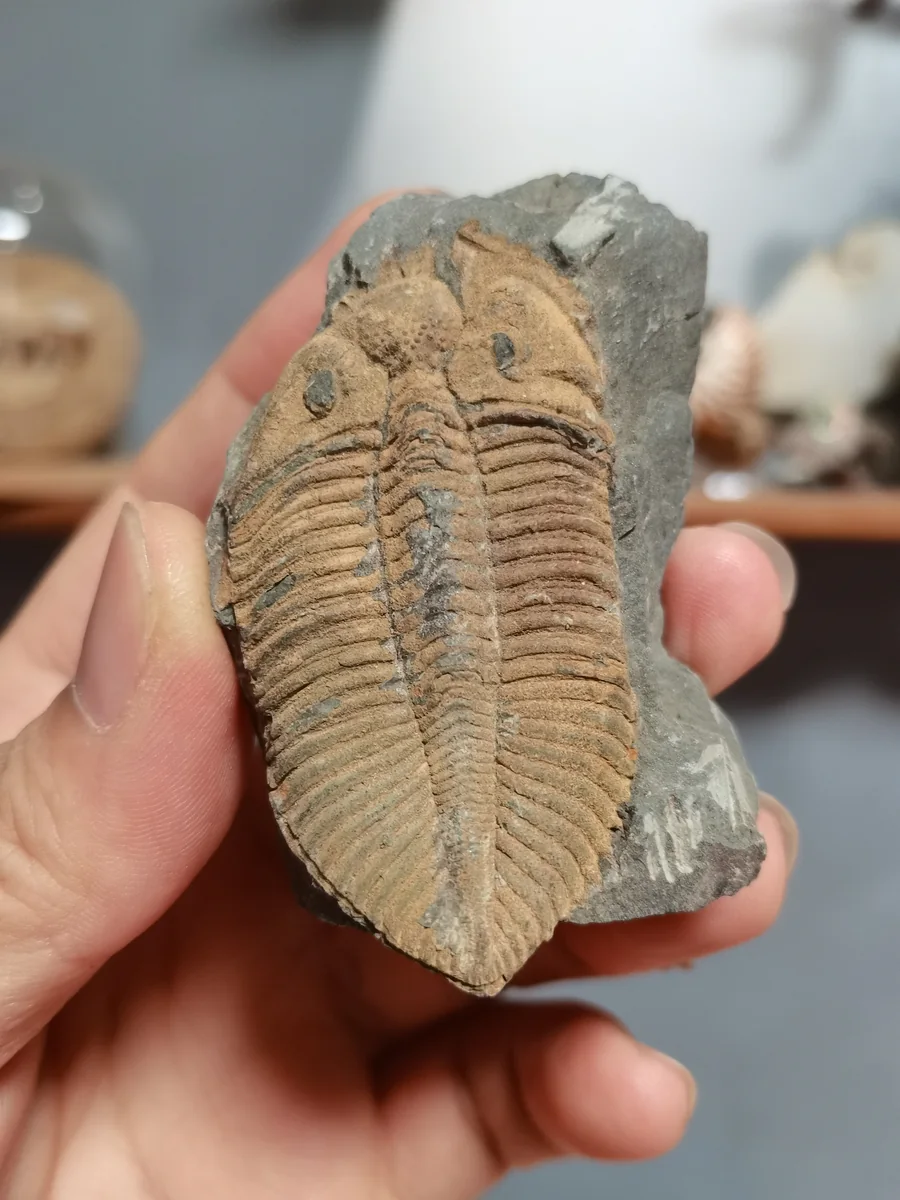
Trilobites built their compound eyes out of calcite, the only animals known to have done so. Each lens was a crystal of the same mineral as the shell, oriented along its optical axis. On a good specimen the eye shows as a raised dome carrying a fine hexagonal grid across its surface.
At this scale that grid is a texture rather than a row of separate lenses, and that is what you should see: a fine pattern standing slightly proud of the surrounding shell. Reproductions that press a pin into the surface to suggest lenses look wrong under any raking light, because the holes come out round, evenly spaced and far too deep. Real schizochroal eyes are packed tightly and they are small.
Some trilobite species lost their eyes entirely, and if you are buying one of those, a blank surface is correct. The cast should still show the genal spine arrangement where the eye would have sat, because the spines are part of the cephalon rather than of the eye.
A trilobite on a plate is judged as a plate, not only as a specimen. The rock should show bedding, the fine parallel lines where sediment settled, and a broken edge that looks like stone rather than a moulded border. The commonest mistake in this product category is a specimen that is beautiful on a slab of featureless grey.
Ours is cast from mineral-filled resin with a layered surface, hand-tinted from a pale limestone grey through to the warmer ochre of the Moroccan beds, then sealed matte. The tint is worked into the relief so the grooves sit darker than the ridges. A single flat wash would leave the animal looking painted onto the plate rather than embedded in it.
Weight matters here more than buyers expect. A plate light enough to lift with one hand reads as hollow, and visitors who are allowed to handle specimens notice it immediately. Ours is filled to sit at a plausible weight for its size, which is the difference between a handling piece and a toy.
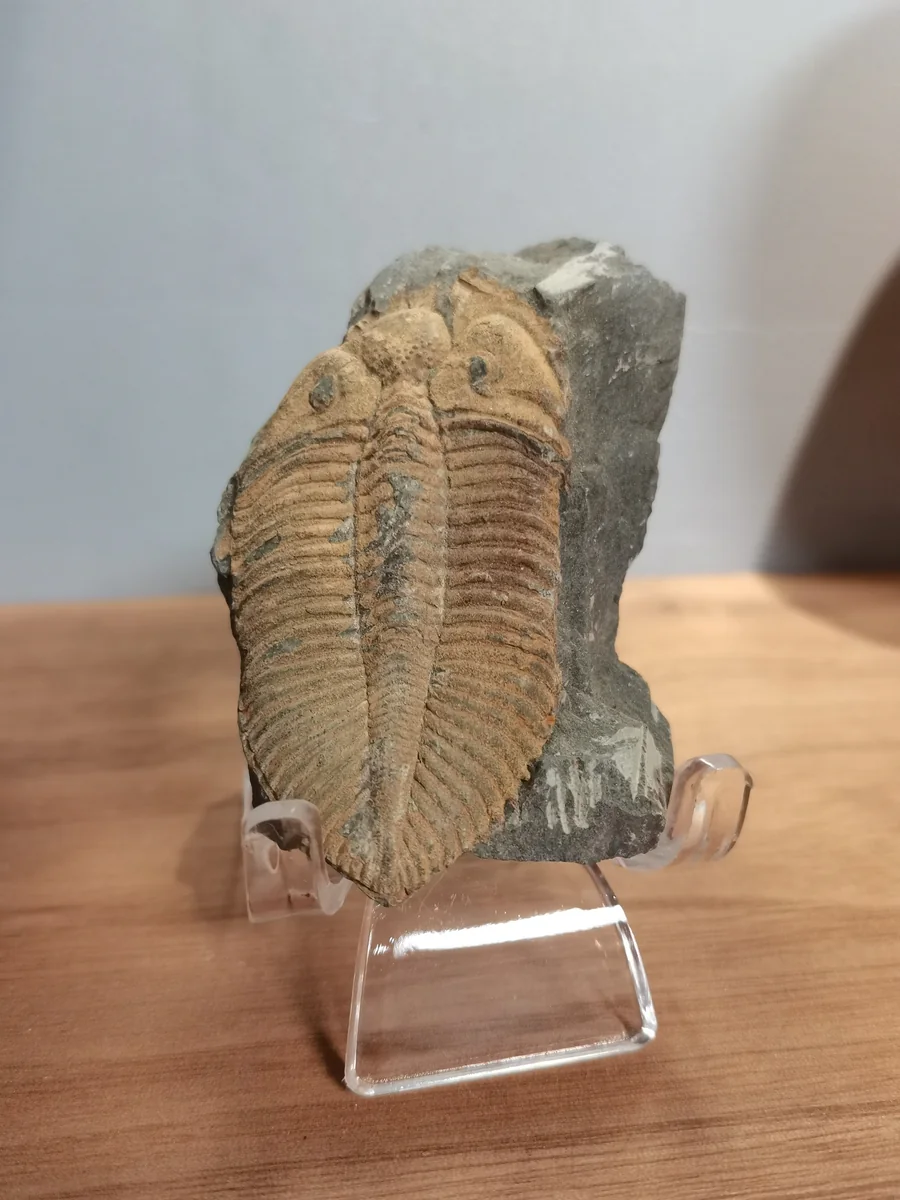
Three ways to show it. A clear acrylic cradle holds the plate at about fifteen degrees, the angle that lets a standing visitor see the dorsal surface without stooping. Flat in a case, the specimen is read from directly above and needs a light angled across rather than down onto it. On a wall, a French cleat keeps the plate flush and the bottom edge should sit above waist height so it is not read at a glancing angle.
For a handling collection, order without the cradle and specify a sealed edge. The corners of a matrix plate are the part that chips, and a sealed edge turns a chip into a scuff.
The rule that works for fossil plates is a viewing distance of about three times the specimen length. A 60 mm trilobite reads from roughly 200 mm, which is closer than most cases allow, so a small specimen either goes into a shallow case or gets enlarged. A 90 mm specimen on the 240 mm plate is the size that works in a standard museum case at normal standing distance.
Handling trays are the exception. There the object is picked up rather than looked at, and a 180 mm plate is the largest that sits comfortably in two hands without the handler worrying about dropping it. Order the small plate for trays and the large one for cases, and do not try to make one size serve both.
If the plate is going into a case you already own, send the internal dimensions. Plate sizes are nominal and the broken edge wanders by ten or fifteen millimetres, which is enough to stop a plate sitting flat against a backing board.
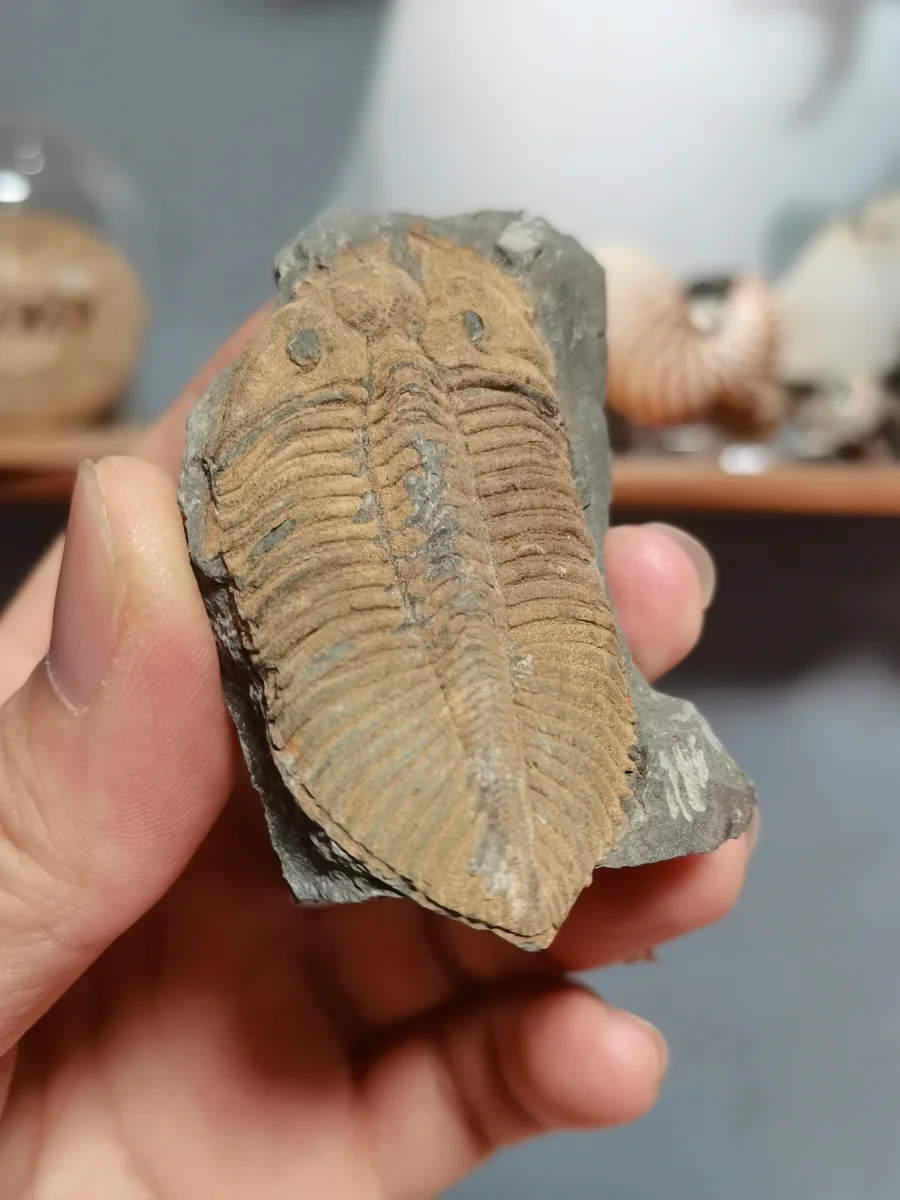
Three requests come up repeatedly from museums. A label plate cast into the matrix rather than glued on, because a glued label falls off in a handling collection within a year. A felt or cork base that does not shed fibres onto the specimen. And consistency across a batch, so that two plates bought eighteen months apart do not arrive in noticeably different tones.
We keep the tint recipe on file against the order, which is the only way to hold a tone across a gap of that length. If you are building a drawer of trilobites over several years, tell us at the first order and we will reference it on every subsequent one.
| Species | Calymene-type trilobite, thirteen thoracic segments |
|---|---|
| Age | Silurian, roughly 430 million years ago |
| Type | Fossil replica on matrix. Static, no mechanism |
| Plate size | 180 x 140 mm typical; 240 x 190 mm and 300 x 240 mm also produced |
| Specimen length | 60 to 90 mm depending on plate size |
| Material | Cast composite specimen on mineral-filled resin matrix |
| Surface | Layered bedding texture, hand-tinted, matte sealed |
| Mount | Clear acrylic cradle, fifteen degrees; wall cleat optional |
| Weight | About 1.1 kg at the 180 mm plate |
| Duty | Indoor. Not for permanent outdoor exposure |
| Customisation | Plate size, matrix tone, species, framed or unframed, sealed handling edge |
Is this a real fossil? No. It is a replica cast from reference material and finished by hand. We do not sell original specimens and we will not describe a replica as genuine.
How can I tell it from a real one? Weight and edge. A real matrix plate is heavier than it looks and its broken edge shows the internal layering of the stone. Handling the two side by side settles it in seconds.
Can it be displayed outdoors? No. Sunlight degrades the tint and the sealed matte finish, and repeated wetting will open the surface. Indoor cases only.
Can the plate be made larger? Yes. We produce 240 x 190 mm and 300 x 240 mm plates with the specimen scaled to suit. A larger plate is the right choice for a close-viewing position.
Is the stand included? Yes, the clear acrylic cradle is included. Wall cleats are supplied separately if you prefer a flush mount.
Can visitors handle it? Yes, if you specify the sealed edge. We finish handling stock with a harder topcoat on the plate edges, which is where chips start.
Do you make other trilobite species? We cast several body plans. Send the species and the plate size and we will confirm what is available before quoting.
Same factory and the same build standard. What changes is size, movement set and how the exhibit is meant to be used on site.
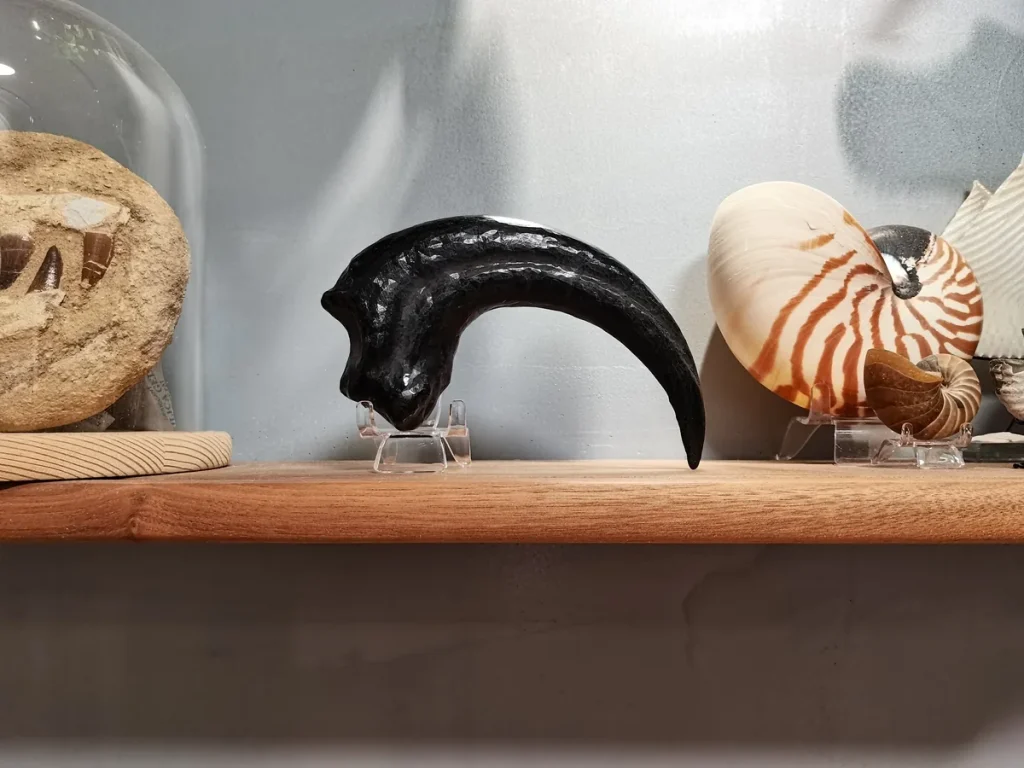
The Sickle Claw and What It Was For Velociraptor carried an enlarged claw on the second toe of each foot, held clear of the […]
View Product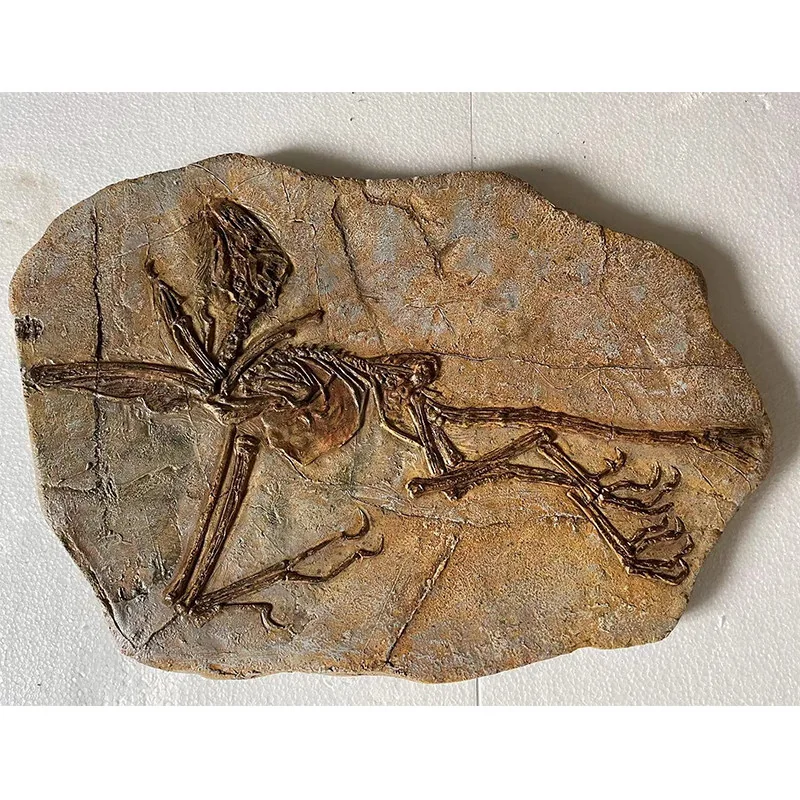
Feathers Are the Hard Part Archaeopteryx is the fossil that made feathers ordinary, and the feathers are the hardest thing to reproduce. On the […]
View Product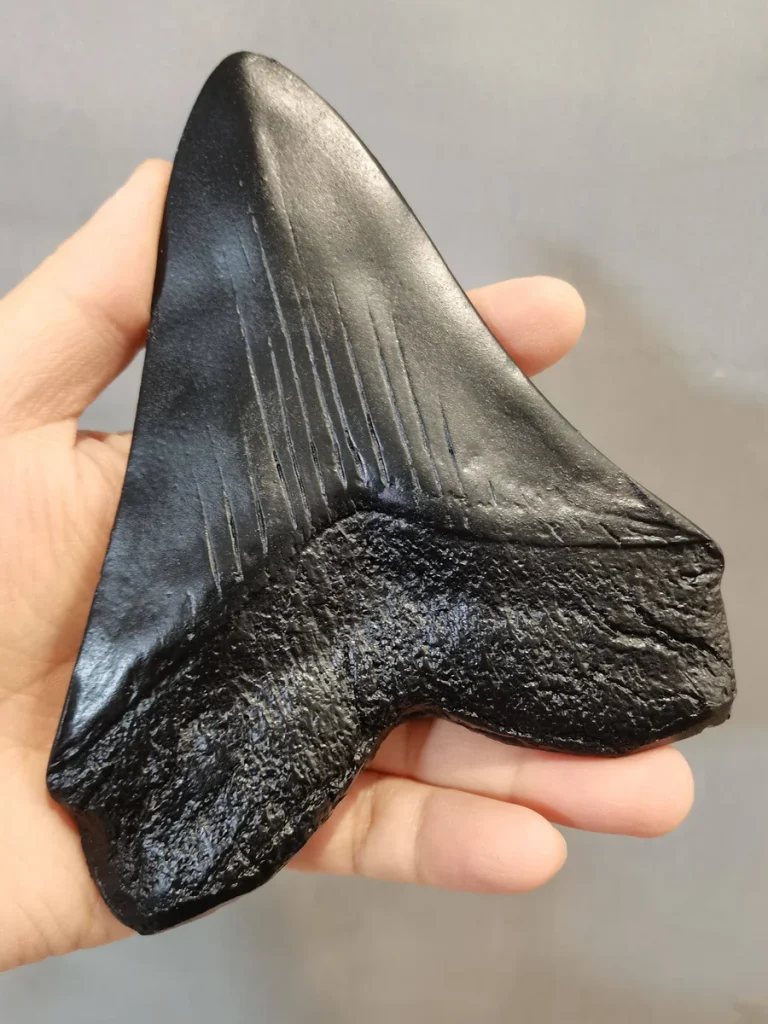
Serrations Are Where Cheap Casts Show Carcharodontosaurus teeth are laterally compressed blades with serrations running along both edges. The serrations are fine, closely spaced […]
View ProductThree things buyers usually want settled before they ask for a drawing — what drives the number, how the piece is actually built, and what to check between suppliers.
From fossil reference to finished skin — how proportions, texture, colour and weathering are decided, and what separates a realistic build from a cartoon one.
Read the guide →Frame, drives, skin, sensors, sound and weatherproofing — the six systems behind every animatronic dinosaur, and how each one changes cost and behaviour.
Read the guide →Choosing the right animatronic dinosaurs for your venue is not just about picking the most famous species — it is about matching each dinosaur […]
Read the guide →Send your dimensions, movement requirements and installation site. You get a realistic budget range and a dated build schedule.
Or email info@hltdino.com — we reply within one business day.