Animatronic Dinosaurs
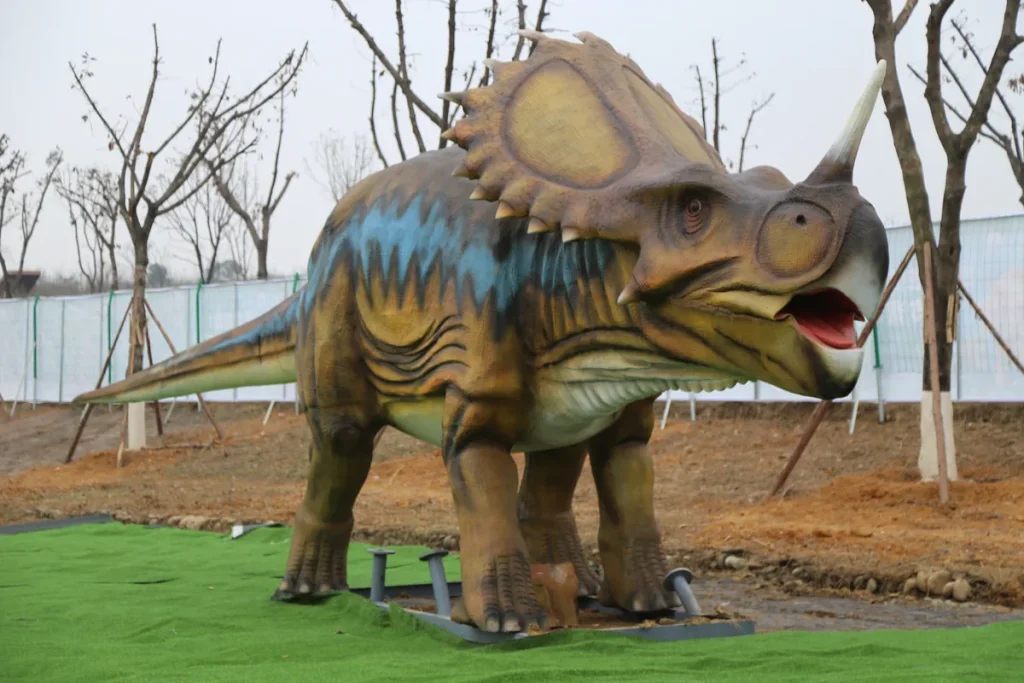
An outdoor life-size animatronic Triceratops is the most useful dinosaur in a collection — big enough to anchor a scene, calm enough to place near children, and instantly recognisable by its three horns and neck frill. This build is supplied as a head-detail and full-body outdoor pair: the close view shows the horn and frill sculpt, the full view shows the animal in the landscape. Q235 steel frame, patented silicone skin, sensor or remote control.
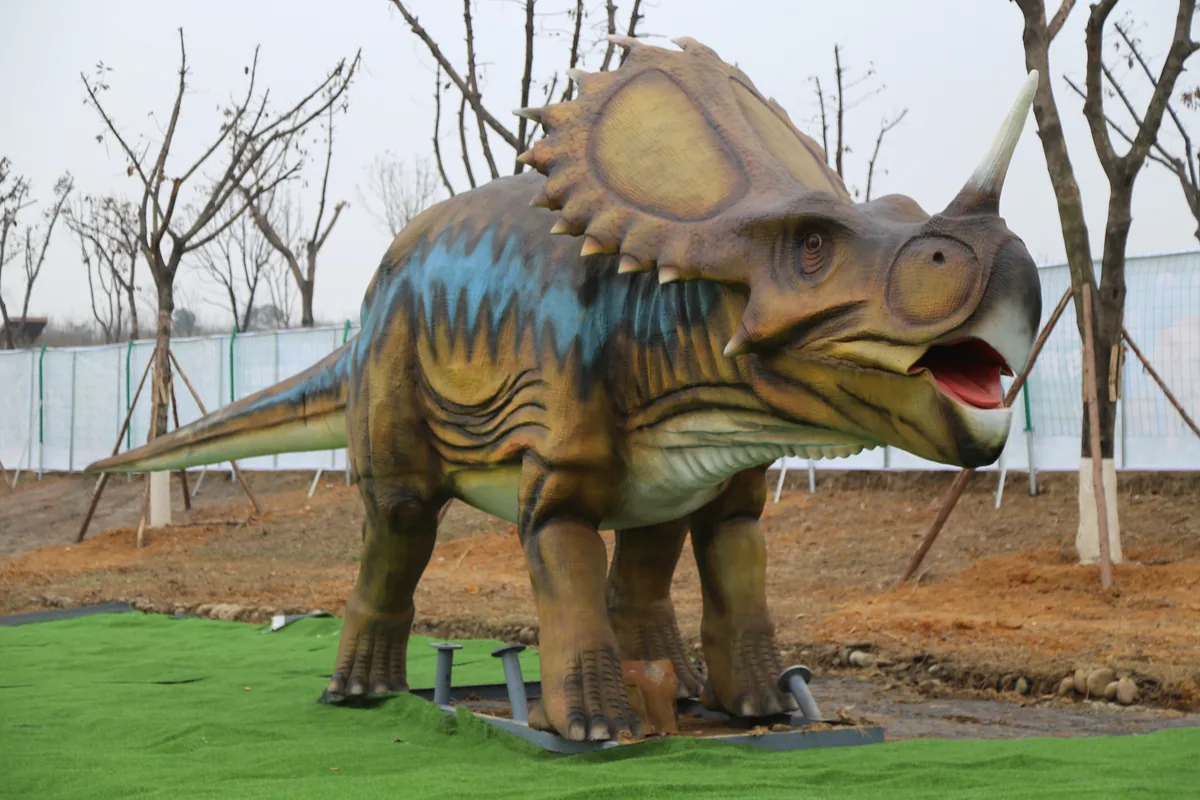
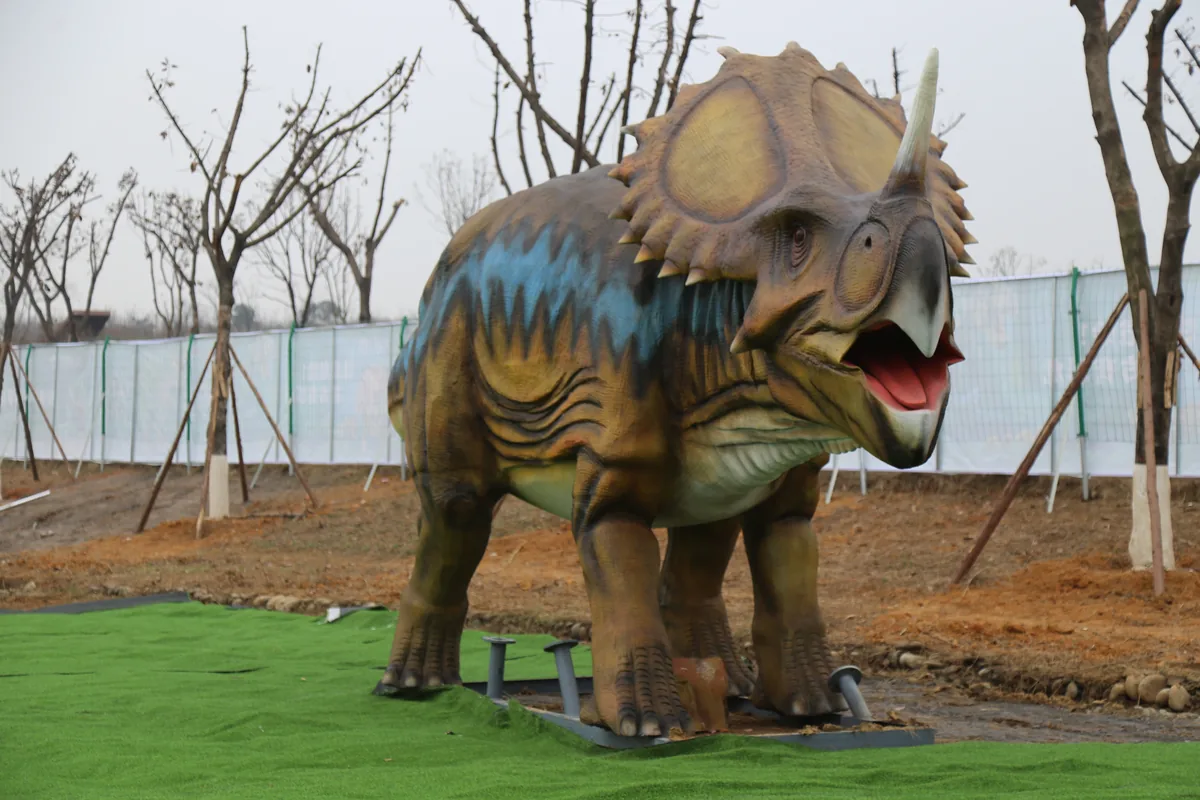
The frill is a large, flat surface that catches wind, weather and camera flashes. Outdoors it is the part most exposed to wind load, and in public areas it is the part most likely to be touched. We mold the frill as a reinforced silicone panel over the frame’s head ring, with the horn cores anchored into the skull structure — not surface-mounted. That is why the horns survive years of visitors posing for photos by holding them.
The head is heavy on this species, so the neck carriage is specified for the frill’s weight and the motion is tuned to move slowly. A fast head snap on a Triceratops looks wrong and stresses the joint.
Frame in Q235 structural steel, welded in-house; horn cores are steel, anchored into the frame and then skinned. Drives are servo with sealed control cabinets, configured for sensor, remote or coin-op input. Skin from our patented silicone system (ZL 2022 1 0224489.5), hand-painted in the pattern you approve. Full motion and electrical test on our outdoor ground before crating.
They are steel-cored and anchored into the head frame, not surface-mounted, so they handle normal visitor contact. We still recommend a low barrier rail for unsupervised public areas — the barrier protects the exhibit.
Yes. A sensor triggers the head to turn toward the visitor, the frill tilts and the jaw works, then the unit returns to rest. Staff can override the trigger from a remote.
Yes, down to a child-friendly scale that keeps the frill proportion and horn detail at a smaller frame weight.
Outdoor units add sealed drives, rain-protected cabinets and UV-stable skin. Tell us the site and we will specify the right finish.
Building a predator-and-prey scene? See the dinosaur range or the outdoor T-Rex. Send your site details for sizing and a dated schedule.
Same factory and the same build standard. What changes is size, movement set and how the exhibit is meant to be used on site.
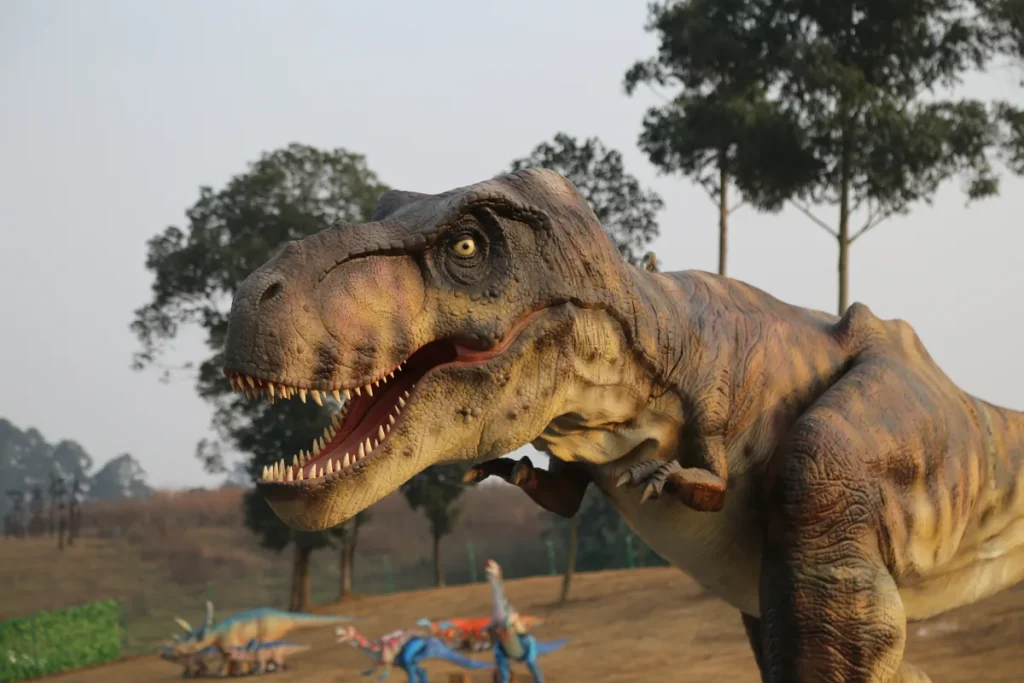
A realistic outdoor animatronic T-Rex is the exhibit that defines a dinosaur site — the head is what visitors remember, and the head is […]
View Product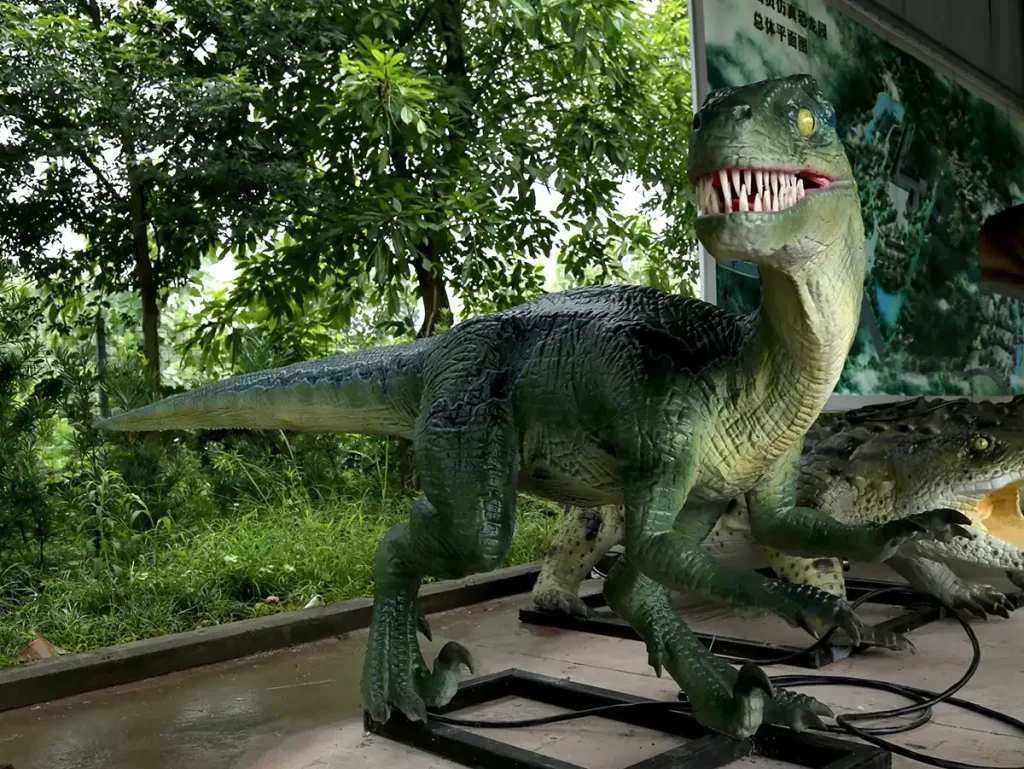
A velociraptor is read from the feet up. The sickle claw on the second toe, the stiff counterbalancing tail, the forward-leaning line from hip […]
View Product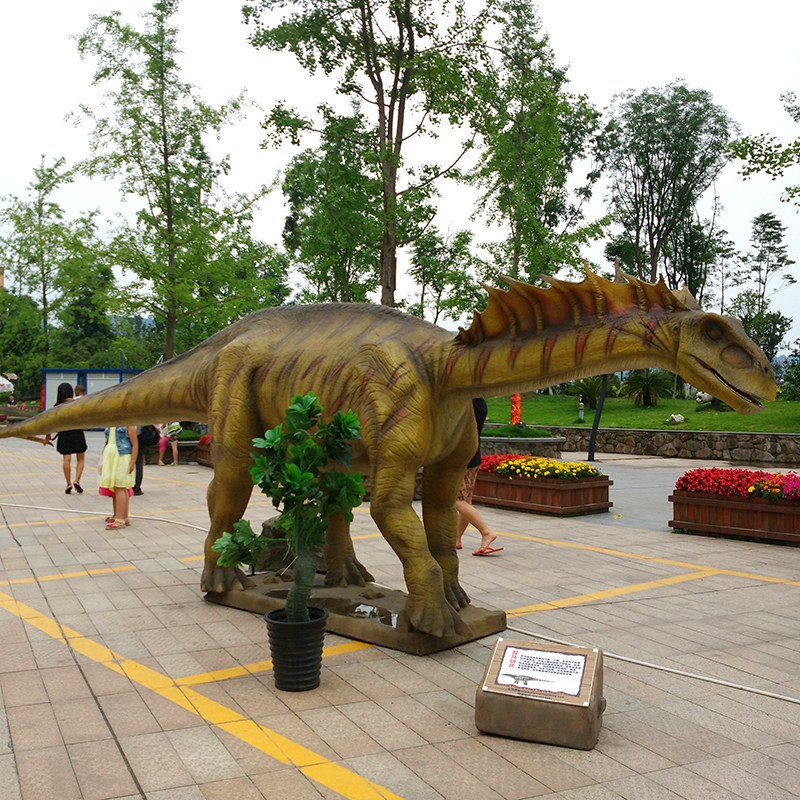
An Amargasaurus is read from its neck first — that double row of tall, sail-like neural spines down the back of the neck is […]
View ProductThree things buyers usually want settled before they ask for a drawing — what drives the number, how the piece is actually built, and what to check between suppliers.
Animatronic Dinosaur Buying Guide for Museums & Theme Parks Choosing the right animatronic dinosaur for your museum, theme park, or zoo is one of […]
Read the guide →From fossil reference to finished skin — how proportions, texture, colour and weathering are decided, and what separates a realistic build from a cartoon one.
Read the guide →Why Motor Choice Matters More Than Buyers Expect Motor selection is usually treated as a manufacturing detail. It is not. It is the decision […]
Read the guide →Send your dimensions, movement requirements and installation site. You get a realistic budget range and a dated build schedule.
Or email info@hltdino.com — we reply within one business day.