Animatronic Dinosaurs
Animatronic Talarurus Armored Dinosaur
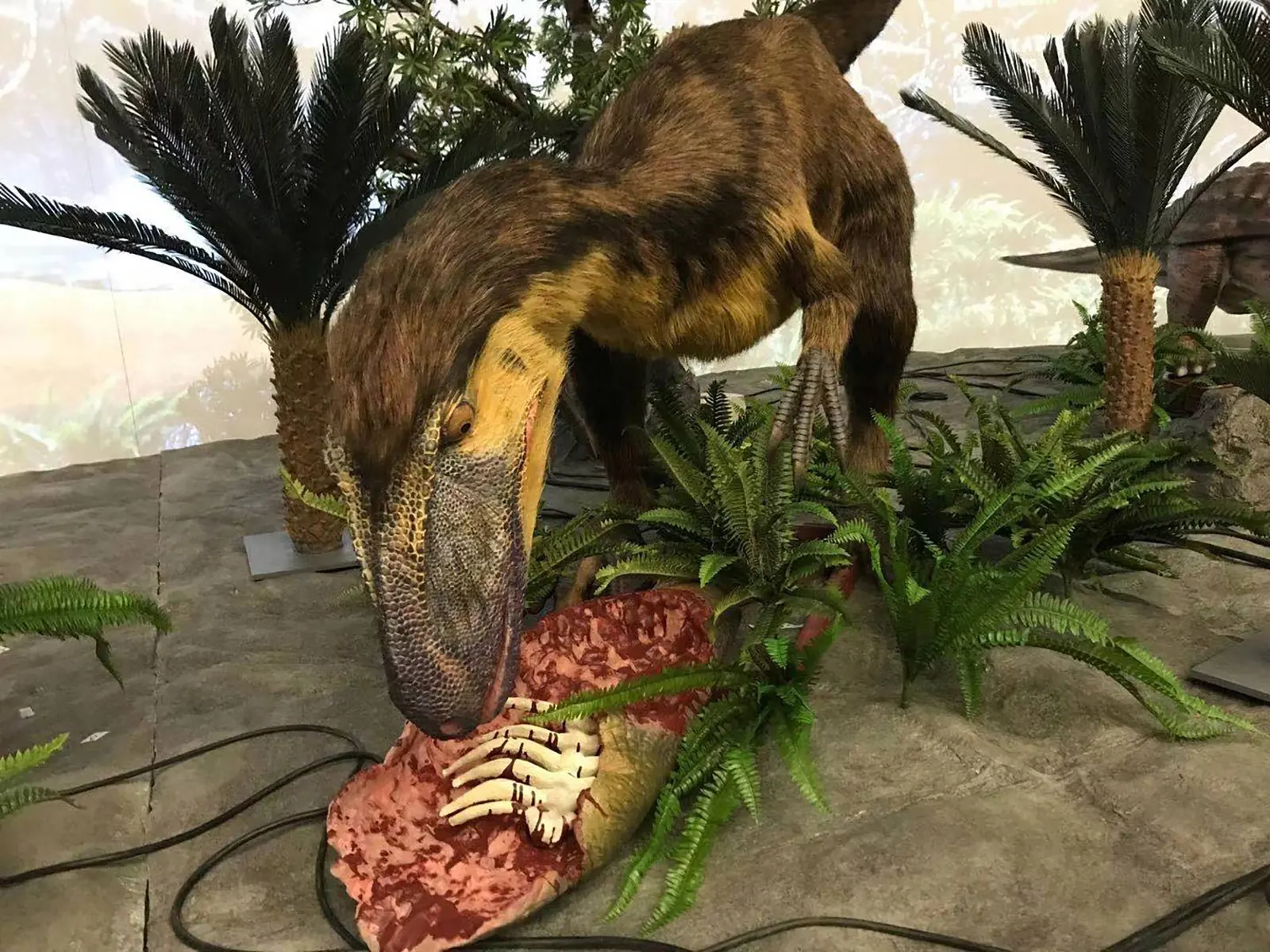
A 5 m animatronic Talarurus with a banded osteoderm shell and a working tail club — low enough for children to read the armour at eye level.
A 5 m animatronic Talarurus with a banded osteoderm shell and a working tail club — low enough for children to read the armour at eye level.
Armored dinosaurs are the easiest group to get wrong, because the armour is the exhibit. A build that treats the osteoderms as surface decoration — bumps moulded onto a smooth back — reads as a toy at ten metres. Real ankylosaur armour sits in rows, in channels, with skin visible between the bands, and the whole back has a structure you can trace with your eye.
| Product type | Medium electric animatronic dinosaur model |
|---|---|
| Overall size | Length 5 m, height 1.5 m at the hip — full custom sizing |
| Power | 110 V / 220 V, specified per site |
| Power draw | 300–1000 W depending on movement count |
| Control | Industrial single-chip controller · sensor trigger · remote · coin-op optional |
| Materials | National-standard steel frame · first-tier servo motors · high-density foam · composite silicone skin · hard-cast osteoderm plates |
| Movements | Head turn and nod · jaw open · neck lower and raise · tail swing with club · eye blink · breathing |
| Weather rating | −20 °C to +60 °C, outdoor rated |
| Lead time | 30–45 days after drawing approval |
Talarurus carries its osteoderms in transverse bands across the neck, back and tail, with smaller ossicles filling the gaps. That banding is the animal’s identity and it has to be built as geometry.
We cast the plates separately in a harder compound than the surrounding skin and set them into the foam so each one sits in its own shallow channel. This costs more time than moulding bumps into a single skin, and it is the difference between armour that reads as bone under skin and armour that reads as bubbles.
The colour work matters as much. Plates weather differently from skin — they take dust on the upper faces, hold a slightly cooler tone, and the gaps between them stay darker because they collect grit. A single-colour back with airbrushed highlights reads flat no matter how good the sculpt is.
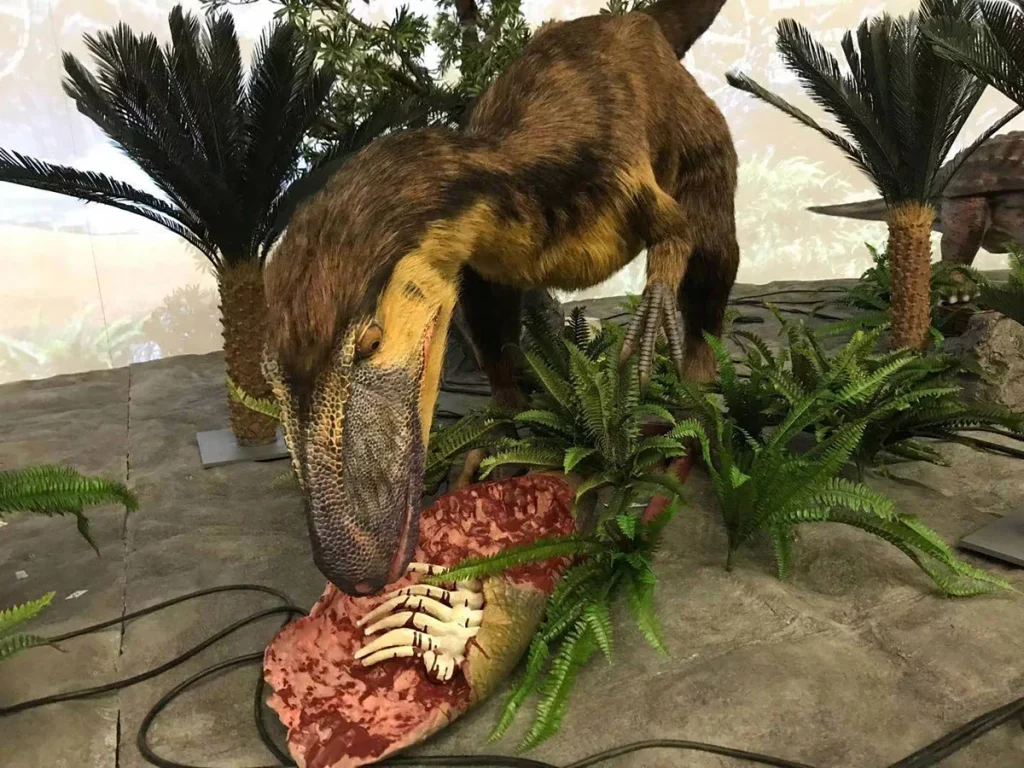
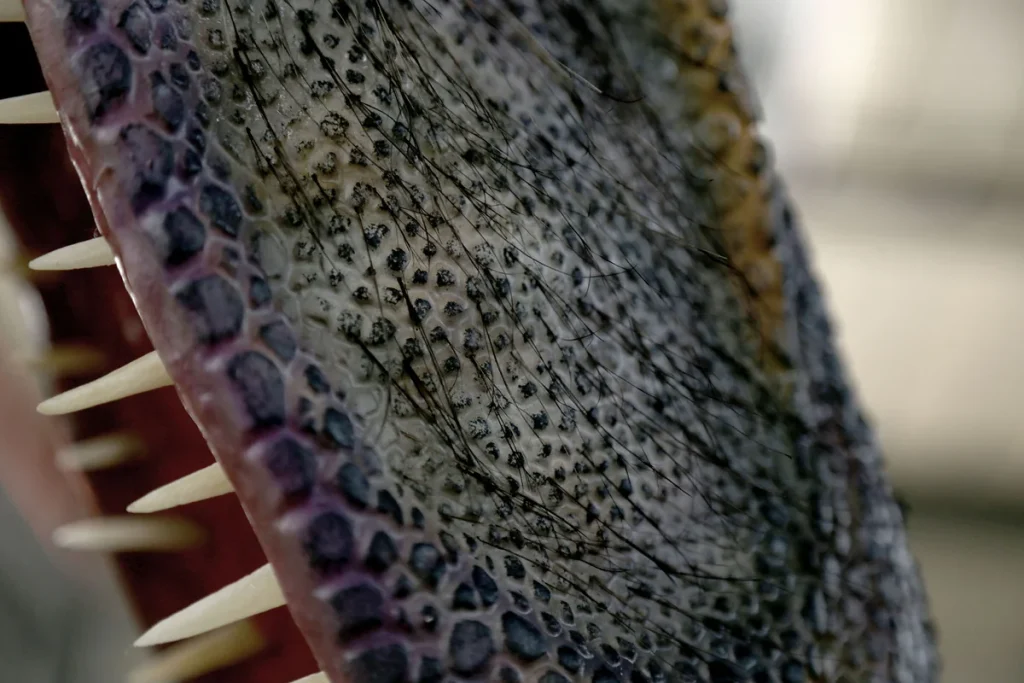
Talarurus stands about 1.5 m at the hip, which puts the armour at the eye level of an eight-year-old. That is a genuine design advantage and most parks under-use it.
A large theropod has to be viewed from a distance; it is impressive, but it is also above the visitor. An ankylosaur can be viewed from half a metre away, and the detail holds at that range — the plate edges, the skin between the bands, the club at the end of the tail. For a family attraction, this is the animal children actually remember, because they got close to it.
Placement follows from that. Put it on the inside of a path curve rather than on a plinth, and let visitors come around the tail. The club is the payoff and it should be discovered from behind, not announced at the entrance.
The club is a weighted unit at the end of the tail, and it is the one movement that can damage the model if it is specified carelessly. A tail that swings a heavy club at full servo speed will eventually work its own mounting loose.
Our build drives the club on a damped cycle with a reduced end-of-travel speed, and the tail bearing is rated above the club’s momentum rather than at it. The swing reads as a deliberate, heavy movement — which is also how the animal would have moved — instead of a fast whip.
If the exhibit is inside a walk-through area, we fit a proximity cut-out so the tail stops short when a visitor is inside the swing arc. It is not visible in normal operation and it removes the one genuine safety argument against a moving club tail.
Can the armour be a different species? Yes — Ankylosaurus, Euoplocephalus, Pinacosaurus and Edmontonia are all built on the same frame with different plate layouts. Send the reference and we will tell you what changes.
Will children climb on it? They will try. The back is not rated as a climbing surface and we do not recommend designing it as one; if climbing is expected, specify a separate static play piece instead of over-building this one.
How close can visitors get? Ideally within half a metre. The detail is finished for that distance, which is unusual — most large models are only finished for three metres and beyond.
Can it be built as a static piece? Yes, and it is a sensible option for a tight budget. The armour and finish carry the exhibit; the movement adds life but the silhouette does the work.
Is the club tail safe in a walk-through? With the proximity cut-out, yes. Specify walk-through at brief stage, because it changes the controller and adds two sensors.
A five-metre animal ships in three sections — body with armour fitted, tail with the club crated separately, and the head protected in its own case. Assembly is typically half a day, with the tail bearing and club mounting checked and torqued on site before the first motion test.
Every project ships with a spare-parts list, a maintenance guide and the wiring diagram. Plate replacement is possible individually — a chipped osteoderm does not require re-skinning the back.
Related. the full animatronic dinosaur range, the Ankylosaurus build, zoo and family zone placement.
Same factory and the same build standard. What changes is size, movement set and how the exhibit is meant to be used on site.
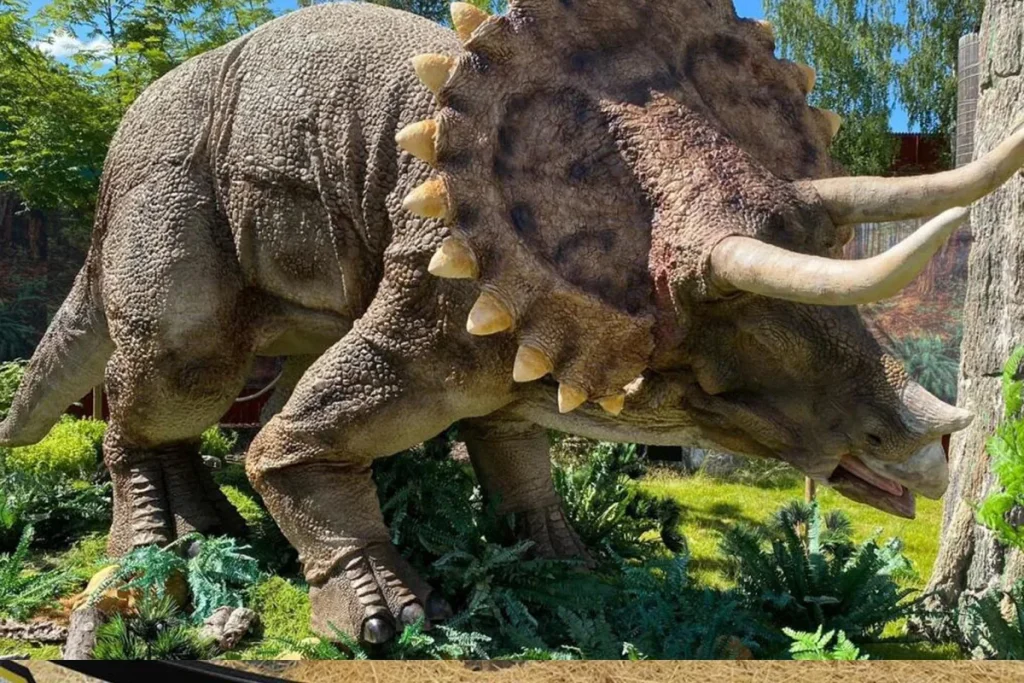
A 7–9 m three-horned exhibit — the family photo piece with steel-cored horns and a wind-rated frill.
View Product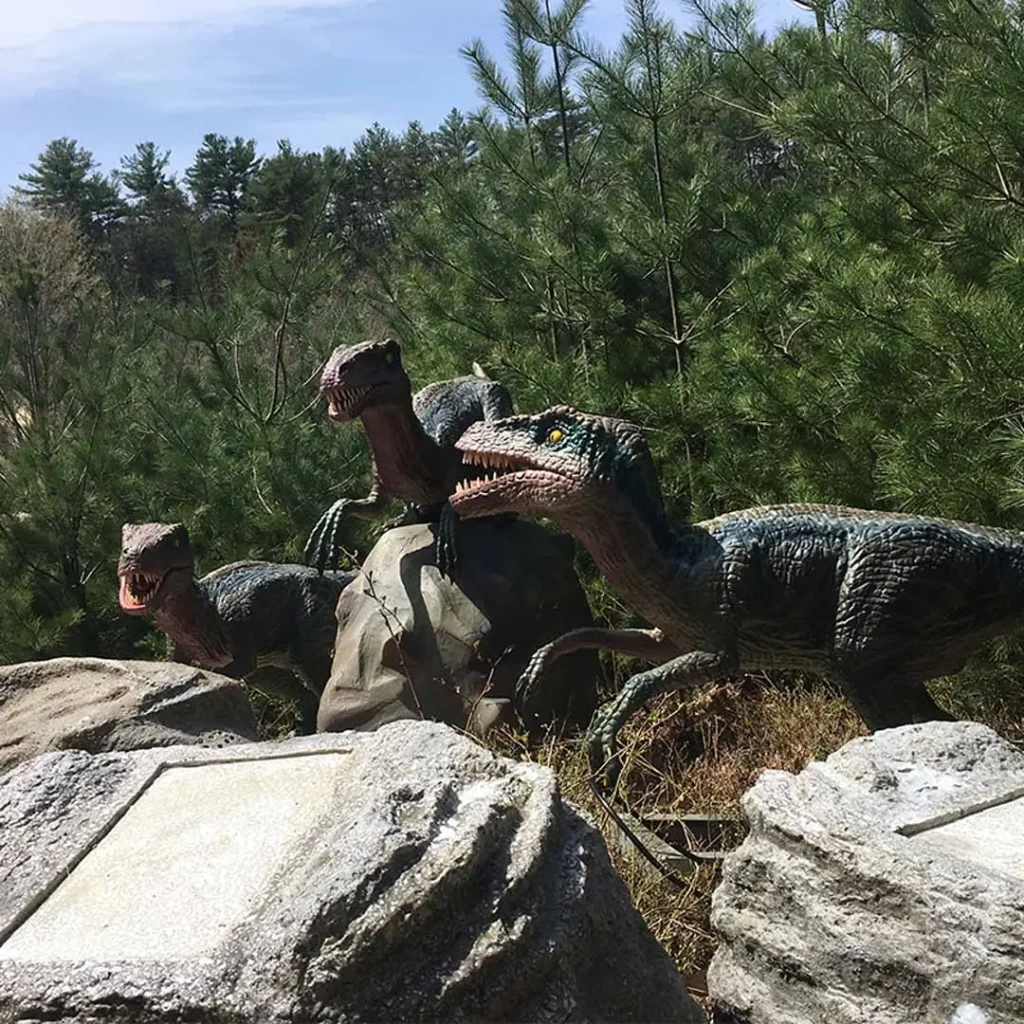
A single Velociraptor in a hall reads as a large bird. Three of them, in different stances, facing different directions, read as a hunt […]
View Product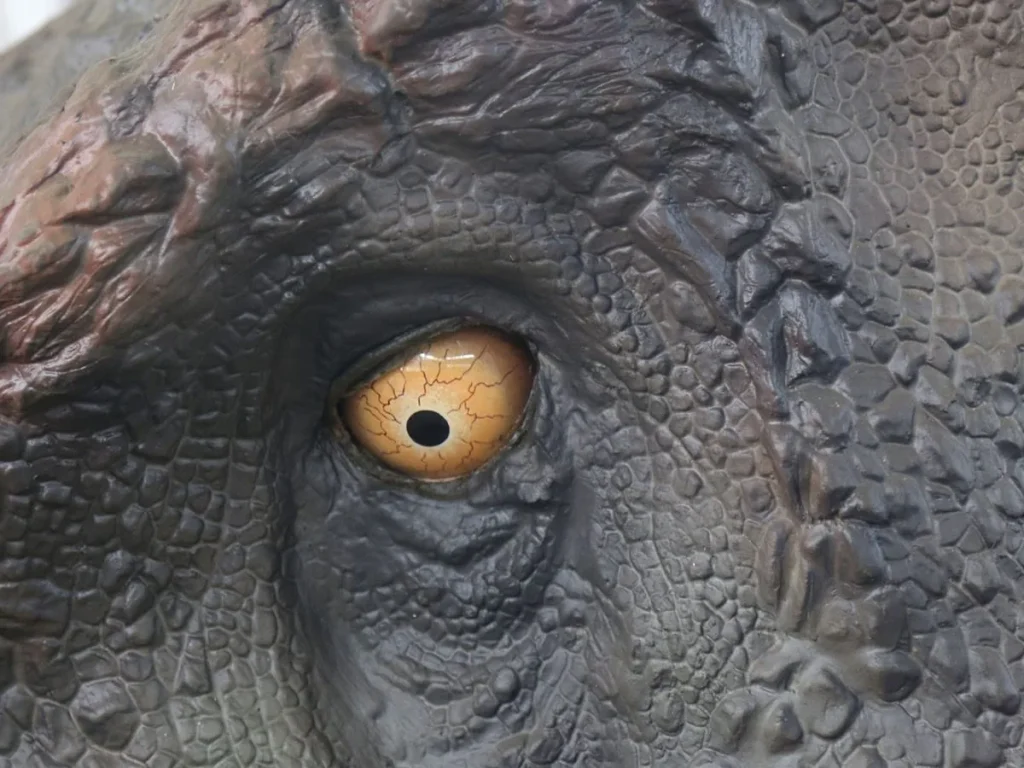
Museum-grade interactive animatronic dinosaur with 3 m proximity sensing, touch response and dual behaviour modes for science centers and parks.
View ProductThree things buyers usually want settled before they ask for a drawing — what drives the number, how the piece is actually built, and what to check between suppliers.
Animatronic Dinosaur Buying Guide for Museums & Theme Parks Choosing the right animatronic dinosaur for your museum, theme park, or zoo is one of […]
Read the guide →From fossil reference to finished skin — how proportions, texture, colour and weathering are decided, and what separates a realistic build from a cartoon one.
Read the guide →Why Motor Choice Matters More Than Buyers Expect Motor selection is usually treated as a manufacturing detail. It is not. It is the decision […]
Read the guide →Send your dimensions, movement requirements and installation site. You get a realistic budget range and a dated build schedule.
Or email info@hltdino.com — we reply within one business day.