Animatronic Dinosaurs
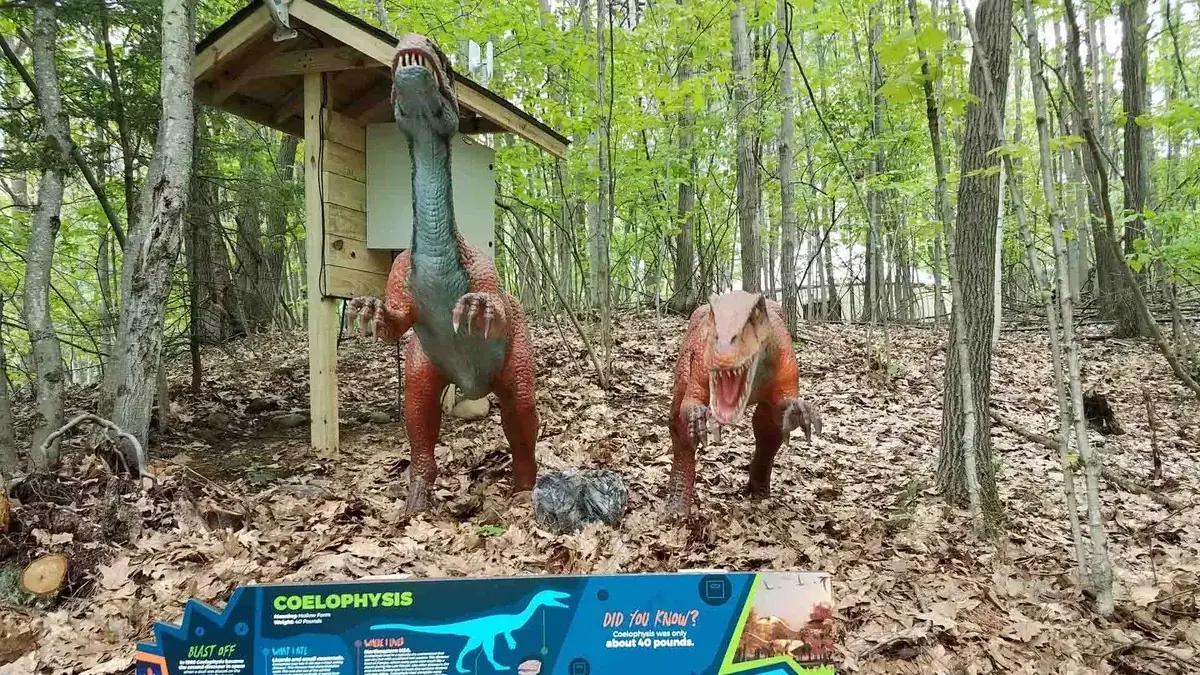
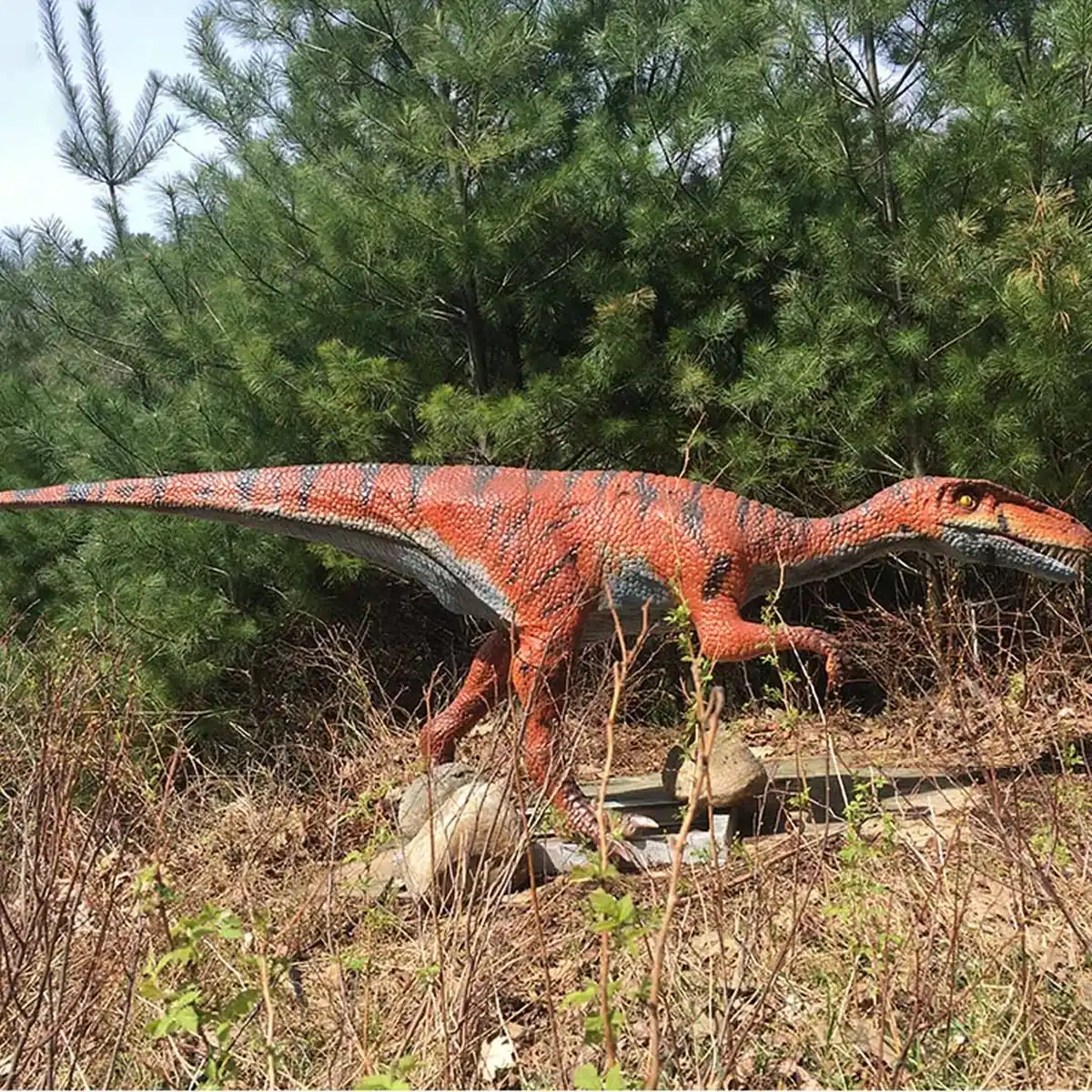
Coelophysis is one of the earliest known dinosaurs and one of the lightest — a slender, hollow-boned theropod about the size of a human. That is the build brief, and it is the opposite of how most animatronic dinosaurs are tuned. A heavy walk cycle on a light animal reads as a puppet being pushed.
| Species | Coelophysis bauri |
|---|---|
| Era | Late Triassic, about 215 million years ago |
| Type | Animatronic exhibit, full movement set |
| Frame | Weatherproof metal internal skeleton |
| Body core | High-density foam sculpting |
| Skin | Premium hand-finished surface (patent ZL 2022 1 0224489.5) |
| Movement | Stalking steps, head turn, eye blink, jaw snap, tail sway |
| Length | 3.5 m standard; custom 2.5 m to 5 m |
| Height | 1.3 m at the hip |
| Power | 110 / 220 V AC |
| Sound | Optional integrated vocalisation |
| Duty | Indoor and outdoor |
What works is fast and small: stalking steps that stop abruptly, quick head turns, a jaw snap that finishes before the visitor expects it. The whole motion set runs on silent servos, because a servo whine on a 1.3-metre animal destroys the effect in a way it does not on a 12-metre one.
Hundreds of Coelophysis skeletons were found together at Ghost Ranch in New Mexico, which is why the species is one of the best-known Triassic dinosaurs. That find is also an exhibit opportunity: a group of three or four animals at different sizes reads as a Triassic death assemblage or a hunting group, and it is far more interesting than a single animal on a plinth.
If a group is ordered, the spacing matters. Coelophysis was built to run; animals placed shoulder to shoulder look like a row of models.
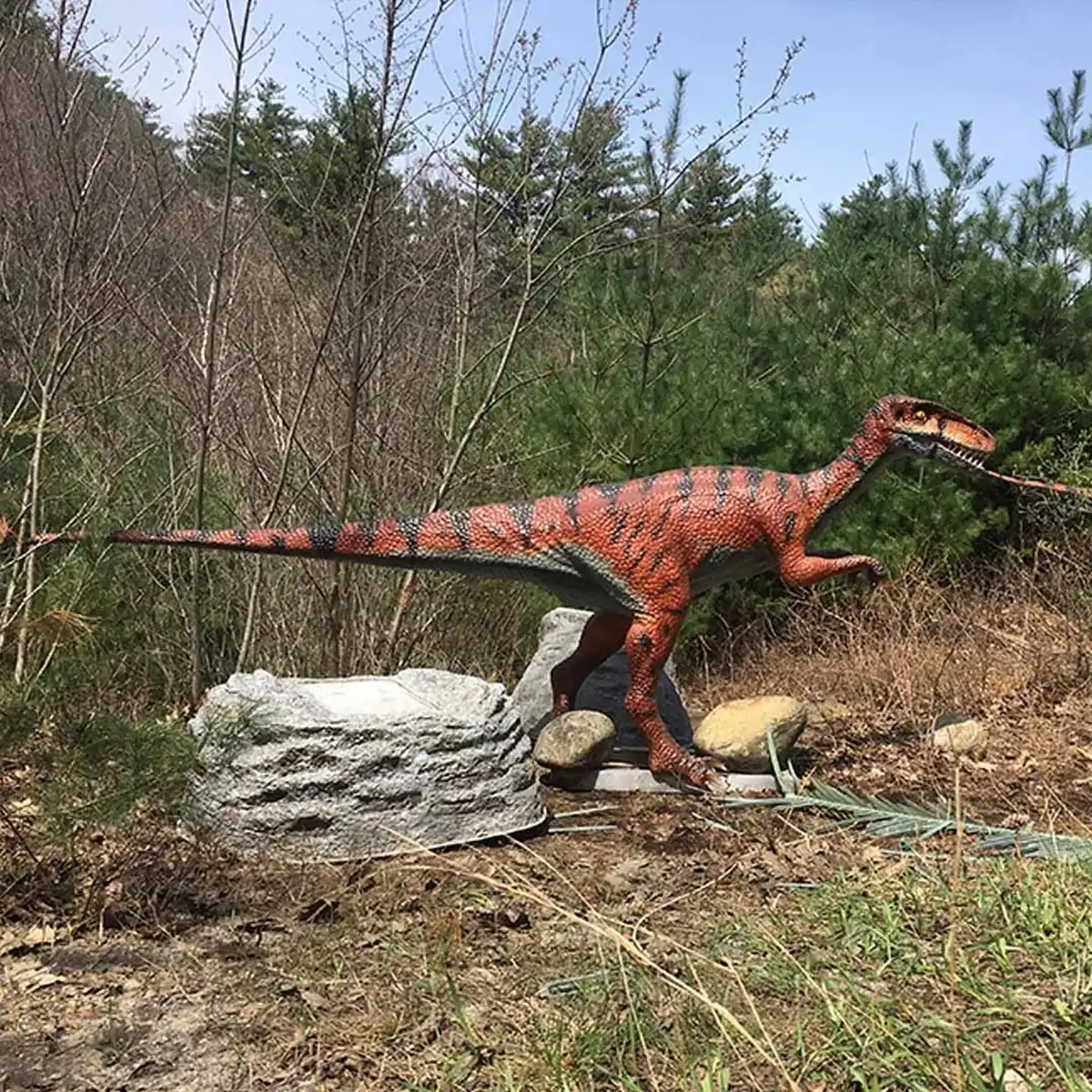
Half the dinosaur exhibits in the world are set in a Jurassic frame, and a Coelophysis dropped into that setting reads as anachronistic to anyone who knows the period. Triassic means drier, sparser vegetation, red beds, and few large plants — a different palette from the fern-heavy Jurassic look.
The animal also has no horn, no crest and no armour, which makes it the cheapest species in the range to specify and the one that needs the most careful paint. There is nothing to hide behind except the striping on the back and tail, which is hand-painted per animal.
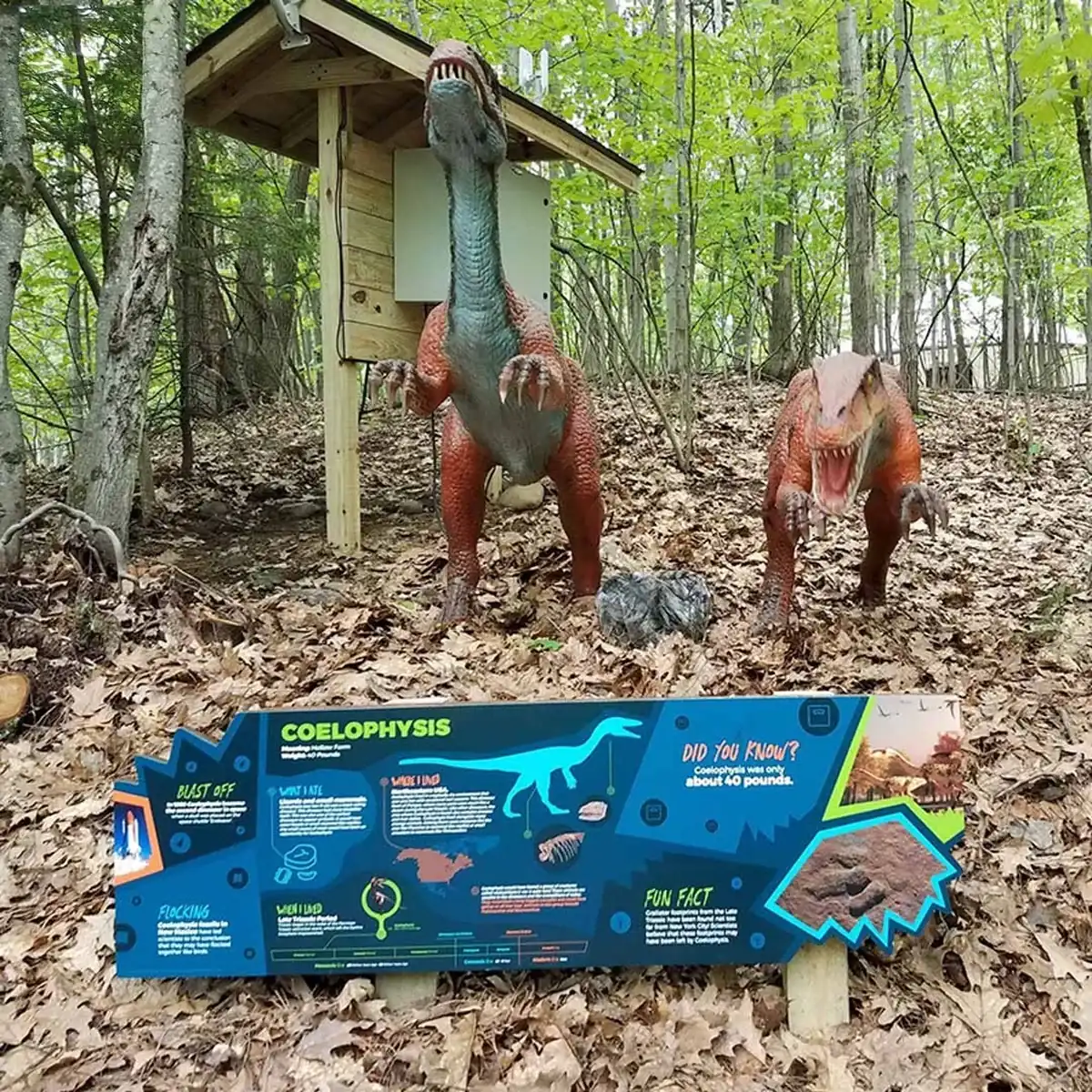
Is it really that small? Yes — 3.5 m long but only 1.3 m at the hip, and slender. It reads as a large bird rather than a large dinosaur.
Should I order one or a group? A group of three or four if the budget allows. The Ghost Ranch find makes a Coelophysis group defensible on scientific grounds, and it looks better.
What period setting does it need? Triassic — drier, sparser vegetation, red beds. Not the fern-heavy Jurassic look.
How much movement? Stalking steps, head turn, eye blink, jaw snap, tail sway. Silent servos, because noise is obvious on a small animal.
110 / 220 V AC at the animal. The load is small — this is a light build on silent servos, not a heavy drive.
Outdoors, the base needs a hard standing. A 1.3-metre animal is light enough that wind is a real consideration on an exposed trail; the anchor layout accounts for it, but the position should not be on an unsheltered ridge.
The movement set is tuned faster than on any other build in the range. Stalking steps that stop dead, head turns of a few degrees, a jaw snap on a short cycle — the whole point is that the animal looks quick.
The exception is the idle. Between visitors it should stand almost still with a slow breathing cycle, so that the speed registers as a change when someone approaches.
Materials. Weatherproof metal internal skeleton, high-density foam sculpting, premium hand-finished surface (patent ZL 2022 1 0224489.5), hand-painted striping, silent servo drive.
Related. the animatronic dinosaur range, the Oviraptor, museum exhibit layout, request a quote.
Same factory and the same build standard. What changes is size, movement set and how the exhibit is meant to be used on site.
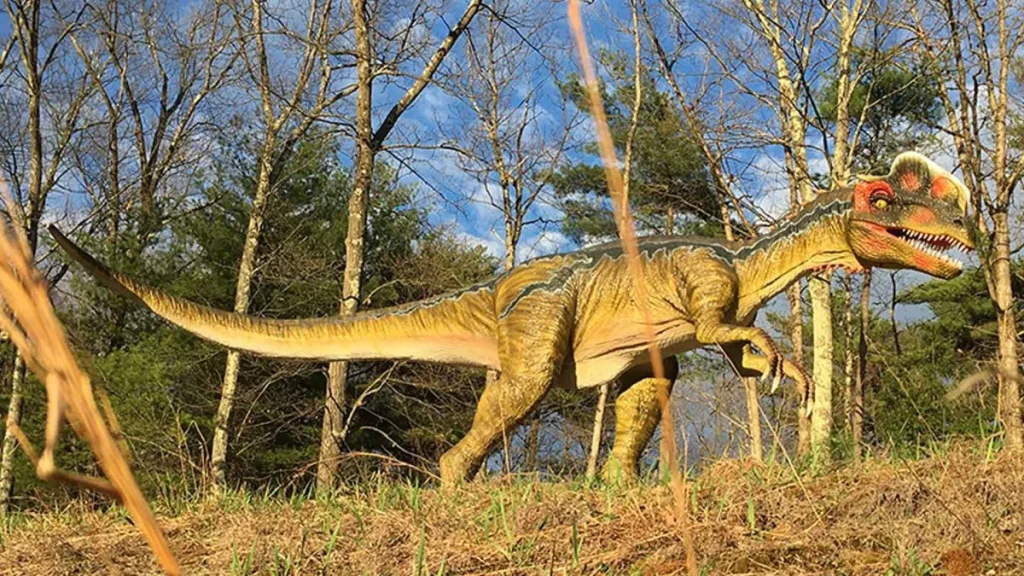
This is the exhibit build of the Dilophosaurus, not the ride. Same animal, same silhouette, different job: it stands on a trail or in […]
View Product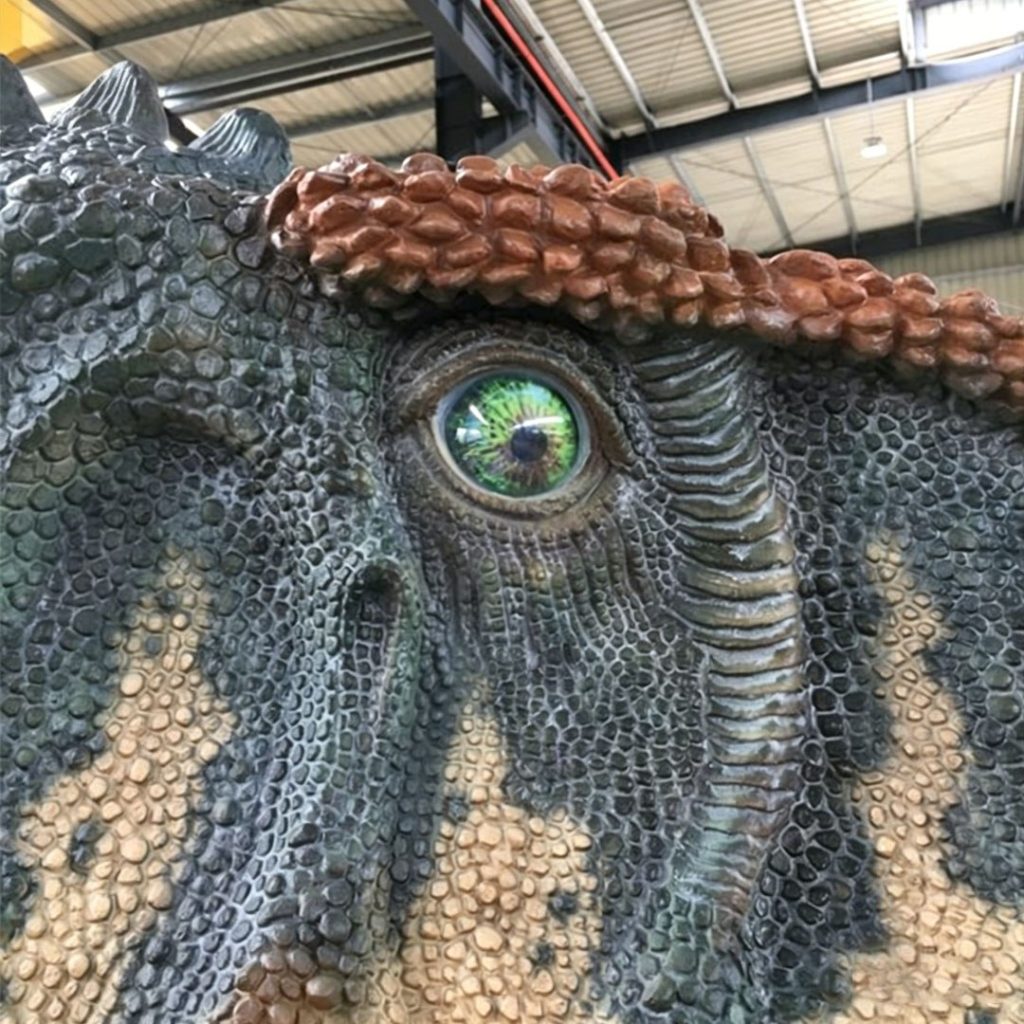
A Megalosaurus is built around the jaw. The skull is long and heavy, the gape is wide, and the teeth are large and slightly […]
View Product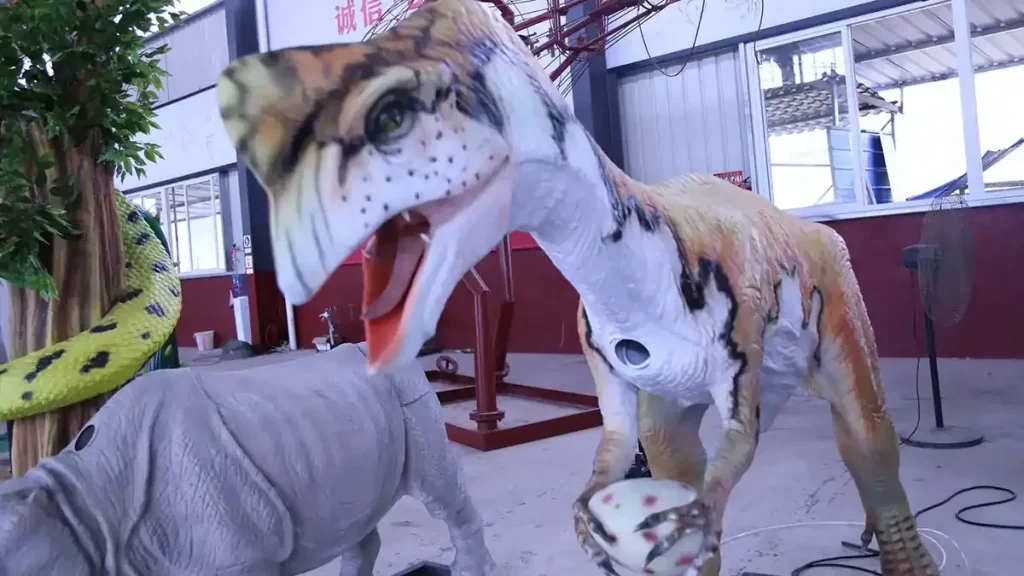
A 1.6–2 m crested, feathered exhibit built for close viewing — fast, bird-like motion on sensor trigger.
View ProductThree things buyers usually want settled before they ask for a drawing — what drives the number, how the piece is actually built, and what to check between suppliers.
Animatronic Dinosaur Buying Guide for Museums & Theme Parks Choosing the right animatronic dinosaur for your museum, theme park, or zoo is one of […]
Read the guide →From fossil reference to finished skin — how proportions, texture, colour and weathering are decided, and what separates a realistic build from a cartoon one.
Read the guide →Why Motor Choice Matters More Than Buyers Expect Motor selection is usually treated as a manufacturing detail. It is not. It is the decision […]
Read the guide →Send your dimensions, movement requirements and installation site. You get a realistic budget range and a dated build schedule.
Or email info@hltdino.com — we reply within one business day.