Animatronic Animals
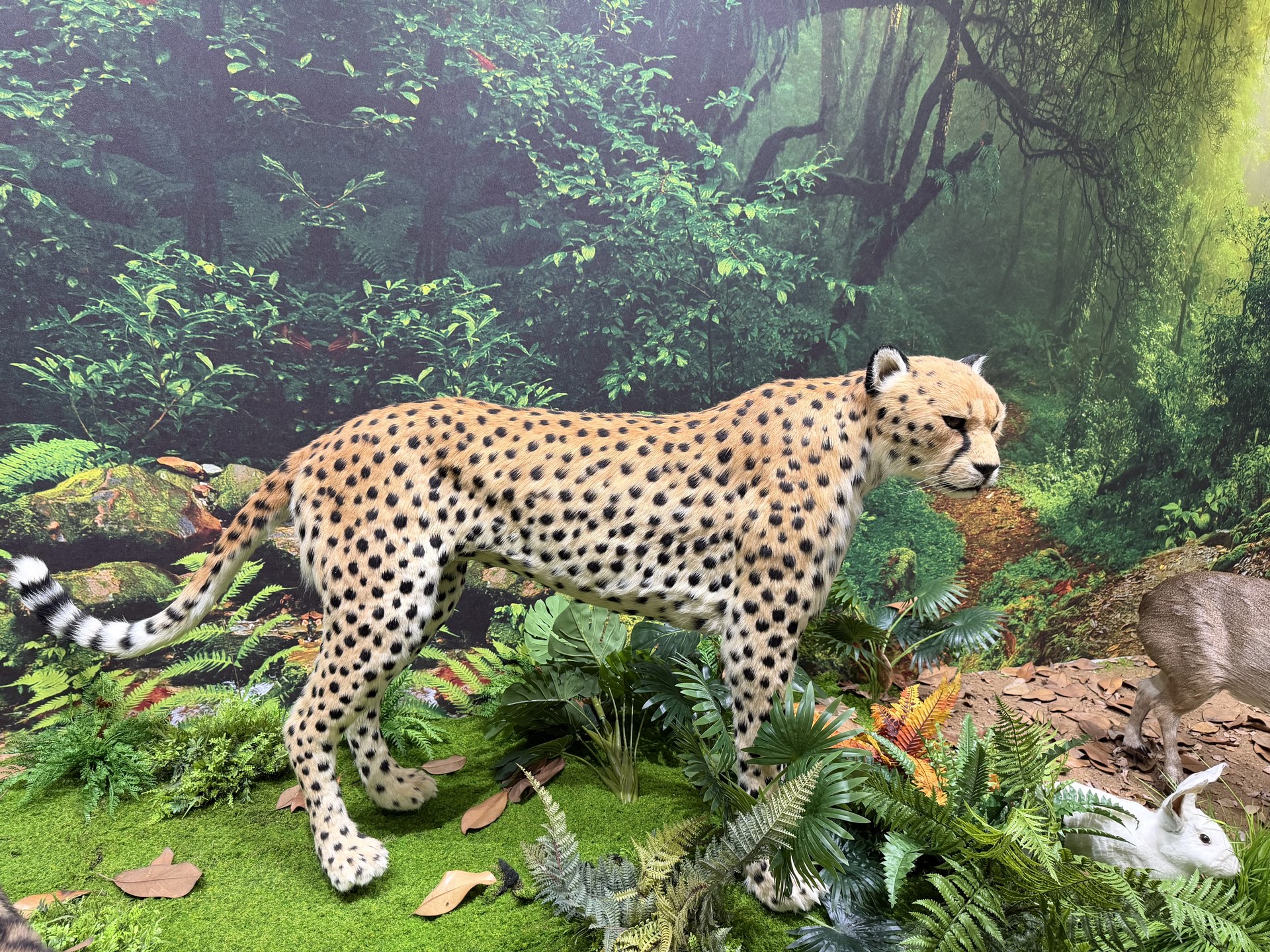
A cheetah is read from its lines — the small head, the solid black spots and the black tear-stripes from eye to mouth are what make it the fastest cat, not a leopard. This model carries that lean, ground-hugging silhouette on the same frame and movement system as the rest of the range, so it reads as speed from across a plaza and the spots still hold detail up close.
| Product type | Large electric animatronic animal model |
|---|---|
| Overall size | Length 1–30 m, height 1–15 m — full custom sizing |
| Power | 110 V / 220 V, specified per site |
| Power draw | 150 W to 8000 W, depending on size and movement count |
| Control | Industrial single-chip controller |
| Materials | National-standard steel · first-tier servo motors · high-density foam · composite silicone · elastic fibre mesh reinforcement |
| Movements | Jaw open and roar · eye blink with LED eyeballs · head nod · forelimb grip · breathing torso · tail sway · walking stance |
| Trigger options | Infrared proximity sensor · radar · pre-programmed sequence · remote control · voice interaction |
| Suits | Scenic parks, theme parks, malls, public squares, amusement parks, exhibition halls |
| Warranty | 12 months on the complete unit |
The tear-stripes and the solid spots are where the budget goes, and it shows. They are masked and finished by hand, and the animal is built to the size and the site it is going into rather than pulled from a standard.
A small rounded head, solid black spots across a tan coat and two black tear-lines running from the inner eye to the corner of the mouth — the features that make a cheetah read as a cheetah at a glance. They are sculpted and finished as one piece, so the expression holds from any angle.
The body is long, light and low, built to suggest a sprint rather than a prowl. A cheetah modelled with rosette spots or a heavy build reads as a leopard, so the proportions here follow the species, not the display habit.
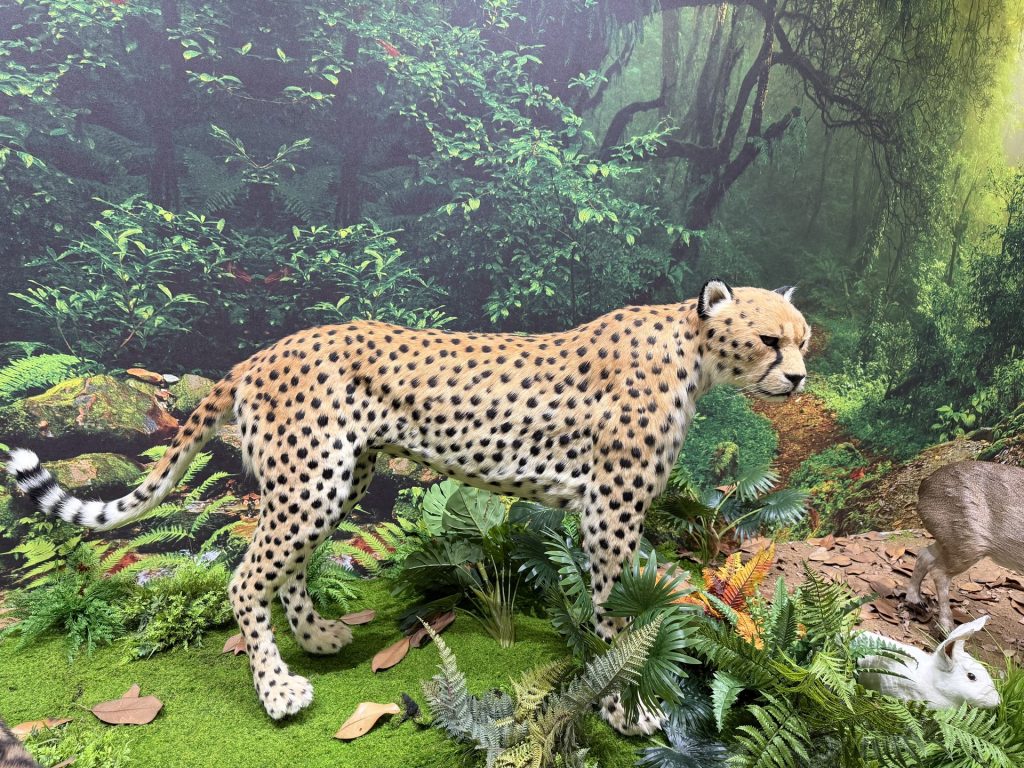
This is an outdoor animal. The frame is hot-dip galvanised steel, the skin is anti-UV composite silicone over an elastic fibre mesh, and the servo drive is rated to IP65. The tan coat is laid in gradient layers under a UV topcoat so the spots read as fur rather than as flat print after a summer outside.
The unit arrives in bolted sections and assembles on site without welding. The long tail is the fragile part, which is exactly why it ships as a protected module and bolts on last.
Safari parks, zoo entrances, themed streets and mall atriums. The low, fast silhouette works at ground level, so it suits open plaza and pathway settings. It is supplied with the animal information board as a separate element.
What sizes can be built? Anything from 1 m to 30 m long and up to 15 m tall. The size is set by the site, the sight lines and the transport route, not by a fixed catalogue.
How is it triggered? Four ways: infrared or radar sensing, a pre-programmed sequence set before dispatch, handheld remote, or voice interaction. Most sites run the sensor as the default and keep the remote for staff.
What does it need on site? A 110 V or 220 V supply and a solid fixing point. The unit arrives in modules and bolts together — no on-site welding.
Can it run outdoors? Yes. The standard specification is an outdoor one, with anti-UV silicone skin, a water-resistant servo drive rated to IP65, and a hot-dip galvanised frame that tolerates salt spray.
How is it fixed? Four options: concrete foundation with pre-embedded anchor bolts, a weighted base that can be moved as one piece, expansion bolts on a hard indoor floor, or a sealed and buoyancy-rated base for water features.
How long does production take? Custom builds run on a lead time confirmed against the drawing. Send the requirement and the site plan, and the proposal comes back with the timing and the drawings marked up.
Materials. National-standard steel frame, first-tier servo motors, high-density foam core, composite silicone skin over elastic fibre mesh, hand-sprayed colour finish.
Related.the animatronic dinosaur range, mall installations, costumes and puppets.
The model ships in modules on a reinforced timber crate, with the frame sections, skin panels, head module and hardware packed and labelled for assembly. Nothing on site is welded; the sections bolt together and the base is fixed to a concrete foundation, a weighted base or expansion bolts depending on the surface.
Assembly is a one-day job for a crew, and our technician joins the first run so the movement settings are dialled against the actual ground and light. The tail is checked in place last.
The information board, the lighting and the surrounding landscape are quoted separately and can be drawn at the same time, so the animal and its interpretation arrive as one project rather than two.
| Frame | Hot-dip galvanised or lightweight aluminium welded structure, module sections bolted for transport |
|---|---|
| Skin | Composite silicone over elastic fibre mesh, multi-layer gradient PU paint with UV topcoat |
| Movements | Jaw, blink, head nod, forelimb grip, breathing torso, tail sway, walking stance |
| Control | Industrial microcontroller · infrared / radar trigger · remote · pre-programmed sequence · voice interaction |
| Weather | Outdoor specification standard; servo drive rated IP65, −20 °C to +60 °C |
| Size | Custom — length 1–30 m, height 1–15 m, built to your drawings |
| Lead Time | 30–45 days after drawing approval |
| Warranty | 12 months with maintenance support |
Same factory and the same build standard. What changes is size, movement set and how the exhibit is meant to be used on site.
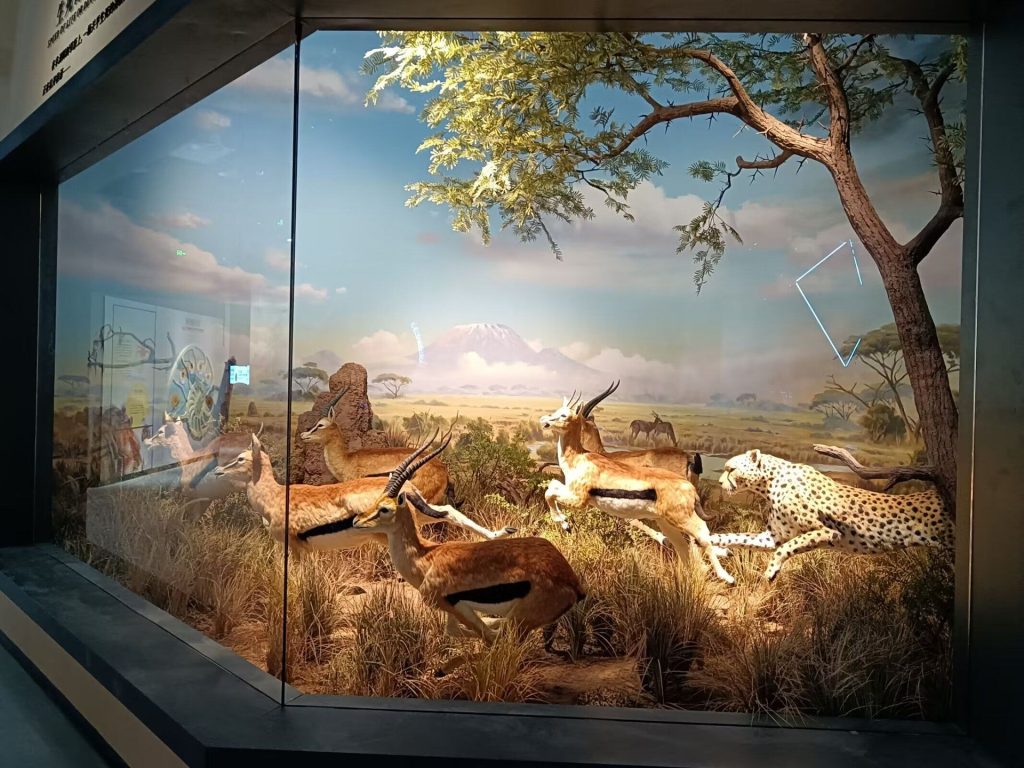
A gazelle is read from its grace — the slender legs, the tan coat with a black flank stripe and the long thin horns […]
View Product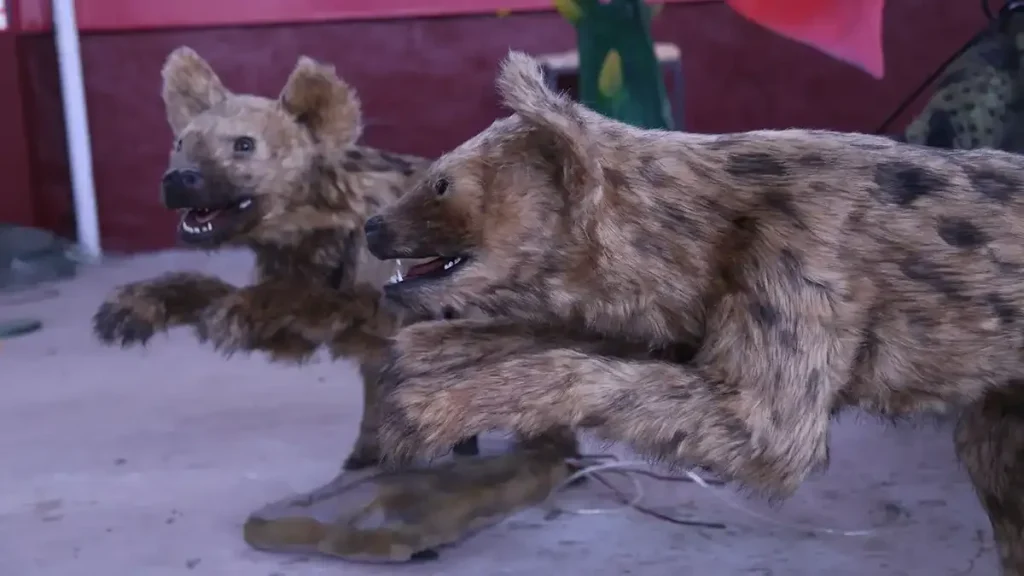
A 1.4–1.7 m spotted hyena designed to be ordered in packs, with staggered trigger timing.
View Product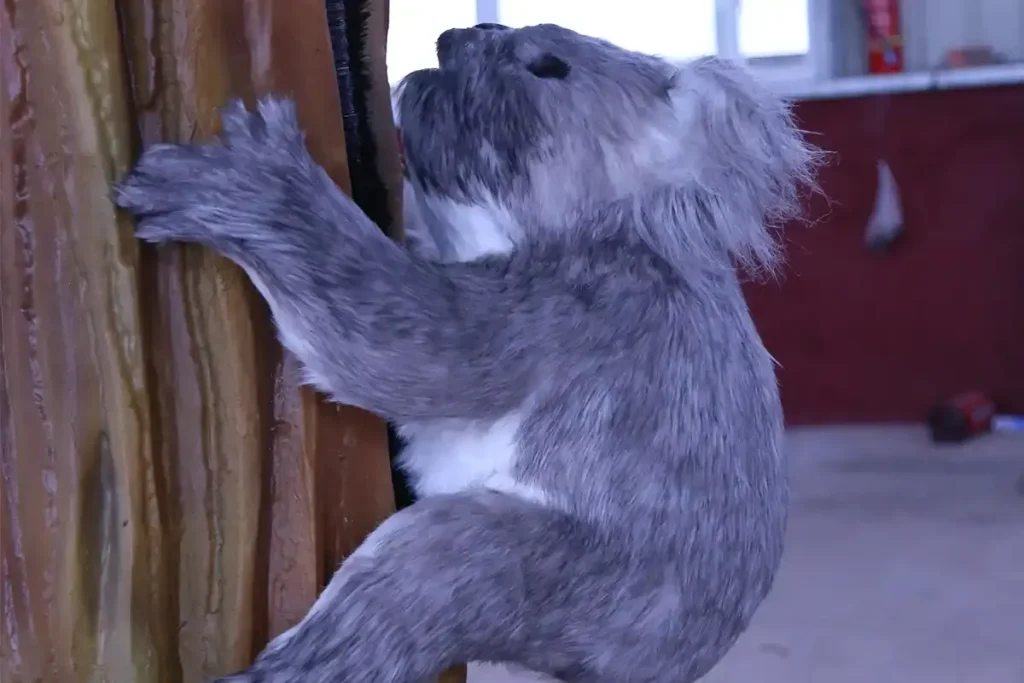
A koala on the ground is a grey lump. The species is defined by its grip: curled around a trunk, back to the viewer, […]
View ProductThree things buyers usually want settled before they ask for a drawing — what drives the number, how the piece is actually built, and what to check between suppliers.
Extinct and hard-to-keep species, sculpted to anatomy keepers can check — where animatronic animals earn a place beside a living collection.
Read the guide →From fossil reference to finished skin — how proportions, texture, colour and weathering are decided, and what separates a realistic build from a cartoon one.
Read the guide →How Much Does an Animatronic Dinosaur Cost? Understanding the Key Cost Factors If you are planning a museum exhibition, theme park attraction, or promotional […]
Read the guide →Send your dimensions, movement requirements and installation site. You get a realistic budget range and a dated build schedule.
Or email info@hltdino.com — we reply within one business day.