Dinosaur Skeletons & Fossils
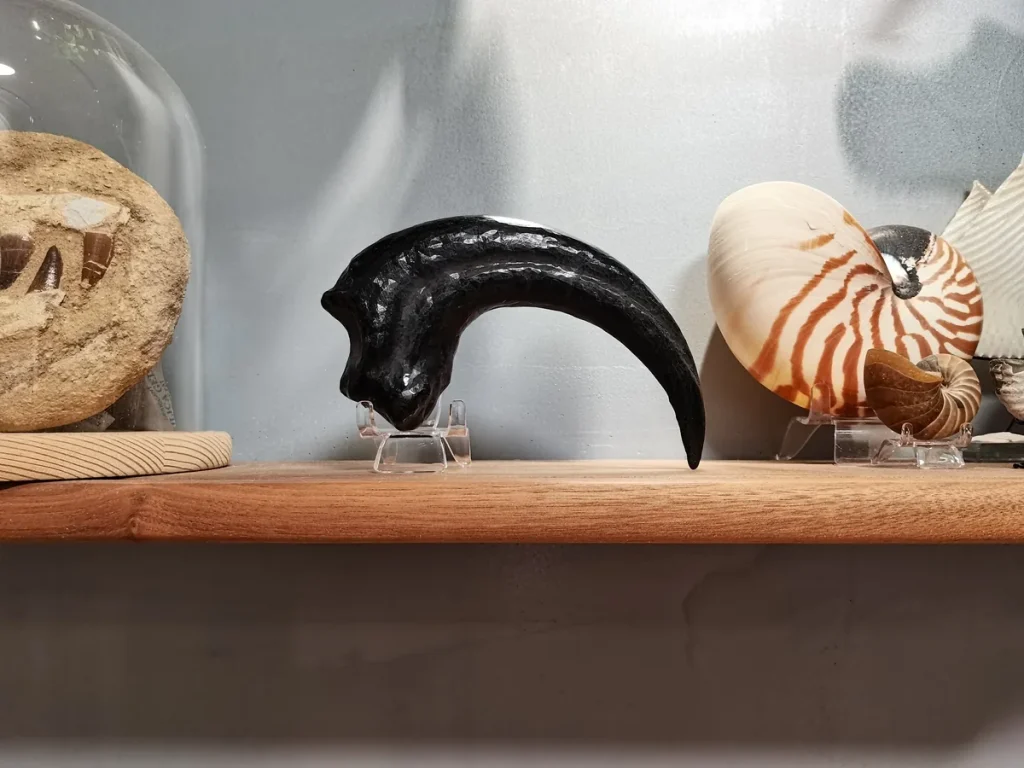
Velociraptor carried an enlarged claw on the second toe of each foot, held clear of the ground when walking. The claw is deep, laterally flattened and curved through most of its length, which is why it is called a sickle.
The popular story is that it was used to disembowel prey. The biomechanics do not support that: the claw has no cutting edge, the curvature is wrong for a slashing stroke, and the range of motion at the joint is limited. The current reading is that it was a climbing hook and a grip, driven into a hold and used to keep the animal attached. That is a less exciting sentence on a label and a more accurate one.
It matters for a display because a claw presented as a blade invites a comparison with a knife, and the object does not survive that comparison. Presented as a hook, it reads correctly.
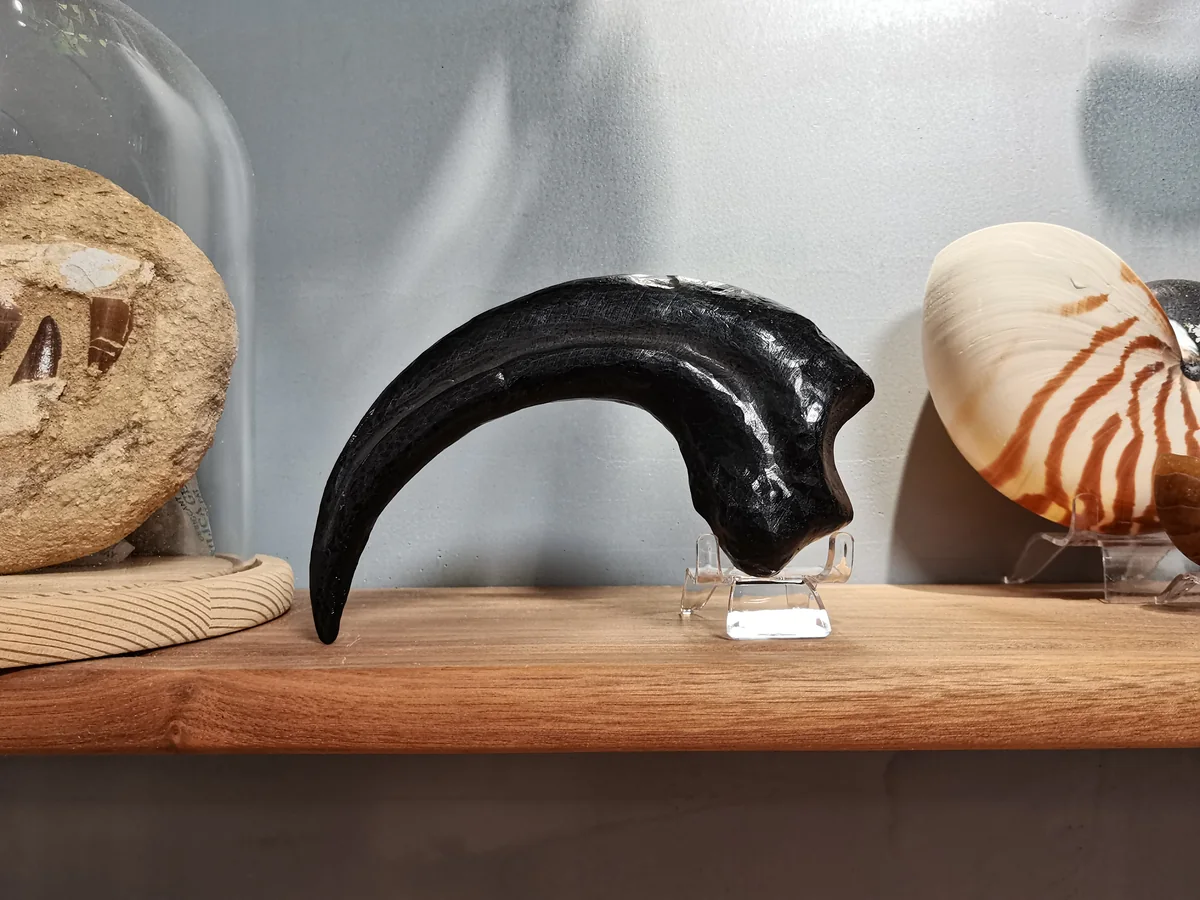
The fossil preserves the bony core of the claw. In life a keratin sheath covered it, and the sheath added roughly a third to the length and deepened the curve. A 70 mm core was a claw closer to 95 mm on the living animal.
Most claw replicas on the market are casts of the core, because that is what a mould taken from a fossil produces. There is nothing wrong with that, as long as the label says so. We supply both versions: the core for comparative collections, the sheathed claw for public display where the object has to read as the animal rather than as its skeleton.
If you are building a set of claws from several species, stay with one version across the set. A sheathed Velociraptor next to a bare Deinonychus core reads as an error rather than as a comparison.
Three things. First, the curve should run through the whole claw rather than turning up sharply near the tip; the latter is what you get when a mould is pulled from a distorted fossil. Second, the base should be a concave socket where it met the toe, not a flat cut. Third, the surface should show the fine longitudinal grain of the bone, not a smooth polished shell.
A fourth thing, if the piece is being sold as museum quality: look at where the claw would have met the sheath. There should be a slight swelling at the base of the crown, because the sheath thickened there before tapering. Casts that ignore it look like thorns.
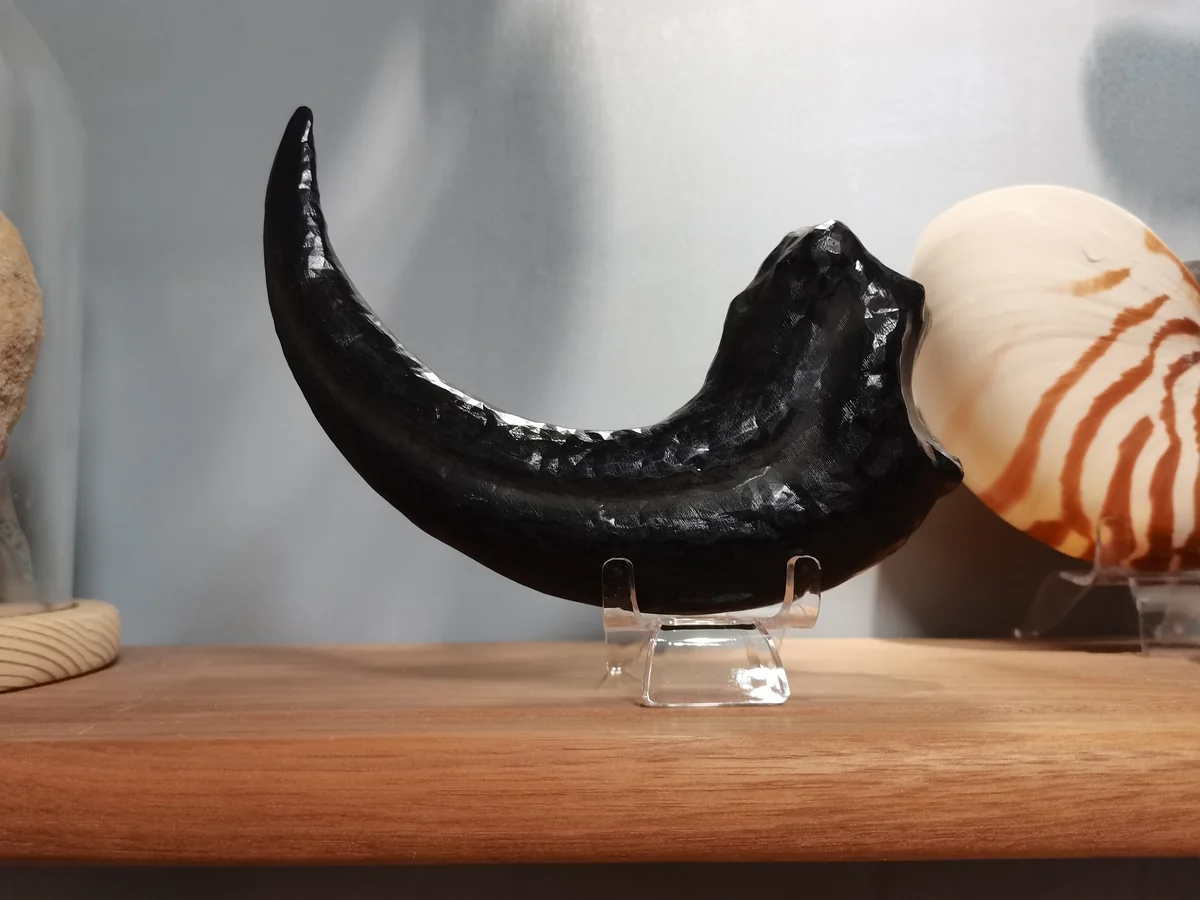
A claw is a small object in a large room, and the commonest display mistake is giving it too much air. Our standard mount is a clear acrylic block with a machined recess, holding the claw at thirty degrees so the curve is legible from standing height.
For a wall, use a shadow box with a dark interior and light the claw from one side so the curve throws a shadow. For a handling collection, order without the block and specify the sealed finish, because a claw that gets picked up will be dropped.
The sickle claw is not one shape, it is a family of shapes. Deinonychus carries a smaller, thinner version than Velociraptor. Utahraptor carries one that is larger and heavier in proportion to its body. The Mongolian forms sit in the middle, and the smallest dromaeosaurs carry claws that look almost delicate until you compare them to the animal’s size.
A row of four claws from four species is a better exhibit than one perfect claw, because the variation is the point. The question a visitor asks is why the claw is shaped that way, and the answer is only visible in comparison. We cast the set to a single tone so the shapes do the arguing.
Keep the claws at their true sizes. Scaling them to match looks tidier and destroys the information, which is the entire reason for having four of them.
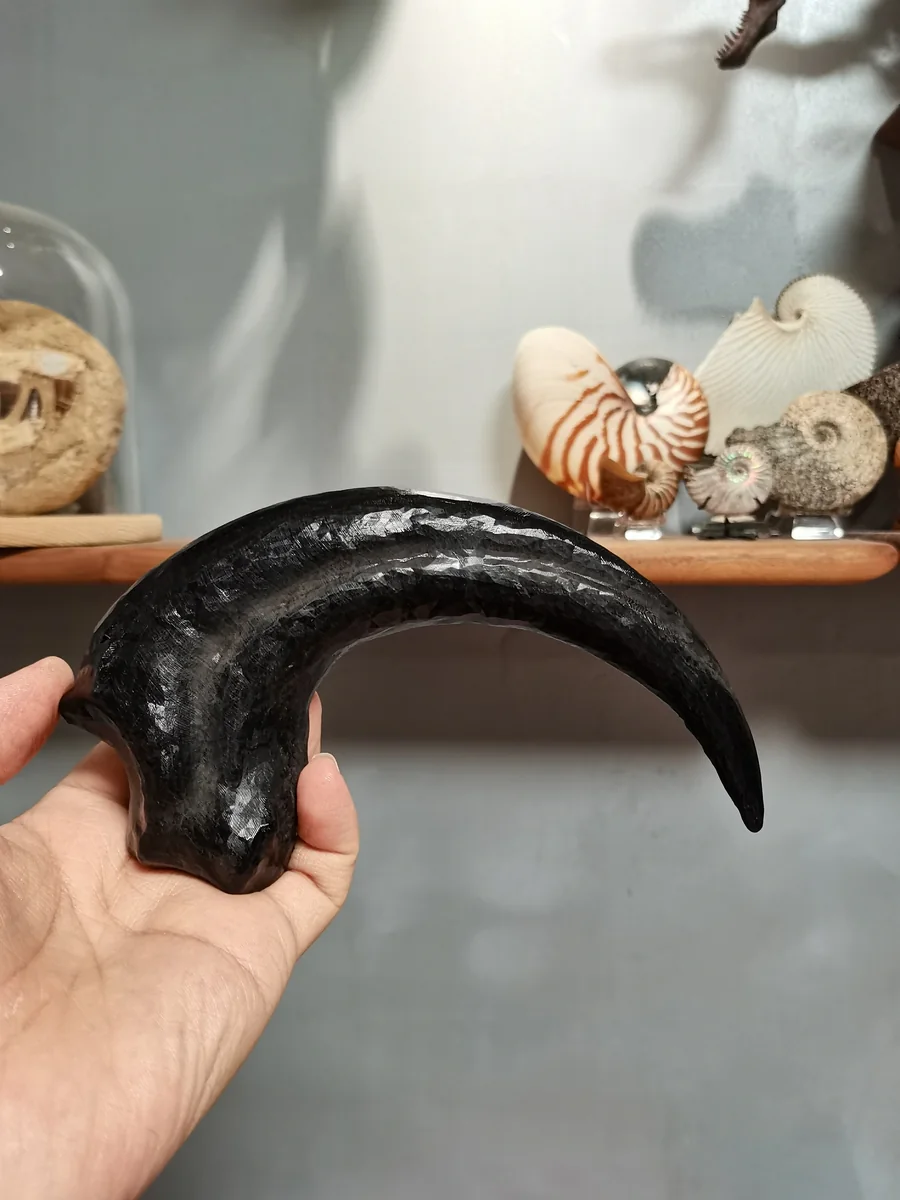
This is one of the few fossil replicas that genuinely works as a touch object. It is small, it has a shape you can understand with your fingers in one second, and it does not have thin edges that break when it is set down.
For a touch table, order the sealed finish and the core version rather than the sheathed one. The core is the honest object for handling, because it invites the explanation of what the sheath was, and that explanation is the whole interpretive moment.
Attach it to the table. A claw this size will be picked up and walked off with, not maliciously, just because it fits in a pocket. A short steel cable through the base of the mount solves it without making the object look restrained.
| Species | Velociraptor mongoliensis |
|---|---|
| Age | Late Cretaceous, roughly 75 to 71 million years ago |
| Type | Single sickle claw replica. Static, no mechanism |
| Length | 70 mm along the curve as a bony core; 95 mm with sheath |
| Digit | Second toe of the hind limb; left or right |
| Versions | Skeletal core, or core with reconstructed keratin sheath |
| Material | Cast composite with mineral pigment finish, matte sealed |
| Mount | Clear acrylic block with machined recess, thirty degrees |
| Weight | About 120 g with mount |
| Duty | Indoor |
| Customisation | Core or sheathed, side, mount type, paired sets with other dromaeosaurs |
Is this the claw or the bone inside the claw? The standard piece is the bony core, which is what a fossil preserves. The sheathed version reconstructs the keratin covering and is the better choice for public display.
Why is the sheathed claw so much bigger? Because the sheath added about a third to the length and deepened the curve. The animal walking around had a considerably larger claw than the fossil shows.
Was it really used to disembowel prey? Probably not. The claw has no cutting edge and the joint does not have the range for a slashing stroke. The current reading is a climbing hook and a grip.
Can I order a matched left and right pair? Yes. Specify the sides and we cast them as a pair, finished to the same tone and mounted on matching blocks.
Does it come with a case? No, the acrylic block is the mount only. A shadow box with side lighting shows a single claw far better than an open shelf.
Can it be displayed with a full skeleton? Yes. We finish it to match the skeleton tone so the two read as one exhibit rather than as separate purchases.
Is the tip sharp? It is finished with a wear facet rather than a needle point, which is both more accurate and safer for handling collections.
Same factory and the same build standard. What changes is size, movement set and how the exhibit is meant to be used on site.
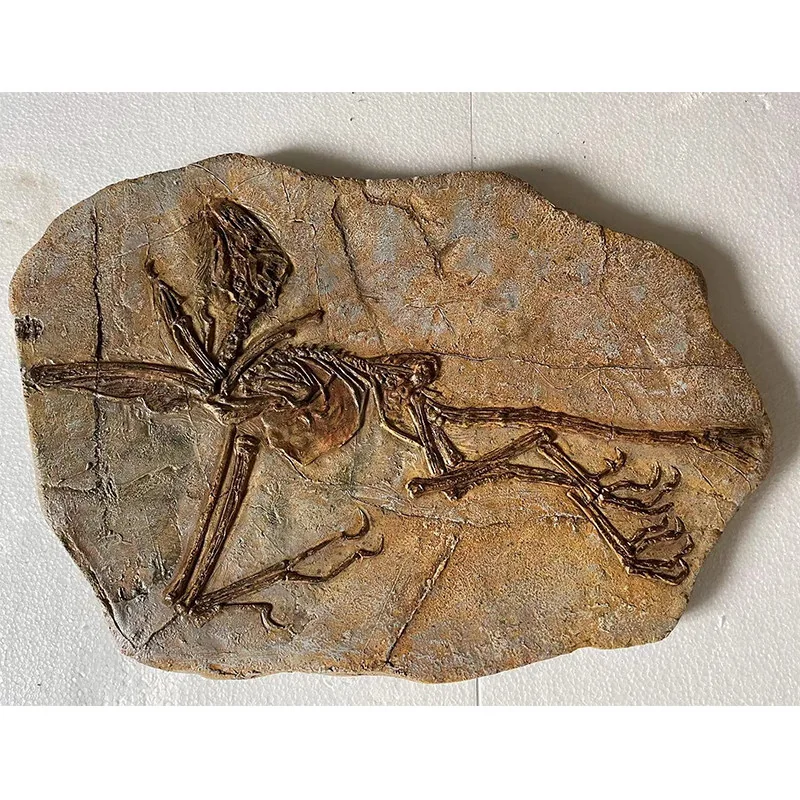
Feathers Are the Hard Part Archaeopteryx is the fossil that made feathers ordinary, and the feathers are the hardest thing to reproduce. On the […]
View Product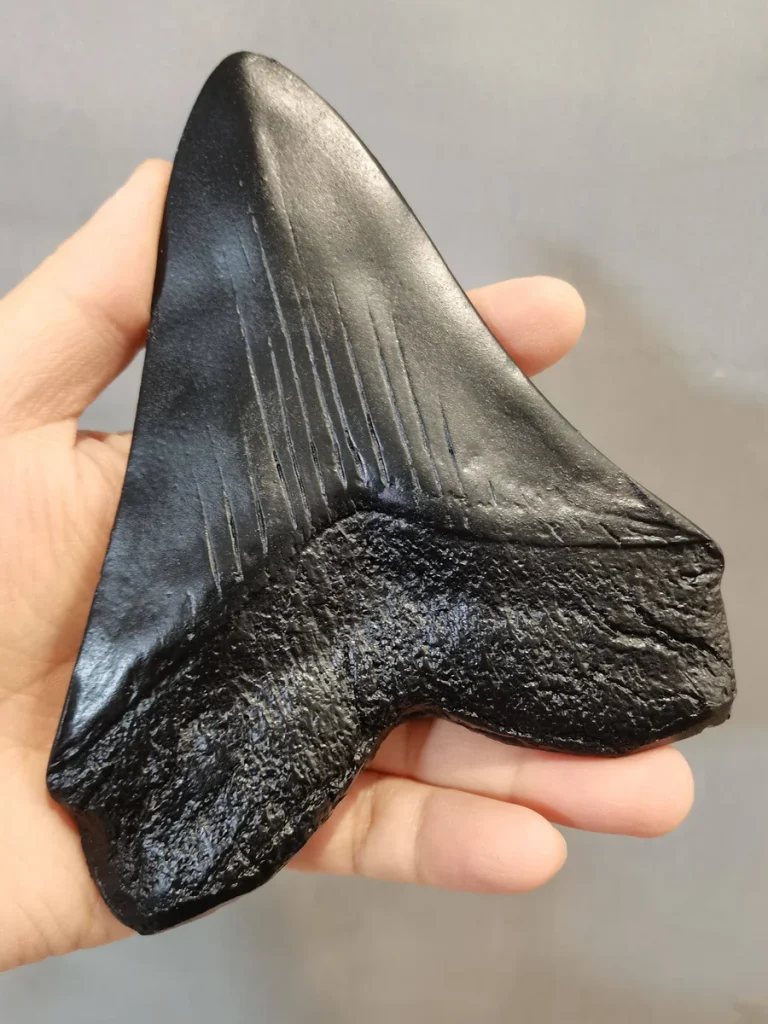
Serrations Are Where Cheap Casts Show Carcharodontosaurus teeth are laterally compressed blades with serrations running along both edges. The serrations are fine, closely spaced […]
View Product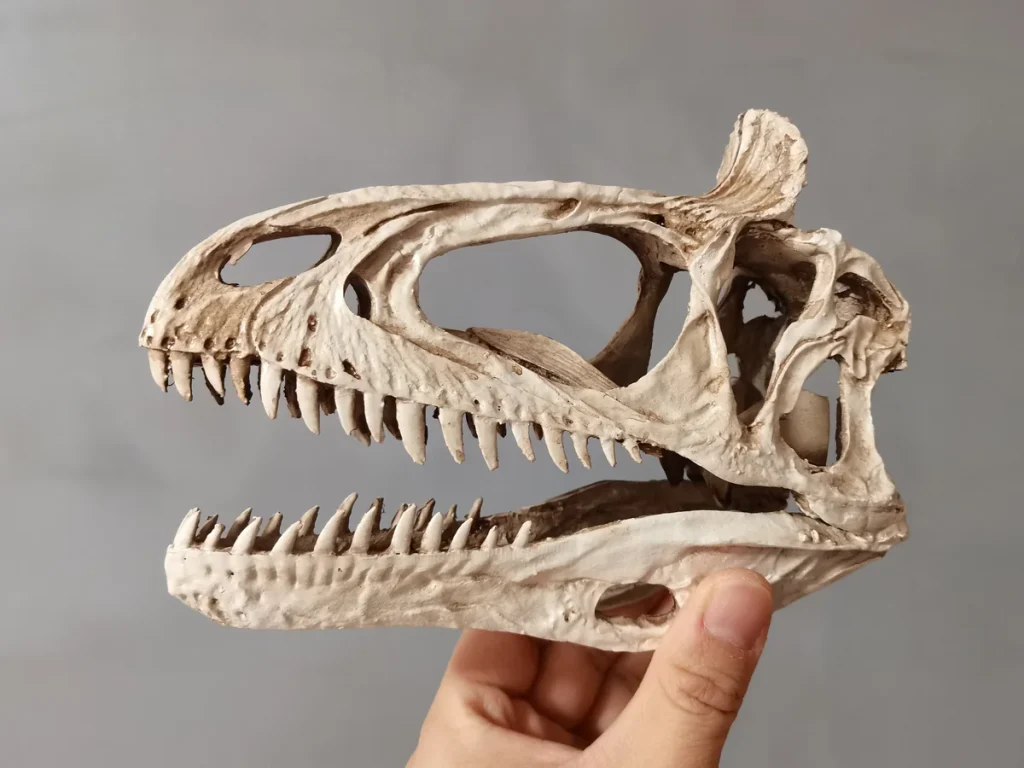
The Crest Does All the Work Cryolophosaurus is identified by one feature: a thin, high crest that rises across the skull roof in front […]
View ProductThree things buyers usually want settled before they ask for a drawing — what drives the number, how the piece is actually built, and what to check between suppliers.
From fossil reference to finished skin — how proportions, texture, colour and weathering are decided, and what separates a realistic build from a cartoon one.
Read the guide →Frame, drives, skin, sensors, sound and weatherproofing — the six systems behind every animatronic dinosaur, and how each one changes cost and behaviour.
Read the guide →Choosing the right animatronic dinosaurs for your venue is not just about picking the most famous species — it is about matching each dinosaur […]
Read the guide →Send your dimensions, movement requirements and installation site. You get a realistic budget range and a dated build schedule.
Or email info@hltdino.com — we reply within one business day.