Animatronic Animals
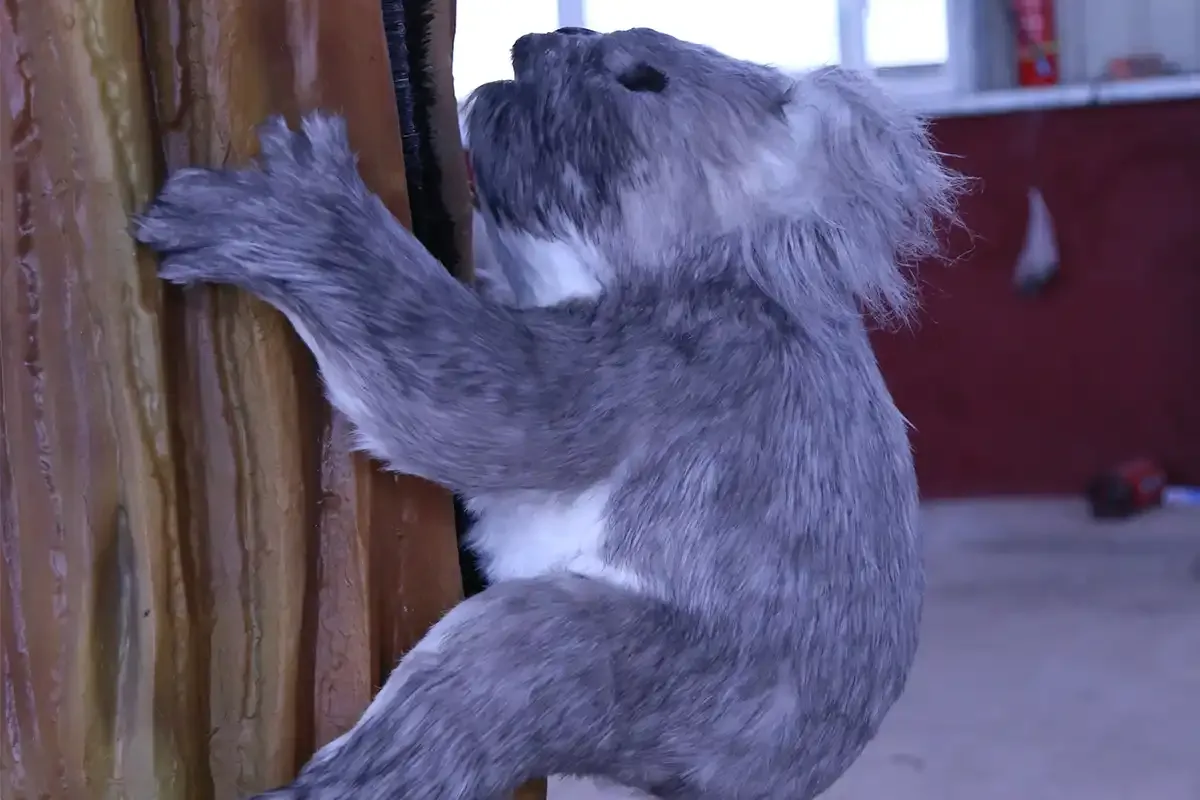
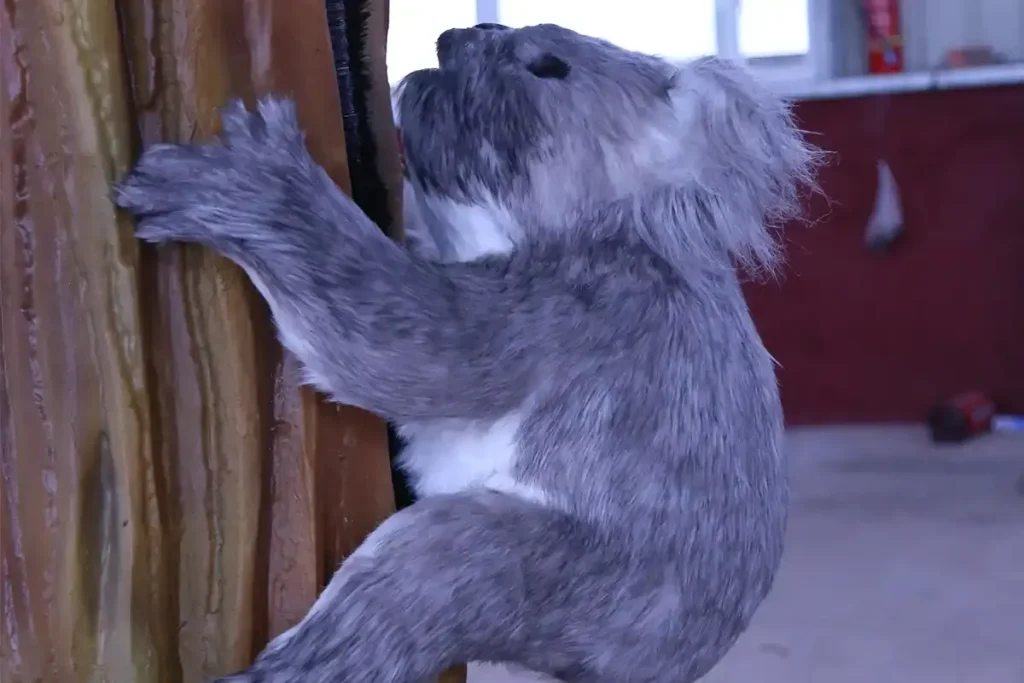
A koala on the ground is a grey lump. The species is defined by its grip: curled around a trunk, back to the viewer, head turned. That posture is what makes it recognisable at ten metres, and it is the reason the build ships with a eucalyptus branch or prop rather than a base plate.
| Species | Phascolarctos cinereus (koala) |
|---|---|
| Size | 60 cm to 120 cm seated height; custom |
| Frame | Light-gauge weatherproof metal with pose-specific anchor points |
| Skin base | Premium hand-finished surface (patent ZL 2022 1 0224489.5) |
| Fur | Hand-pasted synthetic — grey-brown coat, white chest, dark ear tufts |
| Face | Sculpted dark leathery nose, glass eyes with hand-painted catchlight |
| Pose | Perched on a eucalyptus branch or prop; custom |
| Movement | Slow head turn, ear twitch, breathing (1 to 3 servos) |
| Sound | Optional built-in speaker with koala vocalisation or narration |
| Duty | Indoor and covered outdoor |
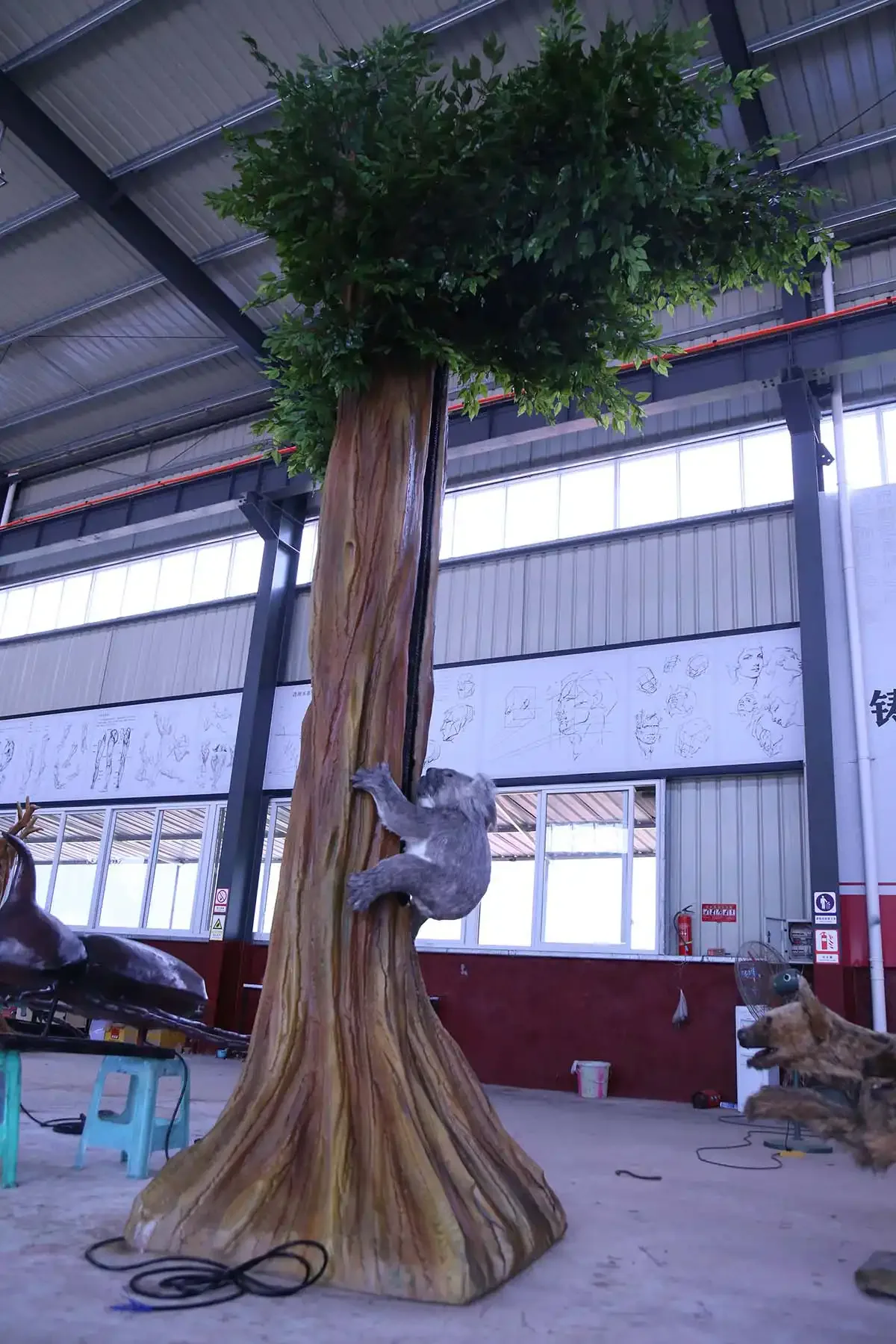
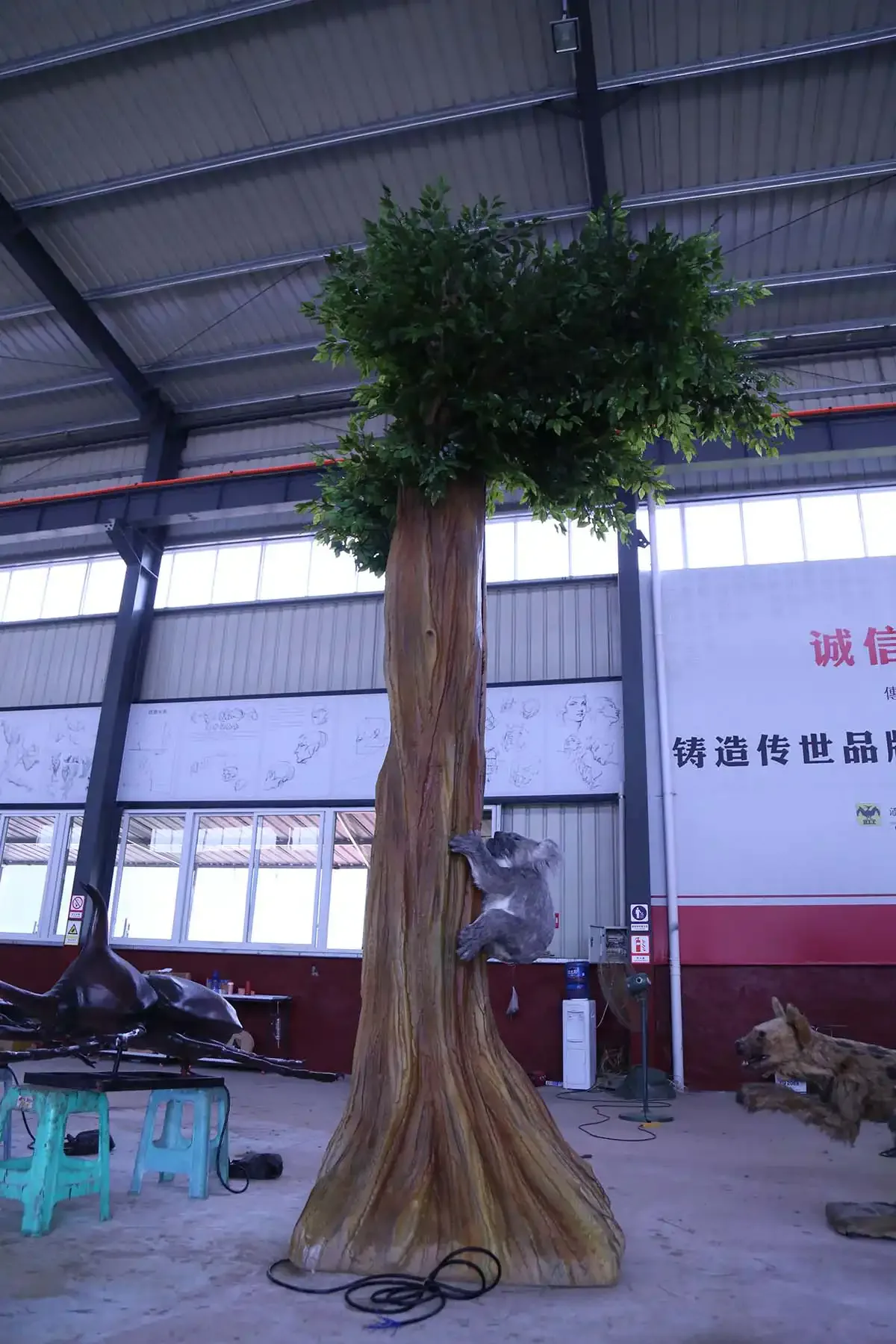
The branch also solves the support problem. A light-gauge frame carrying 60 to 120 cm of body does not need a heavy foundation if the load goes into a vertical trunk — which is exactly how the real animal sits.
The coat is hand-pasted in three zones: grey-brown body, white chest, dark tufts at the ears. What separates a convincing koala from a plush toy is direction — the fur on the shoulders and flanks lies backward and slightly down, and the chest fur runs forward. Fabric glued on has no direction, and the eye reads it instantly.
The nose is the second identifier. It is large, dark, leathery and slightly shiny, and it sits almost flush with the face rather than protruding. It is a small sculpt and it is the part children point at.
Australian zones, walk-through habitats where the animal hangs at head height, and museum galleries that need a small mammal at eye level rather than an elephant at ceiling height. One or two servos cover head turn and breathing; the ear twitch is the third and the one that makes it read as alert.
Does it come with the branch? Yes — a eucalyptus branch or prop is part of the build. The shape is customisable and changes the lead time, not the price structure.
How much movement does it have? One to three servos: slow head turn, ear twitch, breathing. On a small animal that is enough; more motion reads as a toy.
Is it weatherproof? Indoor and covered outdoor. It is a fur build, and fur that stays wet holds odour, so an exposed position is not recommended.
Can it be built smaller? Yes, but below about 60 cm the head proportions start reading as a baby animal rather than an adult.
Low-voltage supply through a weatherproof control box at the branch. The load is minimal — this is a one-to-three-servo build with optional audio.
Installation is the branch, not the base. A wall-mounted or free-standing branch has to be anchored to take the animal’s weight plus a leaning visitor, and that is the item to engineer before the position is fixed.
Assembly, then three settings: head turn range, ear twitch interval, breathing rate. The breathing is set slow and almost imperceptible — on a small animal it is the difference between asleep and switched off.
The head turn should be short. A koala does not scan; it turns its head a few degrees and stops. Set the arc wide and it reads as a surveillance camera.
Materials. Light-gauge weatherproof metal frame, high-density foam, patented hand-finished skin, hand-pasted synthetic fur in three colour zones, glass eyes, sculpted nose.
Related. the animatronic animal range, the zebra pair, zoo installations, request a quote.
Same factory and the same build standard. What changes is size, movement set and how the exhibit is meant to be used on site.
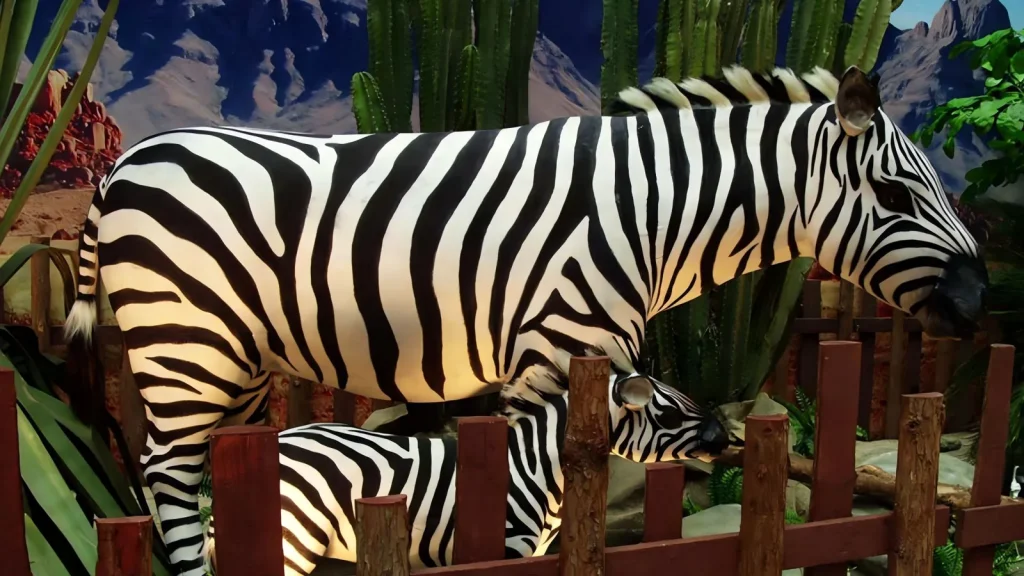
Life-size animatronic zebra mare and foal with individually painted stripes and coordinated mother-and-offspring behaviour for savanna exhibits.
View Product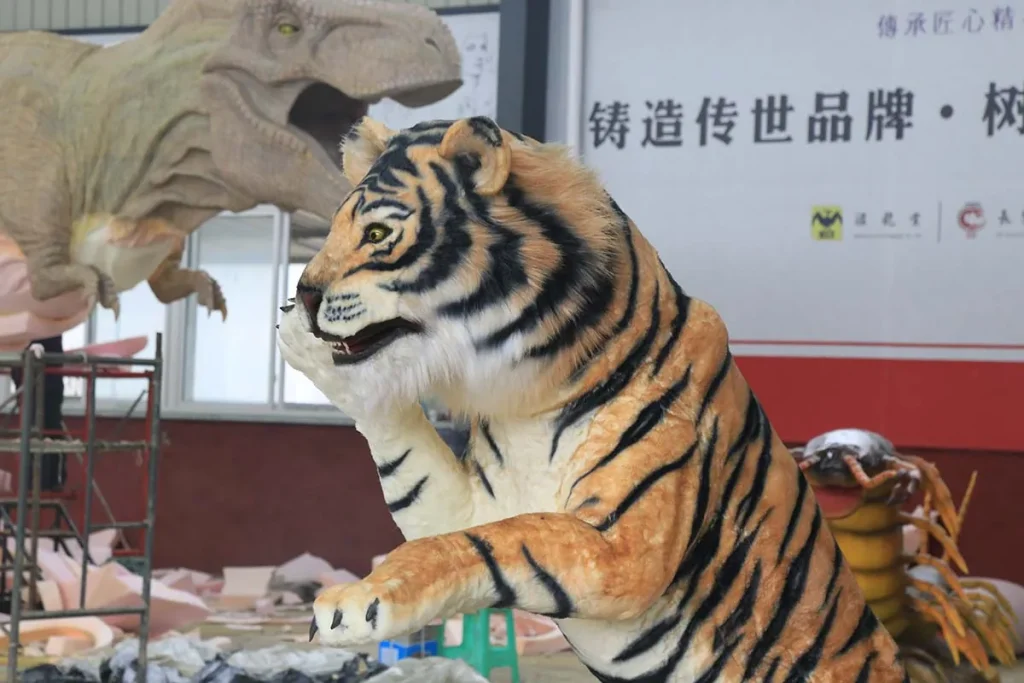
A life-size tiger built to zoo-grade anatomy — 2.6–3.1 m, slow stalking motion, painted stripe detail.
View Product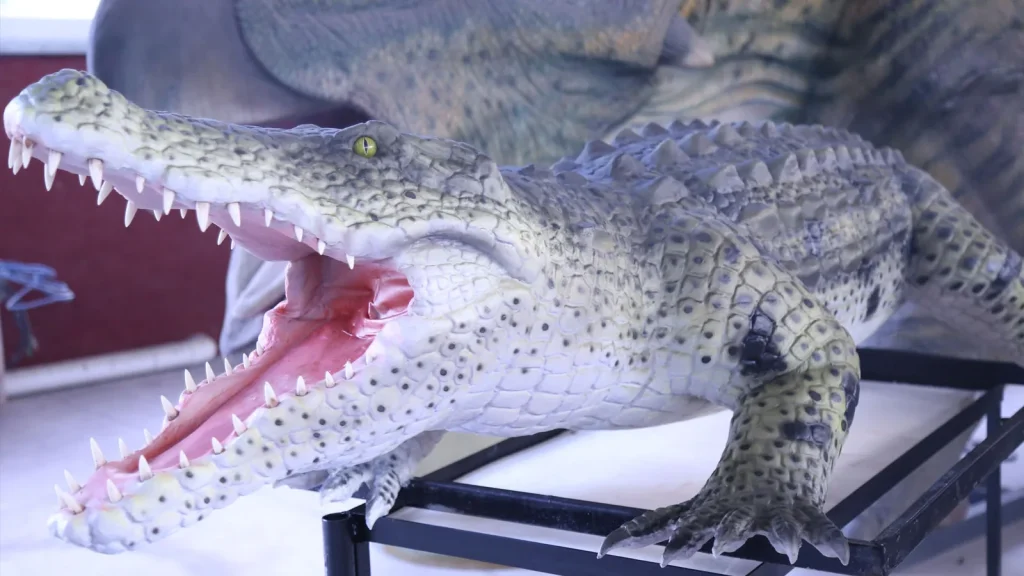
Hyper-realistic animatronic crocodile with hand-sculpted osteoderms, opening jaw and two poses — threat display or low hunting stance.
View ProductThree things buyers usually want settled before they ask for a drawing — what drives the number, how the piece is actually built, and what to check between suppliers.
Extinct and hard-to-keep species, sculpted to anatomy keepers can check — where animatronic animals earn a place beside a living collection.
Read the guide →From fossil reference to finished skin — how proportions, texture, colour and weathering are decided, and what separates a realistic build from a cartoon one.
Read the guide →How Much Does an Animatronic Dinosaur Cost? Understanding the Key Cost Factors If you are planning a museum exhibition, theme park attraction, or promotional […]
Read the guide →Send your dimensions, movement requirements and installation site. You get a realistic budget range and a dated build schedule.
Or email info@hltdino.com — we reply within one business day.