Animatronic Animals
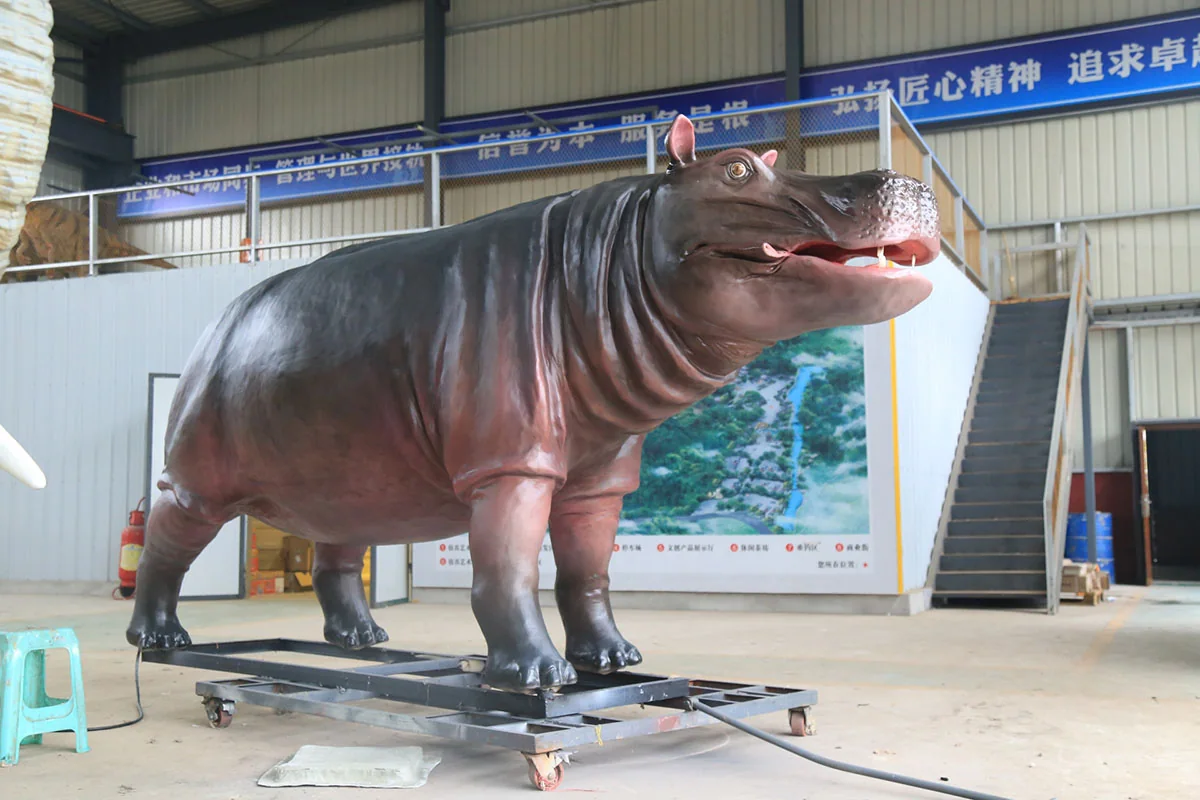
A hippopotamus is the one animal where the motion design is mostly about restraint. Real hippos stand still for long stretches, and a build that swings its head and snaps its jaw looks like a cartoon of a hippo rather than a hippo. The ones that work are the ones doing almost nothing.
| Length | 4 m standard; 2.5 m to 6 m buildable |
|---|---|
| Height | About 1.5 m at the shoulder |
| Skeleton | Weatherproof metal internal skeleton |
| Body core | High-density core with hand-finished surface |
| Power | 110 V / 220 V AC |
| Motion | Ear flick, slow jaw, head turn, tail; breathing on premium builds |
| Herd option | Multi-animal installations available on one layout |
| Duty | Outdoor standard |
Four animations do the work on a hippo: an ear flick, a slow jaw opening that goes no further than about twenty degrees, a head turn that takes several seconds to complete, and a tail flick. That is the whole set. A hippo build with twice the movement reads as less convincing, not more.
The jaw is the one most often got wrong. A wide, fast gape is dramatic and wrong — the animal opens slowly and does not open far. Slowing it down costs nothing and is the difference between a hippo and a monster.
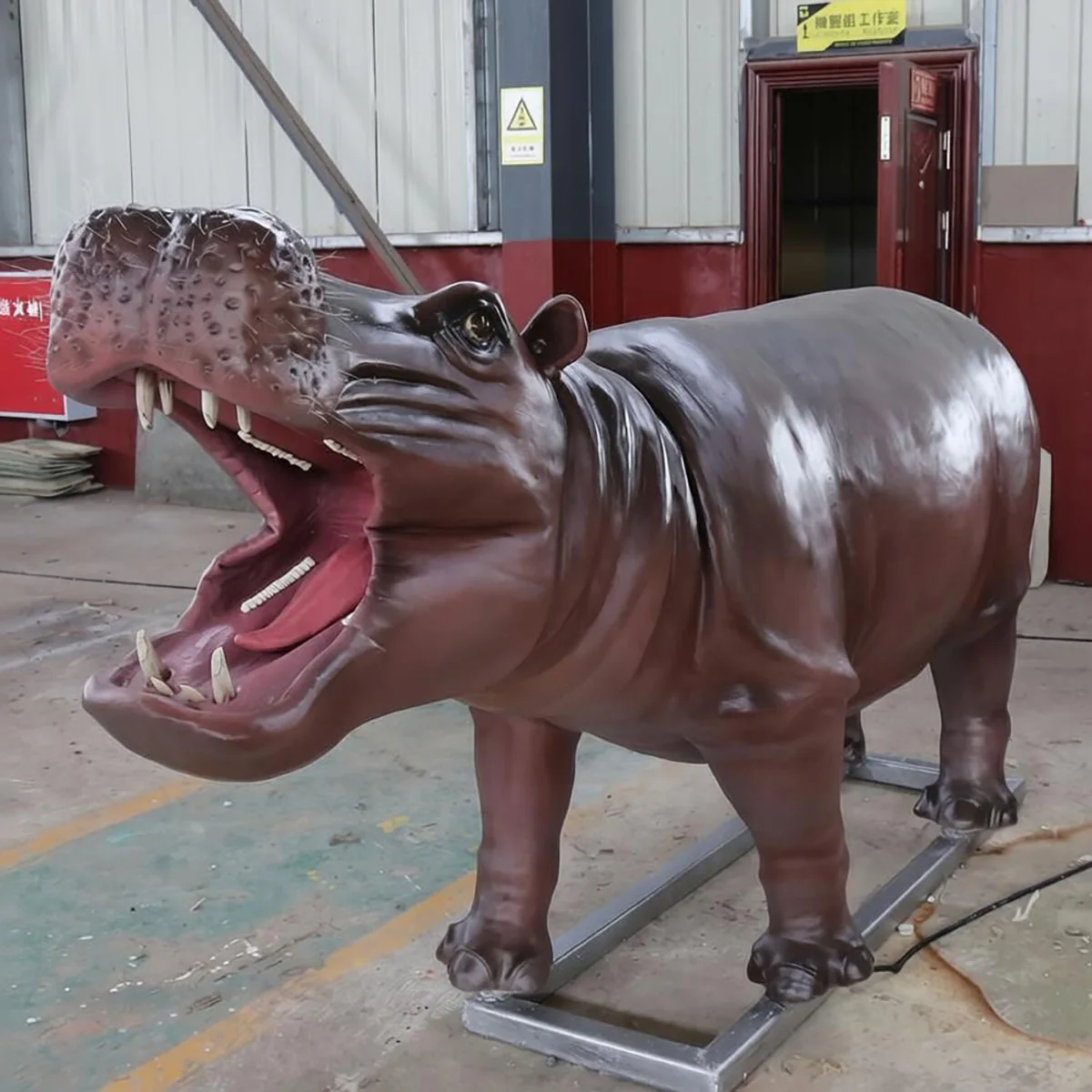
The surface is the other half. A hippo’s skin is not smooth and not even: it has deep folds around the neck and shoulders, a network of fine cracks across the flanks, and a colour that goes from grey-pink in the folds to a drier grey on the exposed surfaces.
That variation is hand-applied rather than moulded, and it is what tells a visitor at three metres that this is a hide rather than a painted shell. It also ages well — a textured surface that gets dusty looks more correct, while a smooth painted surface looks dirty.
Hippos read as a group animal: two or three at different depths with one half-submerged in a water feature is the arrangement that most zoos ask for. We build herd sets on a single layout so the animals are scaled to each other, and the sizes can differ — an adult and a juvenile together is a stronger scene than three identical adults.
If a water feature is part of the plan, say so at order. The base treatment changes: an animal standing in water needs a different drainage detail and a different footing from one on dry ground.
Can it be built half-submerged? Yes, and it is a common request — the body is produced with the lower section already finished for permanent water contact.
Is the mouth movement adjustable? Yes, both the angle and the speed are set at commissioning. We set it slow by default.
How many for a herd? Three is the usual number, with one juvenile. Two adults alone read as a pair rather than a group.
Does it need an operator? No. It runs on a cycle or a motion sensor, unattended.
The draw is modest — this is not a high-motion build — and a standard supply at the animal position is enough. The site work that matters is the base: a 4-metre animal at 1.5 m shoulder height is heavy, and it needs a hard standing rather than direct ground contact.
If the animal is going beside or into water, the footing has to be designed for permanent wet, which means a different base specification and a drainage path. This is the item most often discovered late, and it is not something that can be fixed by adding a rubber mat.
Short. The four motions are timed against each other so they do not fire together — an ear flick and a jaw opening at the same moment reads as a mechanism, while a jaw opening three seconds after an ear flick reads as an animal.
The sensor range is set, or the cycle timing is set for unattended running. On a herd, the animals are staggered against each other so the group never moves in unison.
Materials. Weatherproof metal internal skeleton, high-density body core, hand-finished skin with fold and crack detail.
Related. the animatronic animal range, the lion, zoo installations, request a quote.
Same factory and the same build standard. What changes is size, movement set and how the exhibit is meant to be used on site.
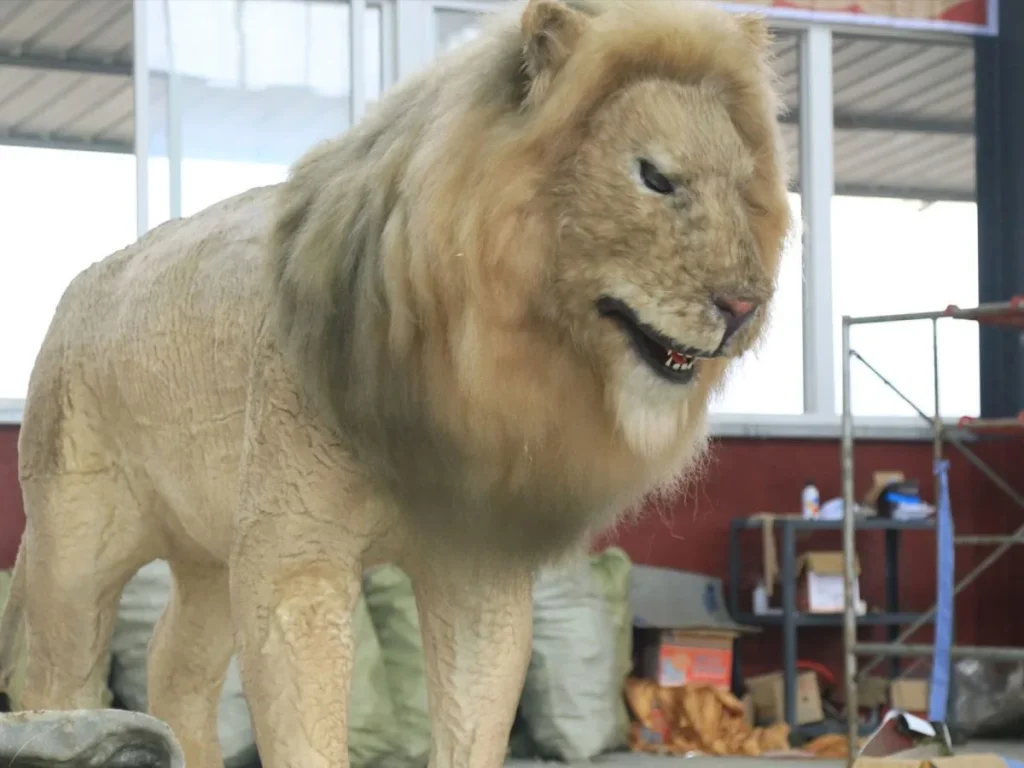
A lion is the easiest animal in the catalogue to get wrong. Everyone knows what a lion looks like, and the failure mode is […]
View Product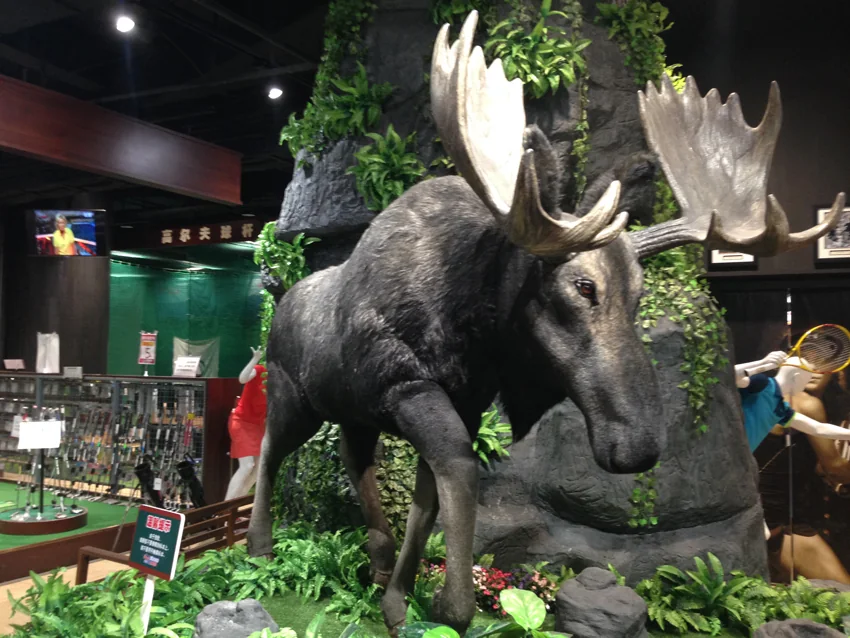
A moose is recognised by three things and nothing else: the palmate antlers, the hanging dewlap under the throat, and the shoulder hump that […]
View Product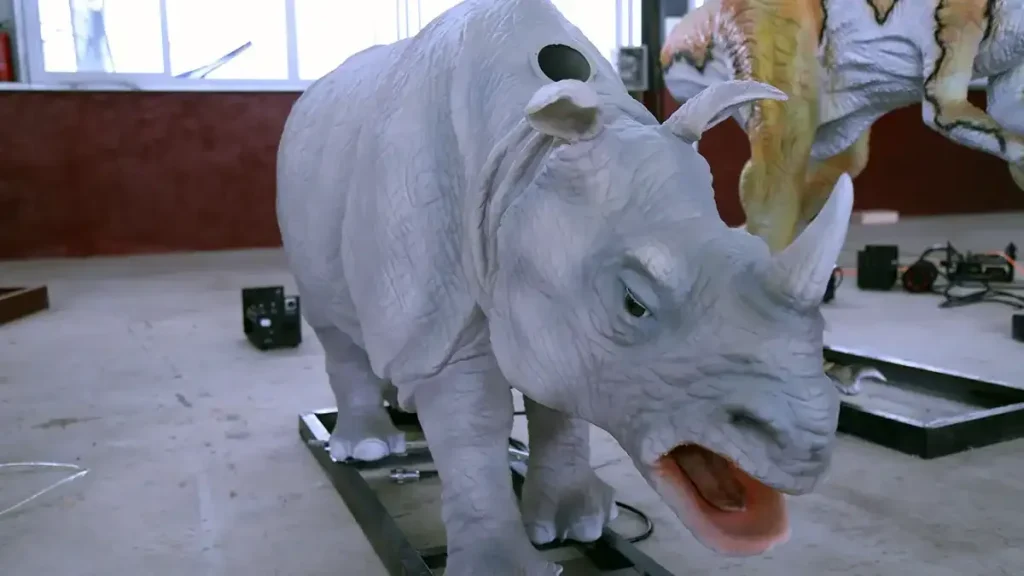
Animatronic white rhino built for year-round outdoor display — mouth and vocal system, head raise, concrete base for loose ground or grass.
View ProductThree things buyers usually want settled before they ask for a drawing — what drives the number, how the piece is actually built, and what to check between suppliers.
Extinct and hard-to-keep species, sculpted to anatomy keepers can check — where animatronic animals earn a place beside a living collection.
Read the guide →From fossil reference to finished skin — how proportions, texture, colour and weathering are decided, and what separates a realistic build from a cartoon one.
Read the guide →How Much Does an Animatronic Dinosaur Cost? Understanding the Key Cost Factors If you are planning a museum exhibition, theme park attraction, or promotional […]
Read the guide →Send your dimensions, movement requirements and installation site. You get a realistic budget range and a dated build schedule.
Or email info@hltdino.com — we reply within one business day.