Animatronic Animals
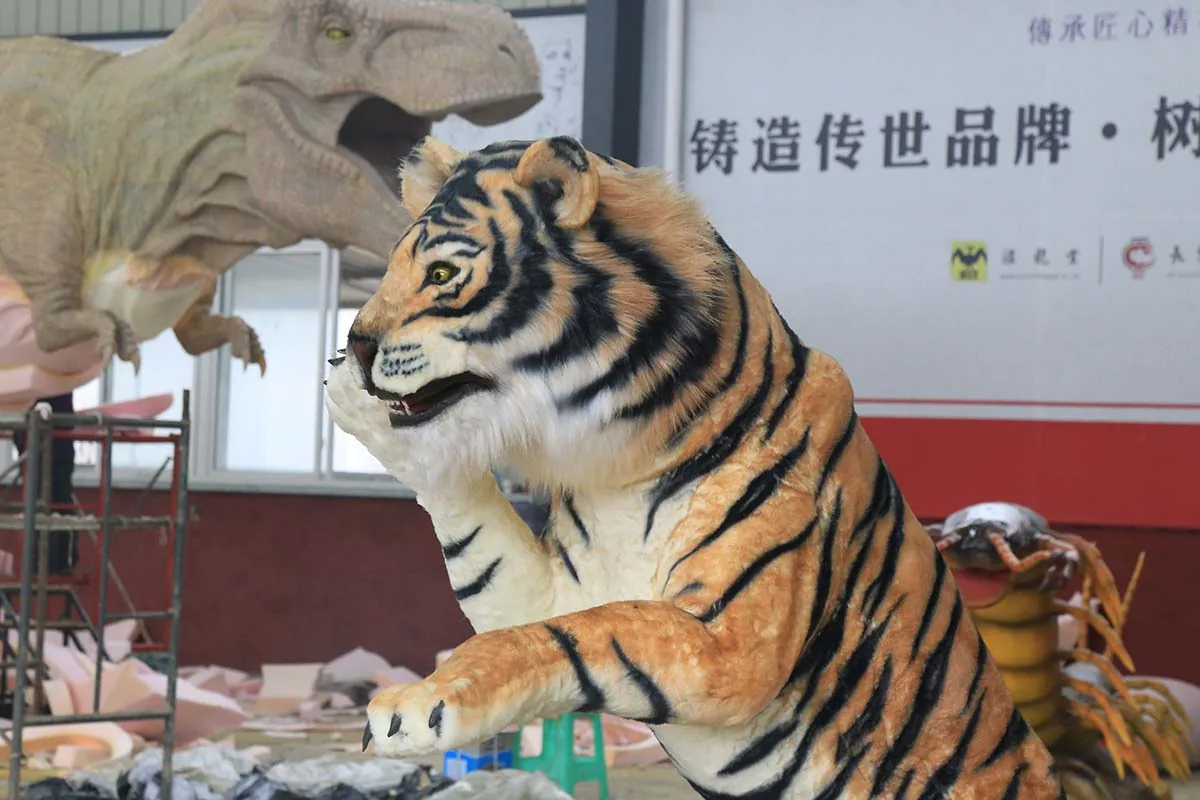
Custom Animatronic Tiger
A life-size tiger built to zoo-grade anatomy — 2.6–3.1 m, slow stalking motion, painted stripe detail.
A life-size tiger built to zoo-grade anatomy — 2.6–3.1 m, slow stalking motion, painted stripe detail.
Cats are the hardest animals to build convincingly, and not for the reason people expect. It is not the size or the movement — it is the fur. A tiger with glued-on fur fabric reads as a mascot at three metres, and three metres is exactly where a visitor stands.
| Species | Bengal or Siberian tiger, per client preference |
|---|---|
| Size | Life-size, 1.5 m to 3 m body length; custom |
| Frame | Weatherproof metal with welded joints and anchor bases |
| Skin and fur | Hand-pasted synthetic fur over a finished base |
| Eyes | Amber glass eyes with pupil detail |
| Mouth | Open-mouth configuration with sculpted fangs and tongue |
| Animation | Optional — head turn, tail flick, chest breathing, jaw open and close |
| Sound | Optional, built-in speakers with tiger vocalisations or custom audio |
| Power | 110 / 220 V AC, 250 W average |
| Duty | Weatherproof, UV-resistant colour coat |
| Installation | Modular assembly, 2 to 3 technicians, 4 to 6 hours |
The fur is applied strand by strand over the finished base, which is slow work and the reason this build costs more than a dinosaur of the same size. The payoff is direction: real fur lies one way along the body and stands up at the ruff, and a build with directional fur reads correctly in raking light, which is how outdoor exhibits are lit for most of the day.
Fabric cannot do that. It also cannot be repaired invisibly — a torn patch of fur fabric is a visible rectangle forever, while hand-pasted fur can be re-filled.
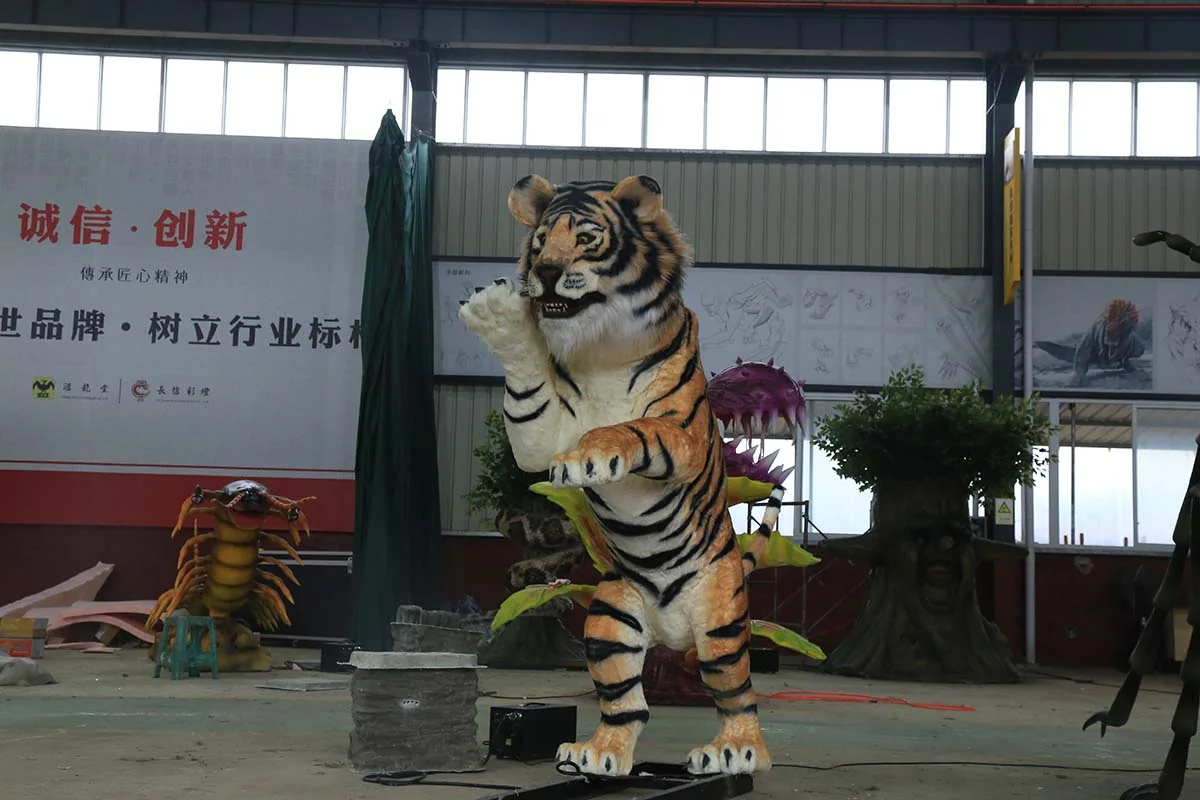
Amber glass eyes with a cast pupil, set slightly deep under a brow. This is the single detail that decides whether the animal reads as a cat or a cartoon, and it is the one most often compromised on price.
The open-mouth configuration carries sculpted fangs and a tongue. On a tiger the mouth is usually the pose that gets photographed, so it is worth specifying from the start rather than adding later — a closed-mouth head cannot be converted.
Bengal or Siberian? Bengal is smaller and the more common choice for a walk-past exhibit. Siberian suits an entrance piece where the animal has to read at distance.
Does the fur survive outdoors? Yes, with the UV-resistant coat. Life expectancy depends on sun exposure; a shaded position roughly doubles the interval before a re-coat.
Can it be ordered static? Yes, and it is a common order. The animation is optional — the fur and the eyes carry the animal whether or not it moves.
How long to install? Four to six hours with two or three technicians, on a modular assembly.
110 / 220 V AC at 250 W average — a single supply. The site work that matters is the base: the frame has welded anchor bases, so the animal is bolted down rather than stood up, and the anchor layout is supplied with the drawing.
Outdoors, position it out of standing water. The fur is the part that suffers first: a wet ruff takes days to dry and holds a smell that no amount of cleaning removes completely.
Assembly is the bulk of the visit. Then, where animation is fitted, three settings: the head turn amplitude, the chest breathing rate, and whether the jaw fires on approach or on a cycle.
The breathing is the setting that matters most on a cat. A tiger that only moves when triggered looks stuffed between visitors; a slow chest rise makes it look asleep and alive, which is exactly what a zoo exhibit wants.
Materials. Weatherproof welded metal frame, hand-pasted synthetic fur over a finished base, amber glass eyes with cast pupils, UV-resistant colour coat.
Hand-pasted fur is durable and it is not maintenance-free. Brush it against the lie of the fur once a season to lift dust, and never wet it beyond a damp cloth — a soaked ruff takes days to dry and holds an odour that cleaning does not fully remove. Where the animal is outdoors, plan a re-coat every few years depending on sun exposure; a shaded position roughly doubles the interval.
Related. the animatronic animal range, the lion, the zebra pair, request a quote.
Same factory and the same build standard. What changes is size, movement set and how the exhibit is meant to be used on site.
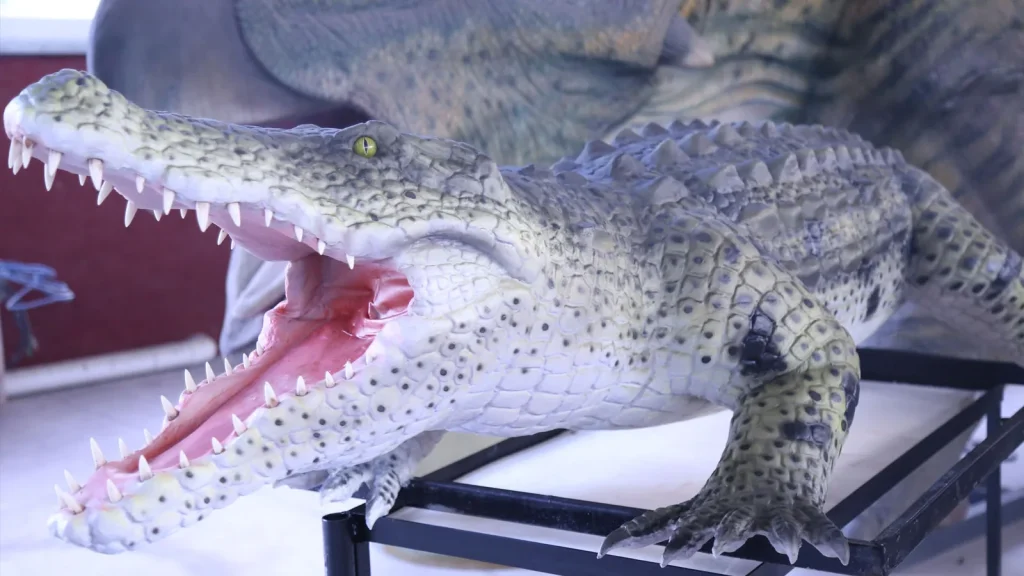
Hyper-realistic animatronic crocodile with hand-sculpted osteoderms, opening jaw and two poses — threat display or low hunting stance.
View Product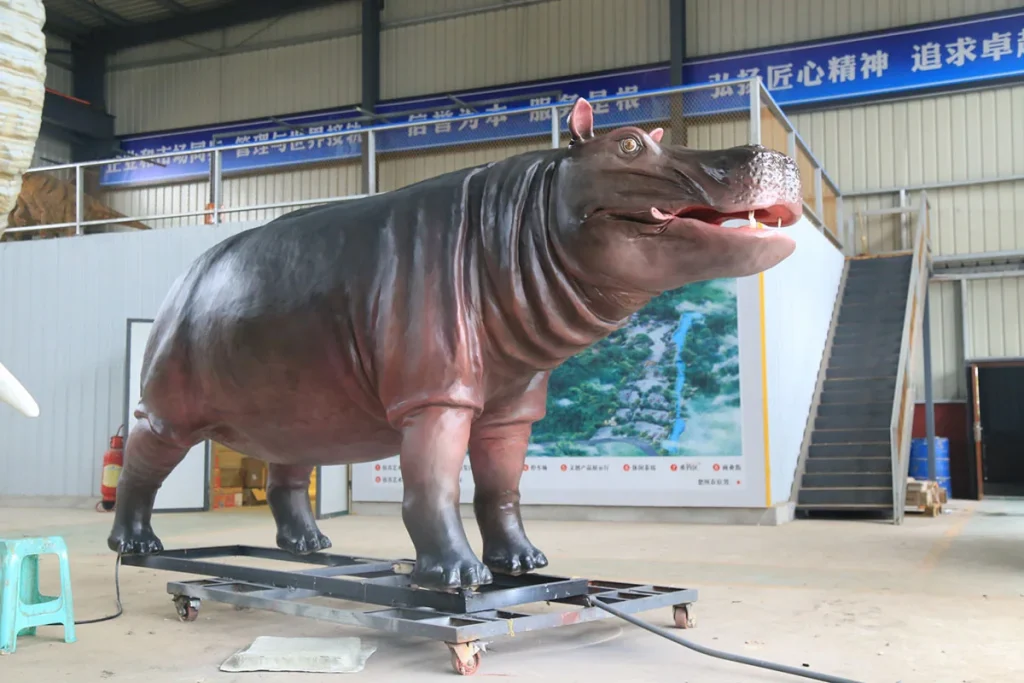
A hippopotamus is the one animal where the motion design is mostly about restraint. Real hippos stand still for long stretches, and a build […]
View Product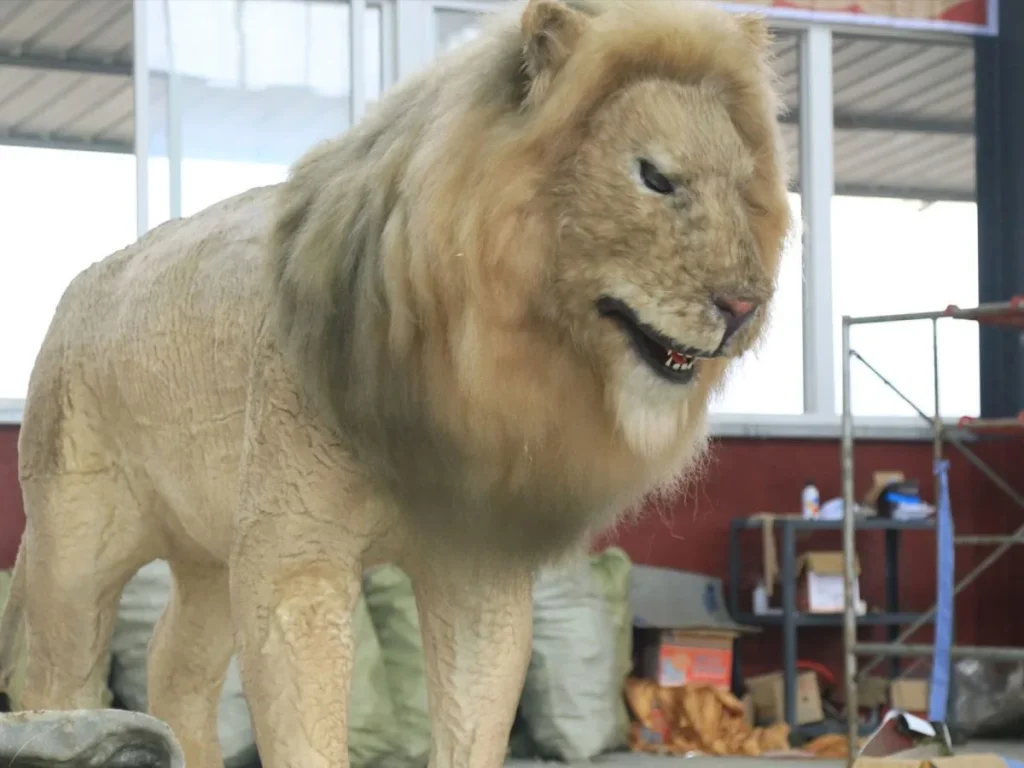
A lion is the easiest animal in the catalogue to get wrong. Everyone knows what a lion looks like, and the failure mode is […]
View ProductThree things buyers usually want settled before they ask for a drawing — what drives the number, how the piece is actually built, and what to check between suppliers.
Extinct and hard-to-keep species, sculpted to anatomy keepers can check — where animatronic animals earn a place beside a living collection.
Read the guide →From fossil reference to finished skin — how proportions, texture, colour and weathering are decided, and what separates a realistic build from a cartoon one.
Read the guide →How Much Does an Animatronic Dinosaur Cost? Understanding the Key Cost Factors If you are planning a museum exhibition, theme park attraction, or promotional […]
Read the guide →Send your dimensions, movement requirements and installation site. You get a realistic budget range and a dated build schedule.
Or email info@hltdino.com — we reply within one business day.