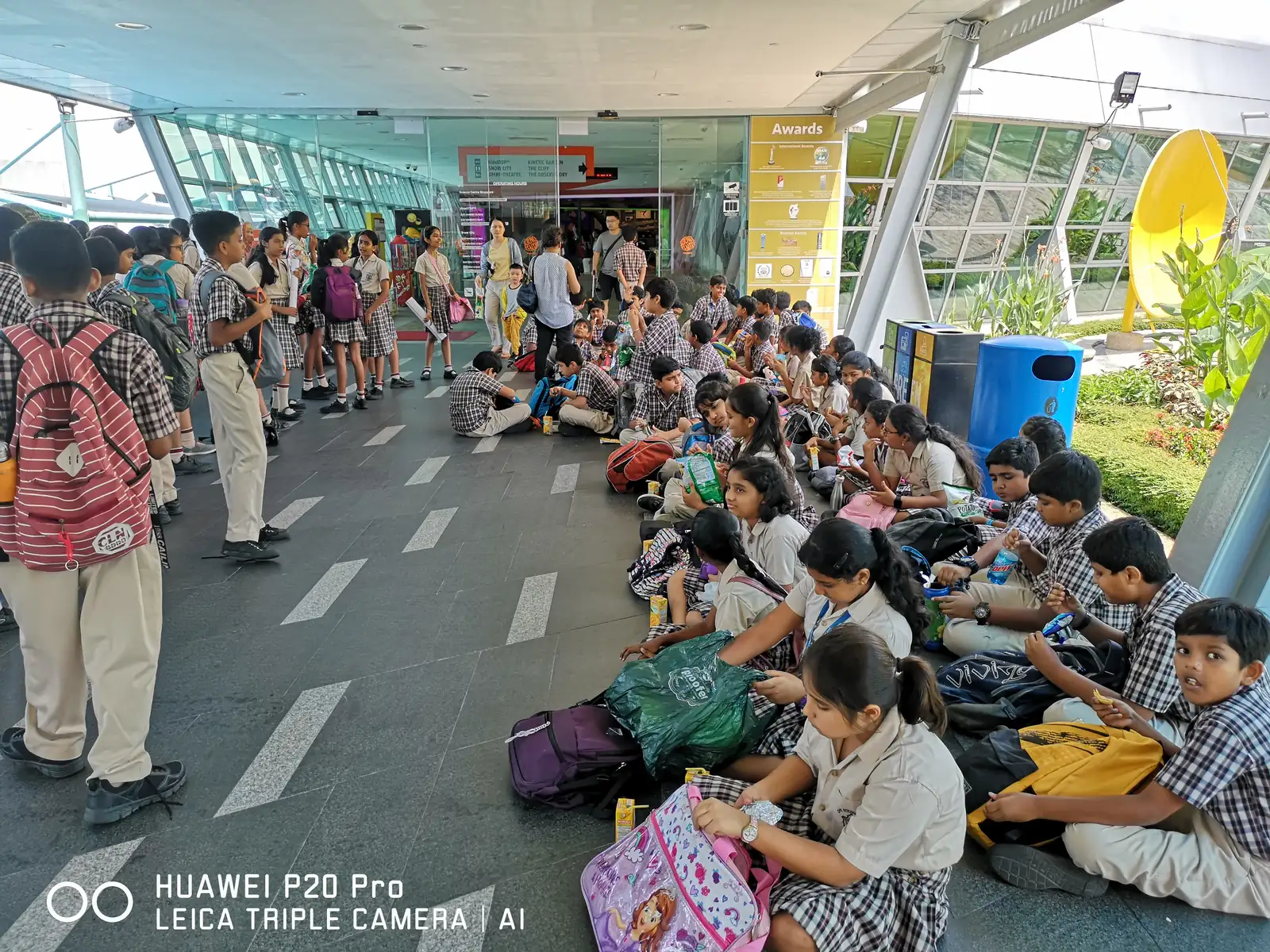
Singapore, 2019: animatronic exhibits for a science centre, where the daily audience is school groups. That changes the brief more than the budget. A science centre specifies for contact, for noise and for staff who are educators rather than technicians, and each of those three has a build consequence.
Contact Changes the Detail
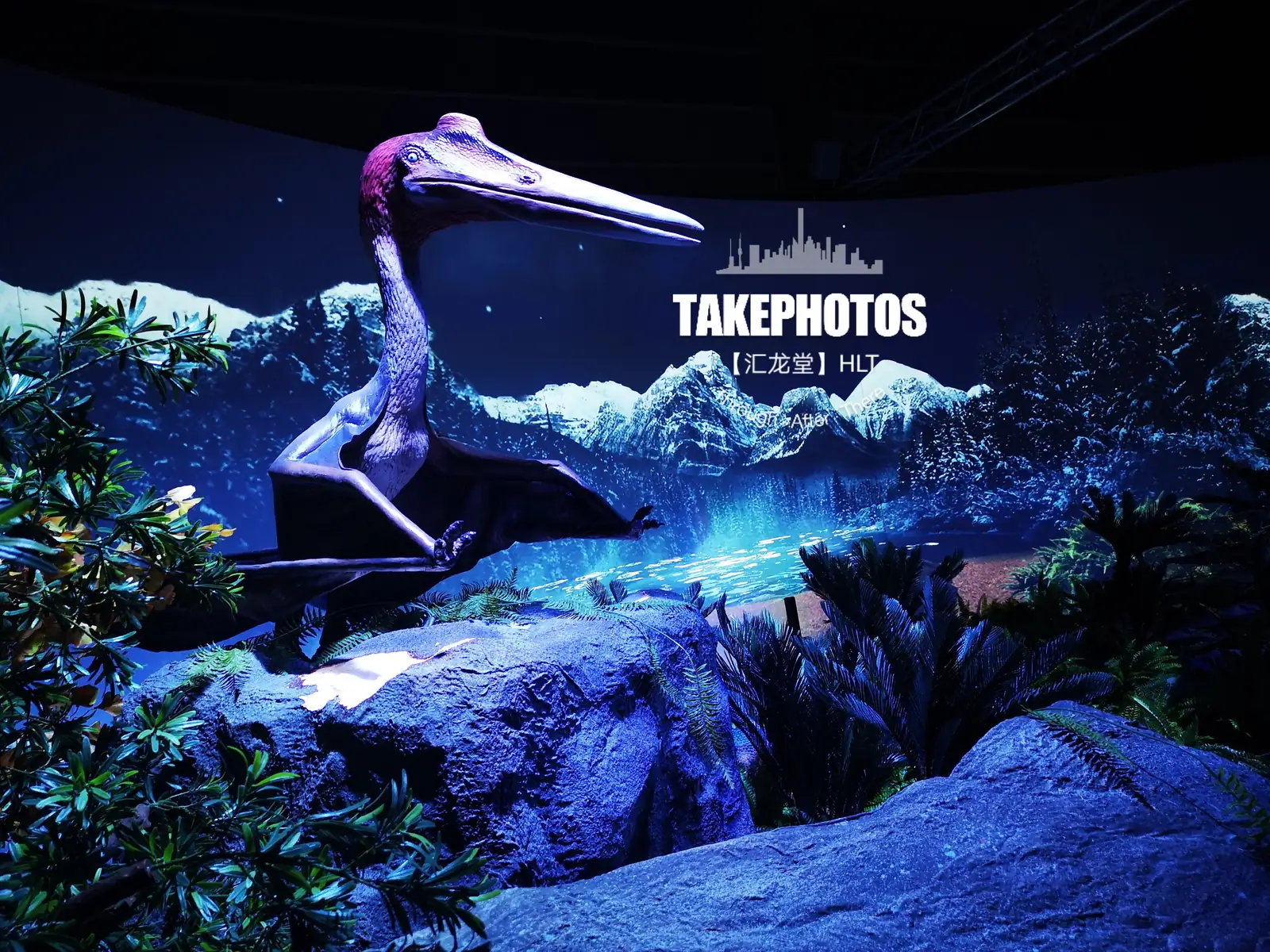
Visitors are invited to lean in and touch, so anything at child height has to survive it. Pinch points at the jaw and shoulders are closed, cable runs are concealed inside the plinth rather than clipped to the outside, and the base edge is finished so a class can crowd around it without meeting a sharp line. None of this is visible in a photograph and all of it decides whether the exhibit is still running in month twelve.
Noise Is a Design Constraint
A gallery has no traffic noise to hide a drive behind. A guided explanation has to be heard over the exhibit, so drives were specified for low-noise operation and the motion set was programmed as a loop with a staff override. That combination is what a science centre actually needs: a predictable show during opening hours and silence during a talk.
Where a unit is meant to be touchable, the behaviour set is written differently from a walk-by piece. Contact responses are slower and softer than approach responses, because a child touching a snout and a visitor walking past are not the same event.
Installation by the Receiving Team
The units shipped as prepared sections with an assembly sequence and wiring diagrams, so commissioning could be finished by the venue’s own staff with remote support. That is the pattern we still use for museum projects: crated sections, numbered sequence, wiring labelled at both ends.
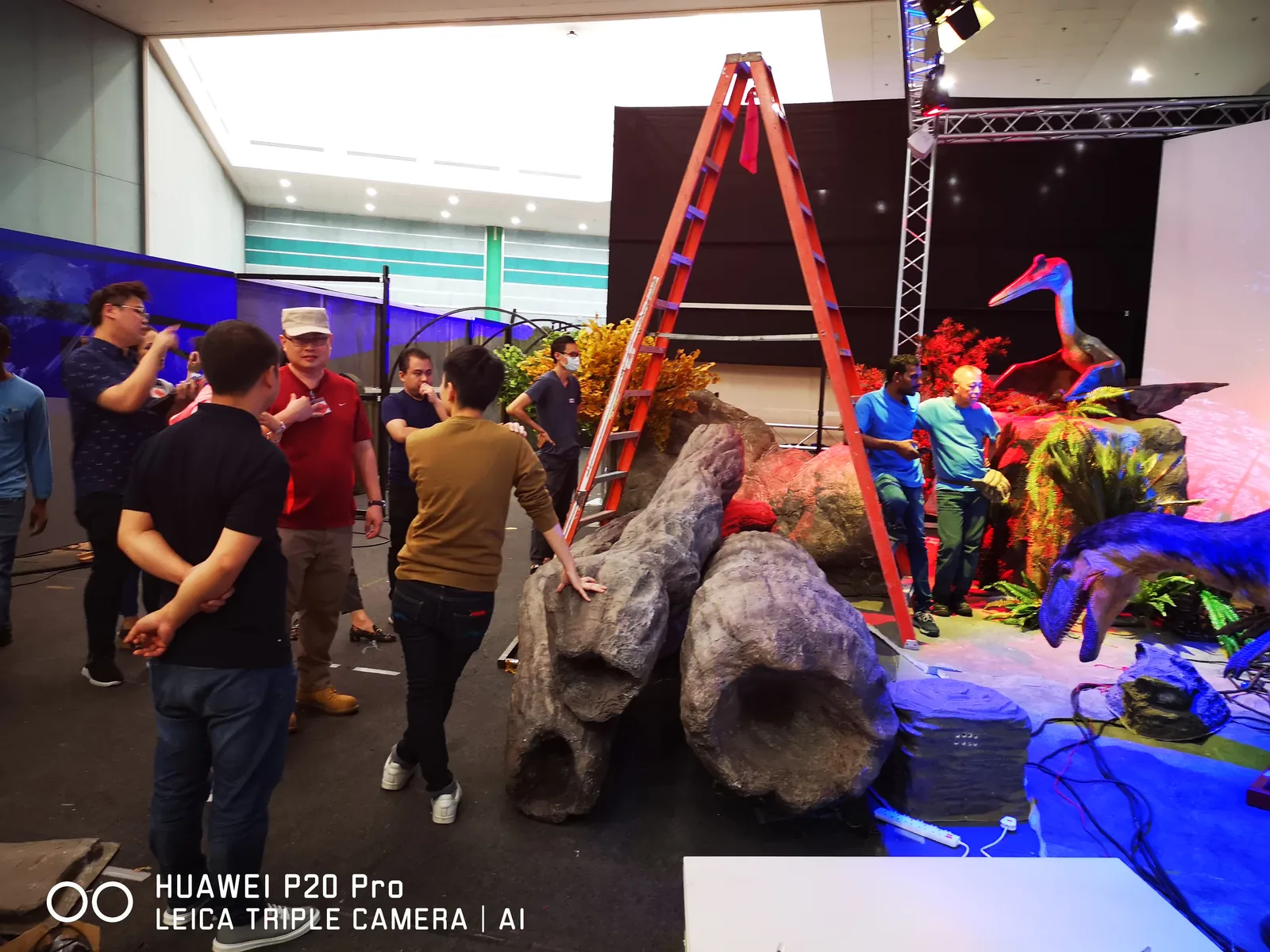
The installation photographs show a crew assembling a section on site, which is a more useful record than a finished display shot. It shows how much of the work happens after the crate is opened.
What This Project Set Up
Science centres and natural history museums are now one of our main venue types, and most of the museum specification we use comes from this order: matte rather than gloss finish, low-noise drive selection, and documentation a curator can file rather than decode. The museum scene page sets out that specification in more detail, and the interactive exhibit range covers the contact-triggered formats built for school groups.
Questions Buyers Ask
Can we supply our own audio and text? Yes. The audio module takes your files, and trigger types can be mapped so a touch response and an approach response carry different content.
Does it need a technician on site? Not necessarily. The sections are labelled and the sequence is numbered. Where a venue has no technical staff at all, we quote for a commissioning visit rather than leave it to chance.
How is it cleaned? Wipe-down with a neutral cleaner, on the same schedule as the gallery. Drives and sensors are reachable from the base cabinet without removing the skin.
Site Photographs
Project facts
- Year 2019
- Country Singapore
- Venue type Science centre
- Scope Animatronic exhibits — design, manufacture, export and commissioning support
- Build Q235 steel frame · molded silicone skin · low-noise drives · indoor gallery finish