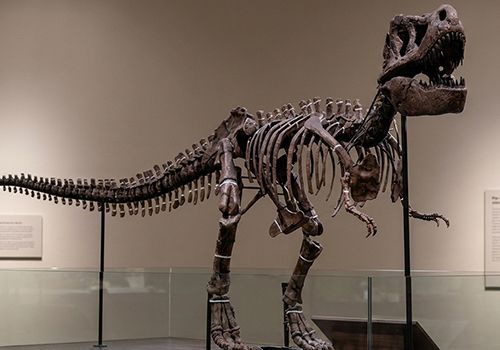
Curation-grade anatomy, quiet drives and lighting that does not fight the specimen. We build for spaces where accuracy is reviewed — and where a moving dinosaur has to earn its place next to a real skeleton.
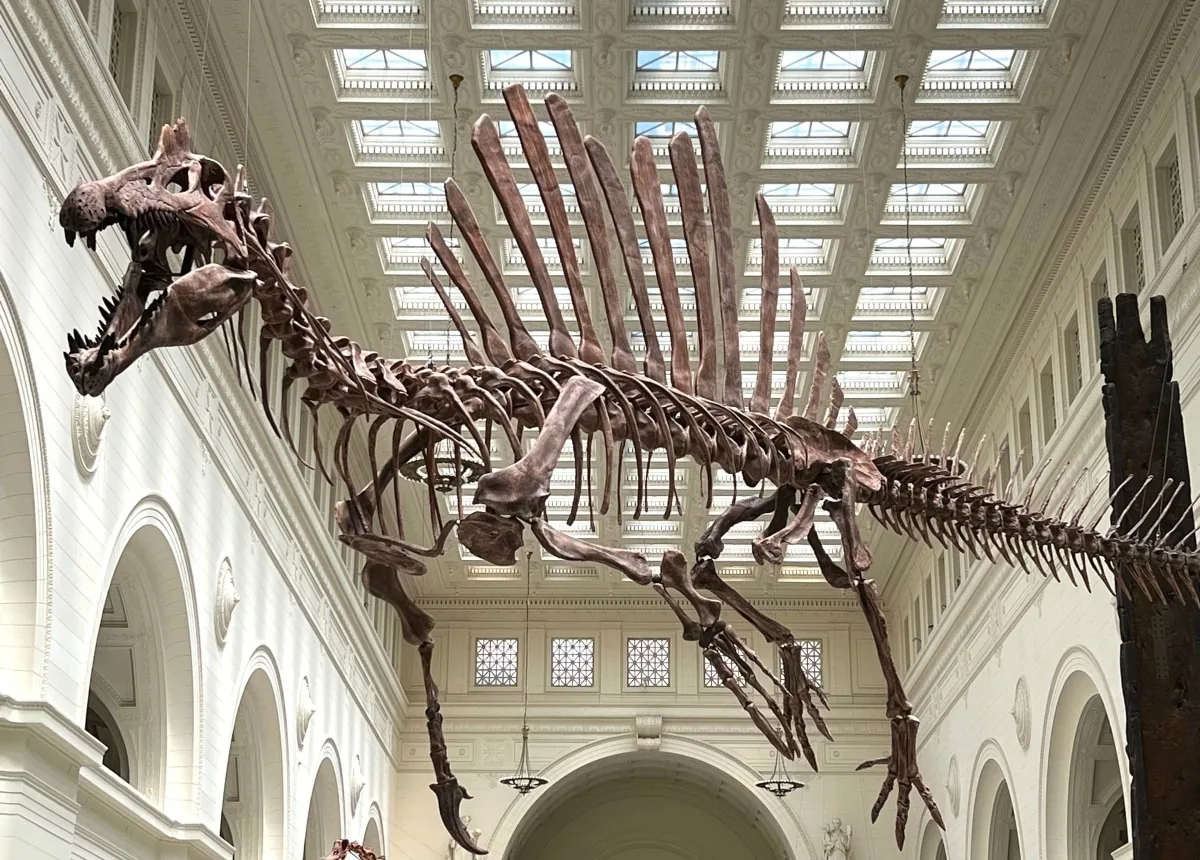
Ceiling height and rigging decide what is possible. A mounted skeleton needs overhead anchoring; a moving specimen needs clearance for its full range of motion, not just its resting pose. Send the hall plan and we will mark both before production.
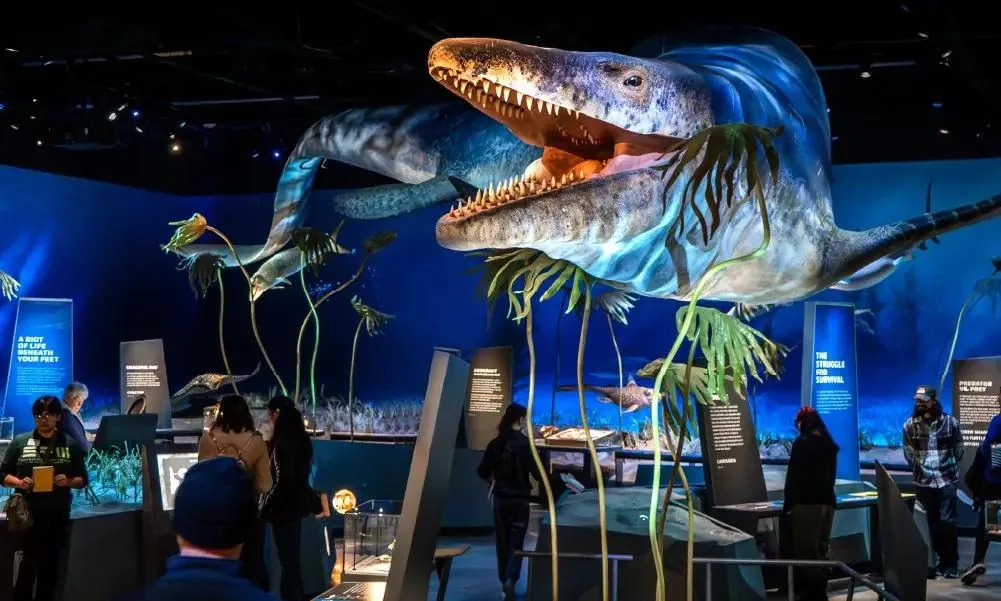
Lighting and noise are the second constraint. Museum builds use matte finishes that photograph well under track lighting, and drives tuned to stay under ambient room noise so the gallery keeps its atmosphere.
We also supply the documentation curators ask for: materials list, electrical specification, maintenance schedule and a touch-up kit matched to the finish we applied.
Museum FAQ
What Curators Ask
How accurate are the proportions?
We build from skeletal reference and revise against your curatorial notes. If your team supplies measurements or a reference cast, we match to that — accuracy is a review process, not a claim.
Will it be too loud for a gallery?
Drives are specified for ambient-level noise, and the show cycle is programmable so the piece can rest during guided talks. Tell us your room tone and we tune to it.
Can it run unattended all day?
Yes — museum builds run on a timed loop with staff override. We supply the maintenance schedule and a touch-up kit so the finish stays consistent between services.
Do you provide mounting hardware?
Floor-standing units ship with base plates; overhead pieces ship with anchoring detail drawings for your structural engineer to approve before installation.
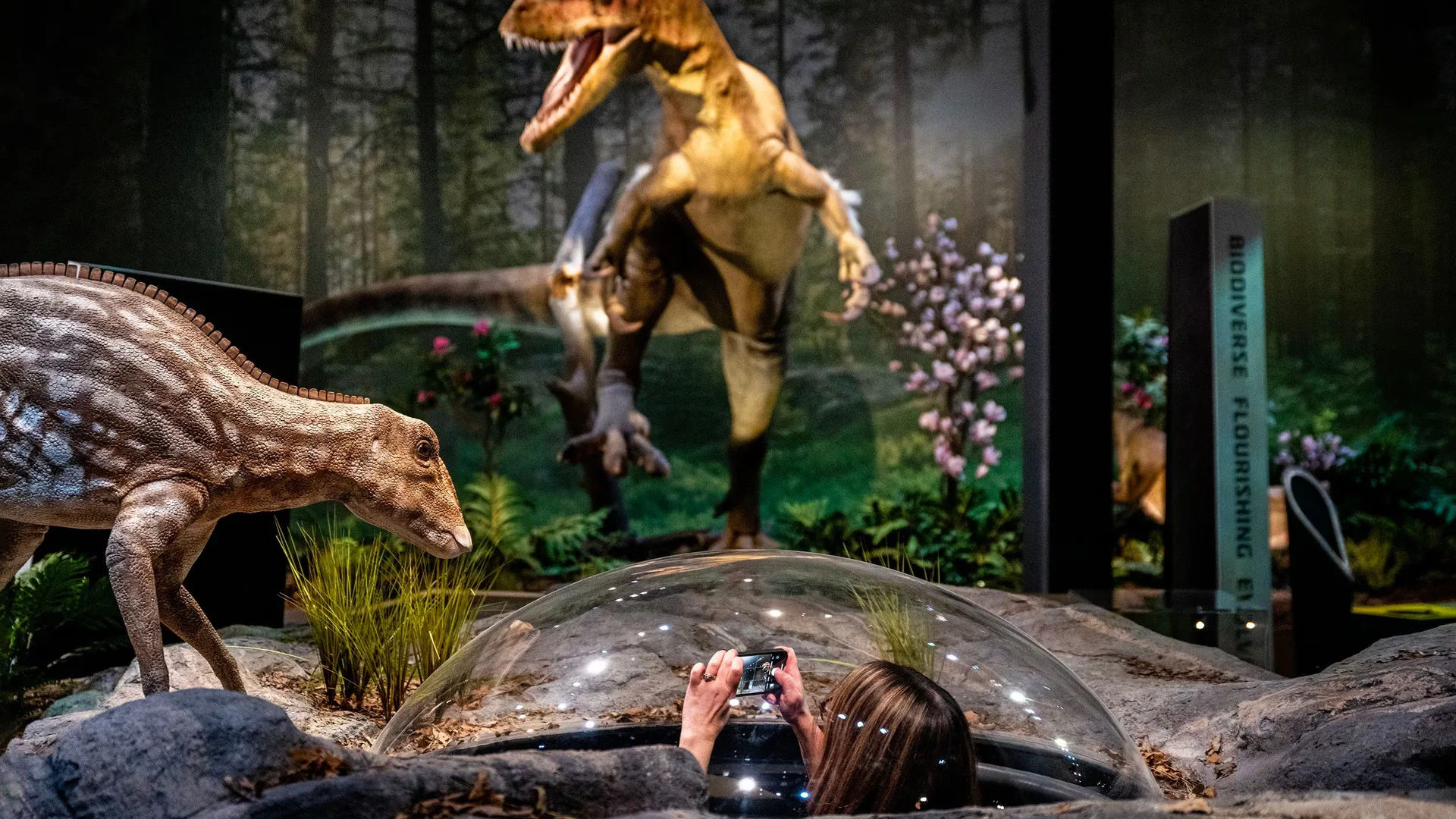
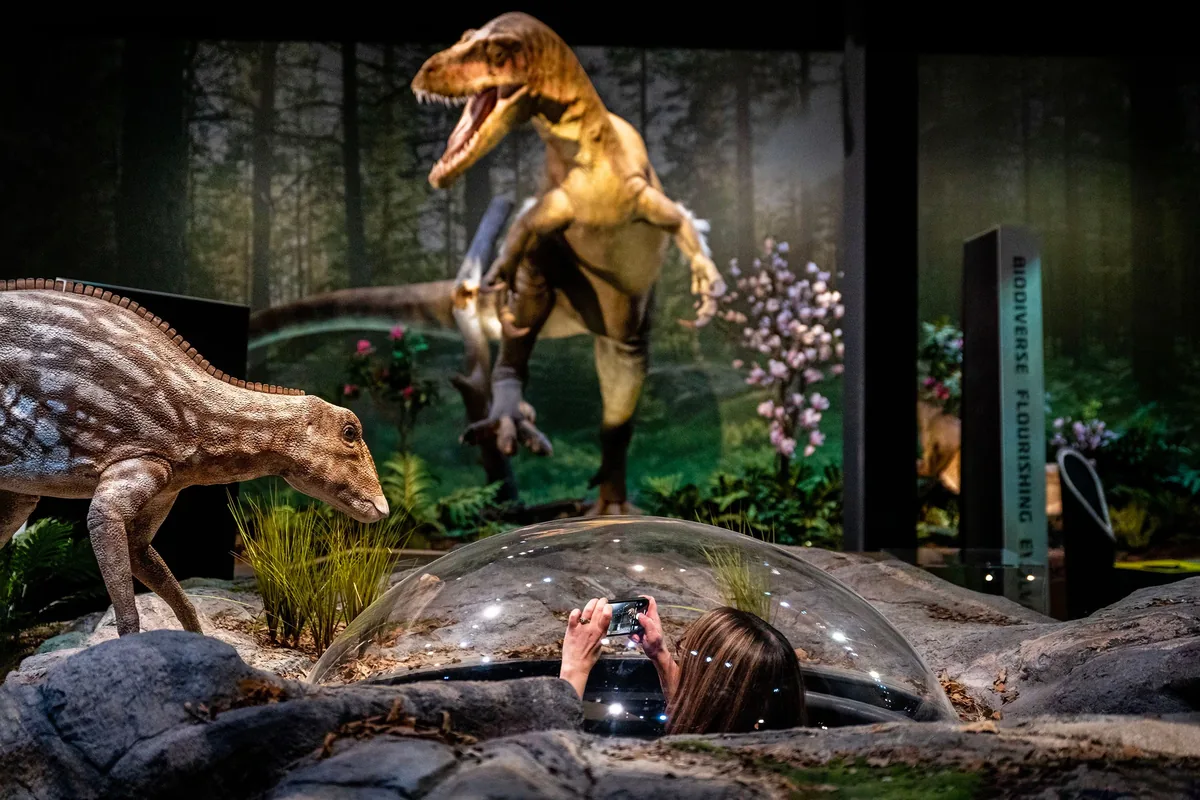
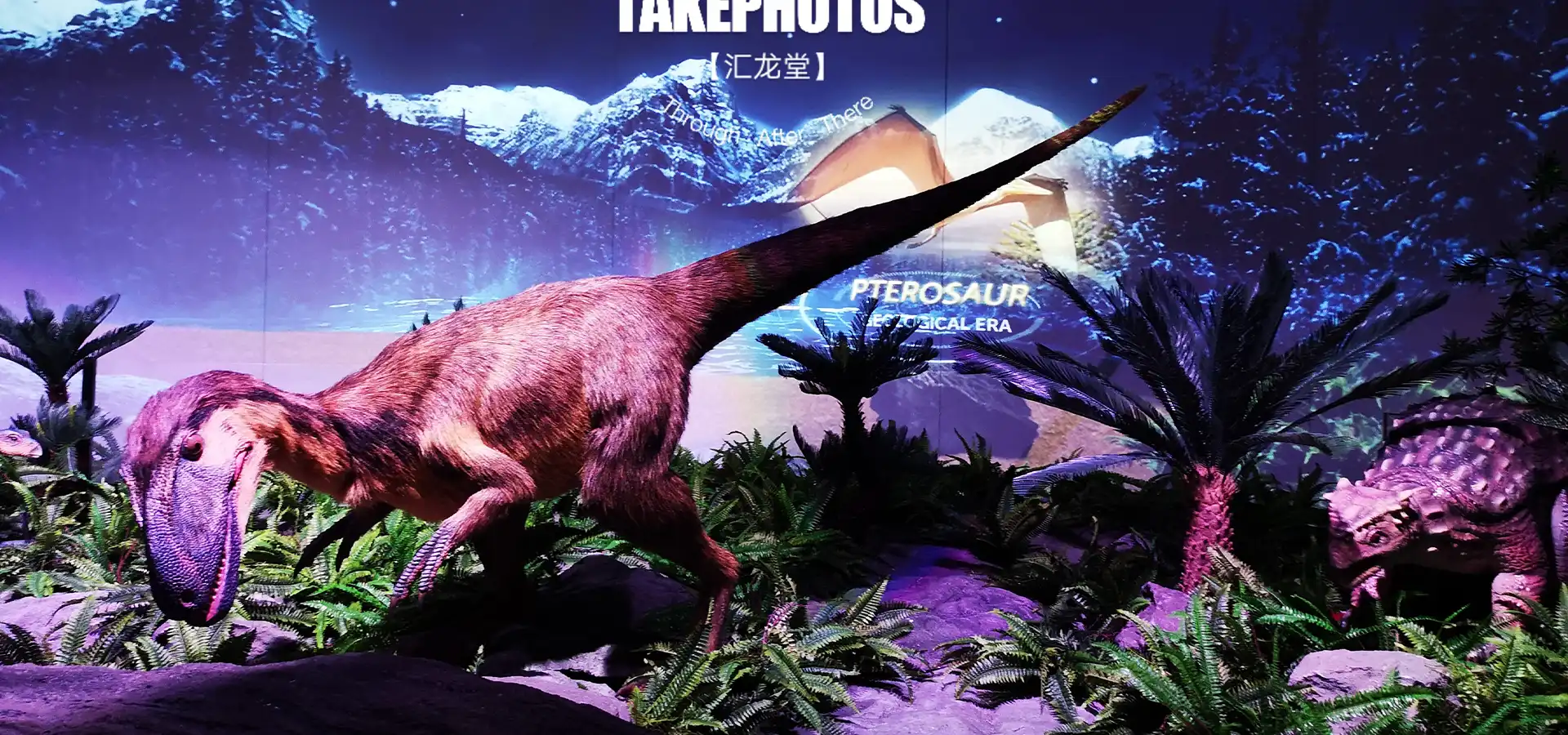
The photo-op diorama, with the visitor path passing the display rather than crossing it.
Singapore Science Centre · 2019
A Photo Point That Doubles as the Exhibit Anchor
An indoor build planned around one composed photo-op diorama, with the visitor route passing the display rather than running through it.
Designed as a photograph first
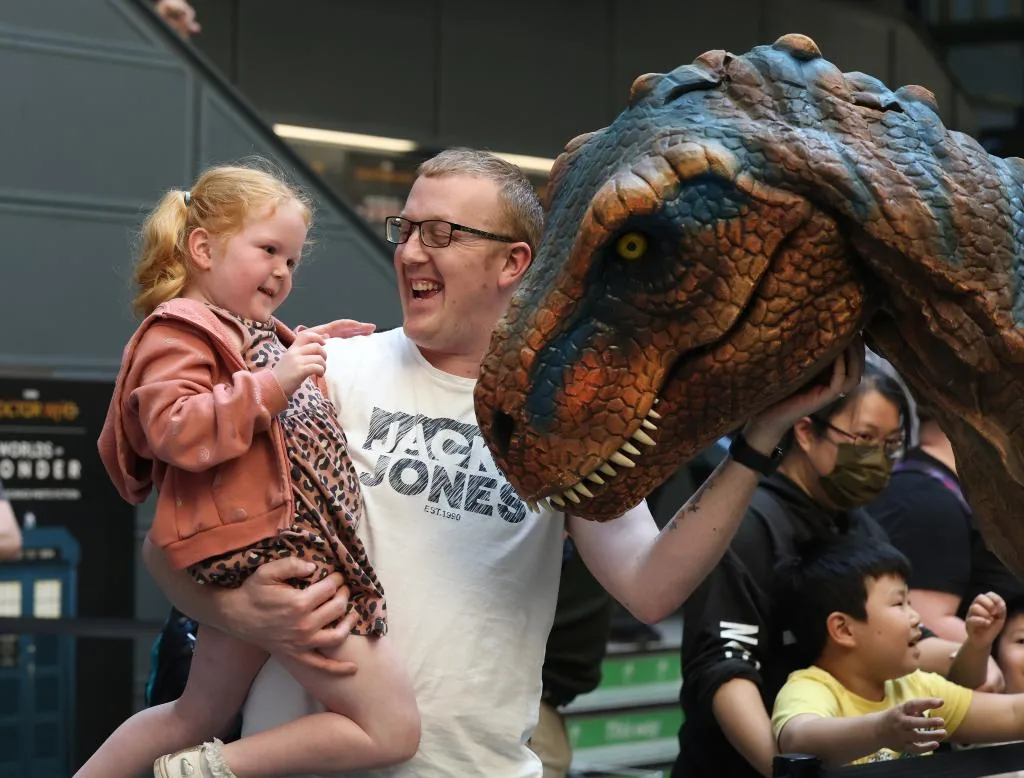
Backdrop, figure and lighting were set so a family standing on the marked spot gets the whole story in a single frame, without a photographer directing them.
Assembled inside a live venue
The build went in around existing exhibits, in sections sized to the delivery route and the lift rather than to the workshop.
Send the hall plan, ceiling height and the species list you are considering. We will return a scale check, mounting options and a dated build schedule.